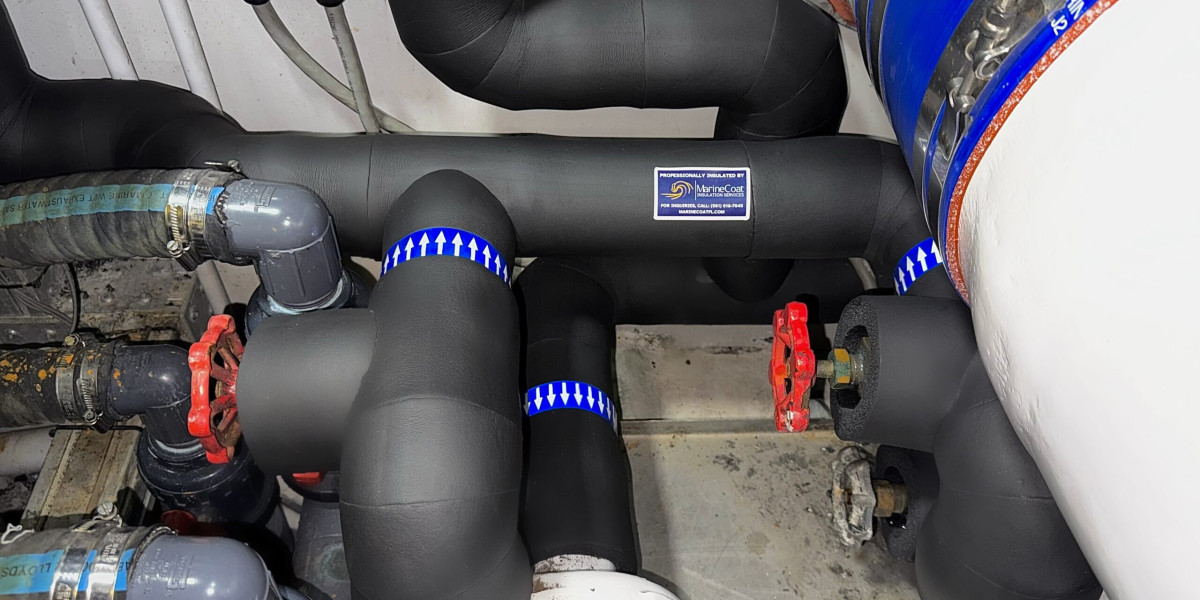

Preventative maintenance within maritime operations demands foresight, precision analytics, and resilient infrastructure stewardship. Vessel operators confront corrosive salinity, relentless humidity, mechanical vibration, and thermal volatility that gradually erode system reliability. In this environment, marine insulation companies contribute strategic expertise that fortifies asset integrity and prolongs operational lifespan. Through advanced marine pipe insulation solutions, these specialists mitigate corrosion, energy inefficiency, and structural fatigue before deficiencies escalate into costly disruptions. Their participation in preventative frameworks transforms insulation from a passive barrier into an active preservation mechanism embedded within comprehensive maintenance architecture.
Strategic Role of Insulation in Preventative Maintenance Programs
Preventative maintenance emphasizes early detection, condition monitoring, and systematic intervention. Thermal systems, fluid conveyance networks, and exhaust assemblies remain particularly vulnerable in maritime climates. Insulation deficiencies often signal deeper structural complications such as condensation infiltration or coating degradation.
Marine insulation companies integrate inspection protocols with maintenance schedules, aligning insulation performance metrics with engine overhauls, dry dock intervals, and classification surveys. Rather than functioning solely as installers, these organizations operate as technical collaborators within predictive maintenance ecosystems.
Marine pipe insulation serves as both thermal stabilizer and diagnostic indicator. Surface temperature irregularities, moisture entrapment, or cladding distortion frequently reveal hidden corrosion or mechanical strain. By incorporating insulation assessments into routine audits, operators gain actionable intelligence that supports anticipatory repairs.
Inspection, Assessment, and Condition Mapping
Advanced Diagnostic Techniques
Comprehensive evaluation begins with infrared thermography, ultrasonic thickness measurement, and moisture detection instrumentation. These methodologies identify corrosion under insulation (CUI), vapor barrier breaches, and insulation compression without dismantling extensive sections of cladding.
Marine insulation companies employ digital mapping platforms that catalogue inspection findings across entire fleets. Each insulated segment receives a condition index, enabling maintenance planners to prioritize remediation based on risk exposure rather than reactive urgency.
Lifecycle Documentation
Meticulous documentation strengthens preventative maintenance accuracy. Installation dates, material specifications, environmental exposure ratings, and repair history are archived within centralized databases. This archival framework permits trend analysis, revealing recurring vulnerabilities linked to specific operational routes or cargo profiles.
By integrating marine pipe insulation records into asset management software, fleet supervisors maintain holistic visibility over thermal infrastructure health.
Corrosion Mitigation and Moisture Control
Maritime corrosion progresses aggressively beneath compromised insulation layers. Moisture intrusion, especially in saline atmospheres, accelerates electrochemical reactions that undermine metallic substrates. Preventative maintenance programs therefore prioritize moisture exclusion as a core objective.
Marine insulation companies engineer vapor barriers, hydrophobic wraps, and corrosion-resistant jacketing systems tailored to localized environmental intensity. Stainless fastening hardware, sealed longitudinal seams, and precision-fitted insulation segments reduce infiltration probability.
Proactive Remediation Measures
Scheduled insulation removal in high-risk zones allows coating reapplication and substrate evaluation before degradation becomes critical. Rather than waiting for visible failure, maintenance schedules incorporate predetermined inspection intervals based on exposure modeling.
Marine pipe insulation upgrades frequently accompany these interventions, replacing outdated materials with advanced elastomeric or mineral-based composites offering superior resistance to vapor diffusion and thermal fluctuation.
Thermal Efficiency Optimization and Energy Preservation
Energy conservation remains central to preventative planning. Heat dissipation in steam conduits or chilled water lines influences fuel consumption, generator workload, and emission profiles. Insufficient insulation amplifies thermal variance, increasing mechanical strain across pumps and compressors.
Marine insulation companies conduct thermal performance audits that calculate conductivity coefficients, surface emissivity, and ambient exposure variables. Analytical modeling determines whether insulation thickness adjustments or material substitutions will enhance efficiency.
Predictive Energy Modeling
Sophisticated software simulates operational scenarios under varying sea conditions. These projections guide recalibration of marine pipe insulation configurations to sustain optimal temperature equilibrium while minimizing added weight. Such precision contributes to propulsion efficiency and regulatory compliance.
Preventative maintenance programs thus extend beyond mechanical repair, encompassing energy stewardship facilitated by insulation expertise.
Fire Safety Integration within Maintenance Strategies
Fire resilience constitutes a non-negotiable dimension of maritime safety. Insulation materials influence flame propagation dynamics and structural heat transfer. Preventative maintenance schedules incorporate periodic verification of fire-rated assemblies to confirm compliance with international maritime standards.
Marine insulation companies evaluate insulation density, integrity of fire-resistant mastics, and continuity of protective barriers surrounding engine exhausts and fuel lines. Deterioration or compression may compromise compartmentalization during emergencies.
Marine pipe insulation selected for high-temperature zones often includes mineral wool or calcium silicate systems encased in reinforced cladding. Routine audits confirm fastening security and absence of mechanical displacement caused by vibration.
Acoustic Stabilization and Mechanical Preservation
Mechanical oscillation aboard vessels introduces persistent stress within piping brackets and support assemblies. Insulation materials contribute to vibration dampening, thereby extending equipment longevity. Preventative maintenance frameworks assess insulation compression or displacement that might indicate excessive vibration amplitude.
Marine insulation companies collaborate with engineering teams to recalibrate supports, apply resilient lagging, or install acoustic barriers in machinery compartments. These interventions preserve not only thermal stability but also structural coherence.
Environmental Compliance and Sustainability Alignment
Global maritime regulations increasingly emphasize emission reduction and environmental accountability. Insulation efficiency directly correlates with reduced fuel expenditure and lower greenhouse gas output. Preventative maintenance strategies therefore incorporate insulation performance verification as part of environmental compliance audits.
Marine insulation companies recommend low-emission manufacturing materials and recyclable cladding alternatives that align with sustainability objectives. Lifecycle assessments evaluate long-term ecological impact alongside economic feasibility.
Marine pipe insulation systems engineered for extended service intervals diminish material waste and decrease frequency of replacement cycles, reinforcing sustainable asset management principles.
Collaboration During Dry Dock and Refits
Dry dock intervals present strategic opportunities for comprehensive insulation assessment. Preventative maintenance schedules often synchronize insulation replacement with hull inspections and propulsion overhauls.
Marine insulation companies coordinate with naval architects, classification surveyors, and maintenance supervisors to implement upgrades efficiently. Prefabricated insulation modules expedite installation while maintaining dimensional accuracy.
Integrated Project Management
Project coordination platforms streamline communication among stakeholders. Insulation tasks align with coating renewal, valve replacement, and structural reinforcement activities. This integrated methodology reduces redundancy and ensures cohesive execution.
Marine pipe insulation enhancements during refits frequently incorporate advanced materials such as aerogel composites, offering superior thermal resistance with reduced thickness.
Digital Monitoring and Predictive Analytics
Emerging sensor technologies transform insulation into an intelligent monitoring component. Embedded moisture sensors transmit data to centralized dashboards, enabling real-time surveillance of vulnerable zones. Predictive analytics forecast potential infiltration events based on humidity patterns and operational cycles.
Marine insulation companies spearhead implementation of these smart systems, integrating sensor data with maintenance management software. Preventative maintenance thereby evolves into a data-driven discipline rather than a purely scheduled routine.
Workforce Training and Knowledge Transfer
Sustainable preventative programs require skilled personnel capable of recognizing early-stage insulation anomalies. Marine insulation companies conduct technical workshops and certification programs for onboard engineers and maintenance crews.
Training modules encompass installation best practices, inspection criteria, safety compliance, and documentation protocols. Empowered personnel contribute to rapid anomaly detection, reducing reliance on reactive intervention.
Conclusion
Preventative maintenance within maritime sectors transcends mechanical servicing; it encompasses comprehensive infrastructure guardianship reinforced by insulation expertise. Through diagnostic precision, corrosion mitigation, energy optimization, and digital monitoring, marine insulation companies elevate maintenance strategies from reactive repair to predictive preservation. Their specialized knowledge in marine pipe insulation ensures that thermal systems remain resilient against corrosive atmospheres, vibration stress, and regulatory scrutiny. By embedding insulation evaluation into structured maintenance programs, vessel operators secure operational continuity, fiscal efficiency, and environmental responsibility across demanding marine environments.