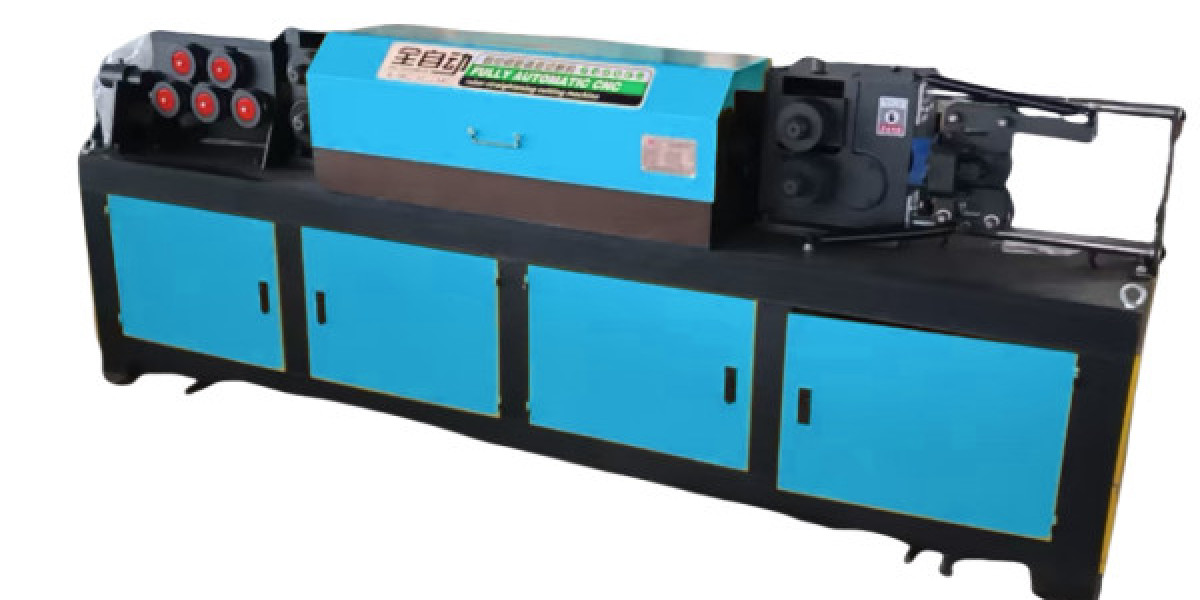

Efficient reinforcement processing is essential for construction companies and steel fabrication businesses that need to meet demanding production schedules. Before reinforcement steel can be incorporated into concrete structures, it often needs to be prepared to precise lengths and dimensions. Combining straightening and cutting operations can simplify this process, making a rebar straightener and cutter a valuable solution for businesses seeking greater efficiency and consistency.
Rebar preparation traditionally involves several manual stages. Workers may straighten material, measure individual lengths, mark cutting points, and then cut each bar separately. While this approach may be manageable for small quantities, it can become increasingly inefficient as production volumes grow. Integrated machinery can streamline these repetitive tasks and help create a more organized workflow.
One of the key advantages of a rebar straightener and cutter is improved dimensional consistency. Construction projects often require reinforcement bars to be prepared according to specific length requirements. Manual measuring and cutting can result in variations, particularly during high-volume production. Automated processing provides greater control over the straightening and cutting sequence, helping businesses produce more uniform reinforcement components.
Production speed is another important benefit. Large construction projects may require substantial quantities of reinforcement within tight deadlines. Processing every bar manually can create bottlenecks and consume significant labor hours. An integrated straightening and cutting solution can simplify repetitive operations and allow fabrication teams to process material more efficiently. Faster production can help businesses maintain schedules and respond more effectively to large orders.
Material efficiency also plays an important role in controlling fabrication costs. Incorrect measurements and inconsistent cutting can lead to unnecessary steel waste. When material is processed according to defined production requirements, businesses can improve control over cutting lengths and reduce avoidable errors. Better material utilization can become particularly valuable when processing large volumes of reinforcement over extended production periods.
Automation can also improve workforce productivity. Straightening and cutting steel manually involves repetitive physical movements and continuous handling of heavy material. Automated machinery allows operators to focus more on feeding material, monitoring the process, checking finished bars, and maintaining production quality. This can reduce repetitive workload while creating a more structured operating environment.
Another benefit of integrated processing is reduced material handling. When straightening and cutting are performed as separate operations, steel may need to be moved between different workstations. Each additional handling stage can consume time and require more workspace. Combining key preparation processes can help simplify the production flow and make better use of available fabrication space.
Reliable reinforcement processing is relevant across numerous construction applications. Residential buildings, commercial developments, industrial structures, infrastructure projects, and precast concrete operations can all require accurately prepared reinforcement steel. Fabricators serving multiple sectors can benefit from equipment that supports repeatable processing and efficient production.
When choosing reinforcement processing equipment, businesses should consider production volume, material requirements, processing accuracy, operating procedures, maintenance needs, and compatibility with existing workflows. Looking at long-term productivity rather than only the initial investment can help companies select equipment that provides meaningful operational value.
As construction and fabrication industries continue to adopt automation, integrated steel processing solutions are becoming increasingly important. Efficient straightening and cutting can reduce repetitive manual work, improve dimensional consistency, minimize unnecessary material waste, and support faster production cycles.
For businesses looking to modernize reinforcement preparation, combining essential processing stages can be a practical strategy. A dependable automated solution can help transform steel preparation into a more efficient and scalable operation, allowing fabrication teams to focus on quality, productivity, and meeting demanding construction requirements.