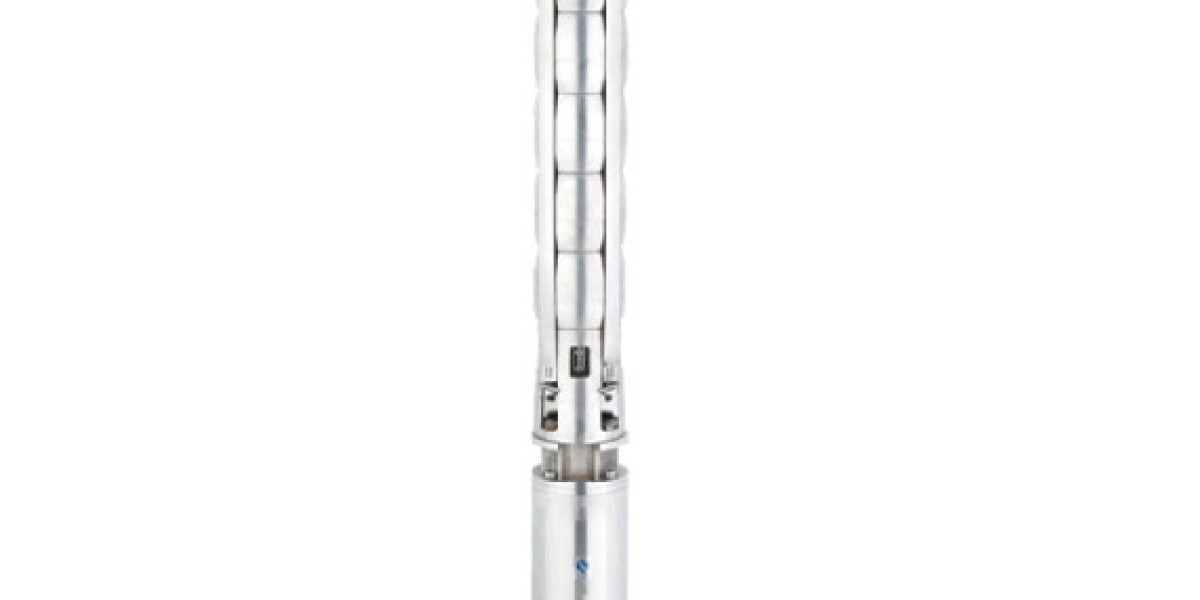

A deep submersible pump is designed for water extraction from deep wells where lifting height and pressure demand exceed the capability of standard pumping systems. In practical applications, a deep submersible pump operates under higher hydraulic pressure conditions, meaning multi-stage impeller structures are often required to maintain stable water output across long vertical distances. Unlike shallow drainage systems, a deep submersible pump must continuously overcome gravity and friction losses inside long well shafts, which makes internal efficiency and pressure balance more critical than external appearance.
In engineering use, pump structure changes significantly with depth requirements. Deep-well models are typically built with elongated bodies to fit narrow boreholes while housing multiple impeller stages inside the casing. These stages work together to gradually increase pressure, allowing water to travel upward from deeper underground sources. Material selection also plays a key role, since long-term submersion exposes components to moisture, sediment, and corrosion risk. Sealing integrity, shaft stability, and motor protection become essential factors in maintaining long-term operation reliability.
Compared with standard pumps used for surface drainage or short-distance transfer, deep-well systems are optimized for sustained high-head performance rather than simple volume movement.