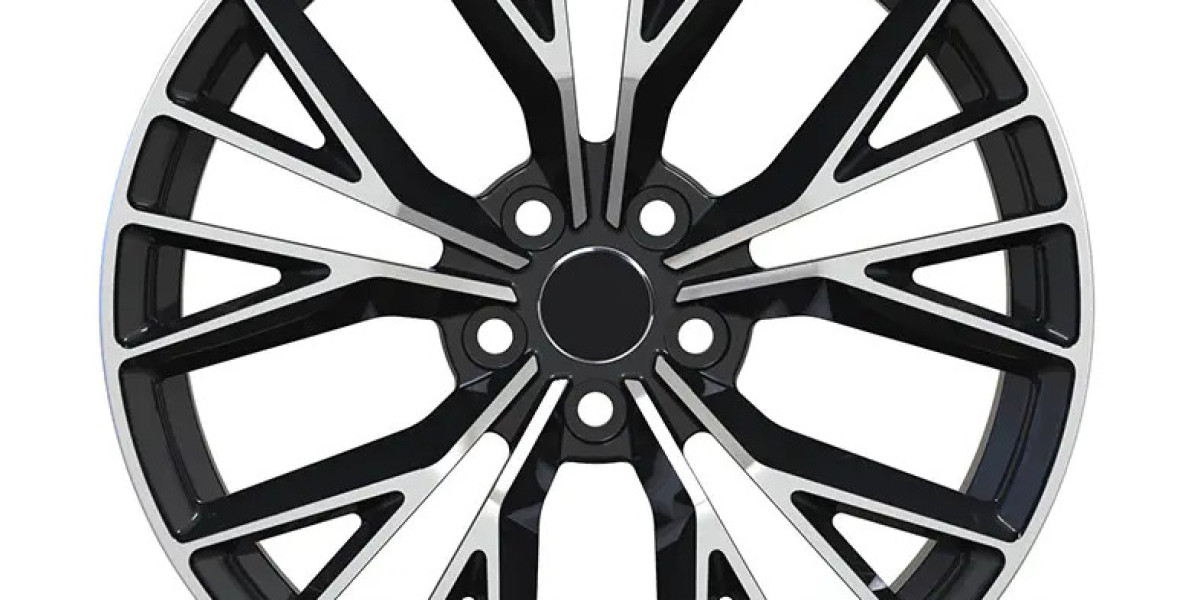

Forged wheels are widely recognized in performance automotive engineering due to their superior structural properties compared to cast alternatives. The manufacturing process begins with a solid billet of aluminum alloy, commonly 6061-T6, which is selected for its excellent balance of strength, machinability, and fatigue resistance.
The billet is heated to a controlled temperature range between approximately 400°C and 500°C, making it malleable without reaching a molten state. It is then placed into a hydraulic forging press capable of applying forces exceeding 8,000–10,000 tons. This extreme pressure compresses and refines the metal’s internal grain structure, aligning it in a directional flow pattern that follows the shape of the wheel.
After forging, the wheel blank undergoes CNC machining to achieve precise dimensional tolerances. Typical machining accuracy can reach ±0.05 mm, ensuring perfect fitment for high-performance vehicles. Heat treatment processes such as T6 tempering further enhance hardness and tensile strength, often increasing yield strength to over 270 MPa depending on alloy composition.
Compared to traditional casting, forging eliminates internal porosity and gas pockets, which significantly improves fatigue resistance. Laboratory testing often shows forged wheels lasting 2–3 times longer under cyclic load stress conditions.
In motorsport and premium automotive applications, reducing unsprung weight is critical. Forged wheels are typically 20–30% lighter than cast wheels of equivalent size, improving acceleration response, braking efficiency, and suspension performance.
A modern Forged Wheel Factory integrates automated forging presses, CNC machining centers, and 3D structural simulation systems (FEA analysis) to ensure every wheel meets strict safety and performance standards before delivery.
The result is a product that combines engineering precision with real-world durability, making forged wheels a preferred choice in both street performance and racing environments.