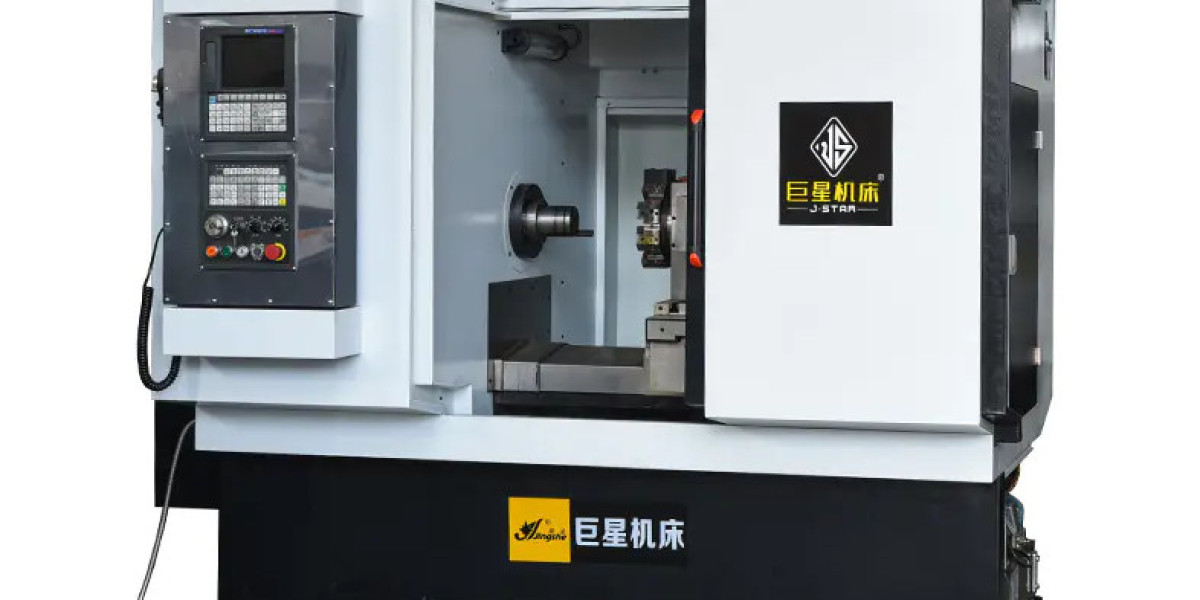

CNC turning technology has become a fundamental method in modern precision manufacturing. A CNC Turning Lathe is widely used for producing cylindrical components with strict dimensional accuracy, such as shafts, bushings, spacers, and threaded parts. The process relies on a rotating workpiece combined with a stationary cutting tool controlled by a programmed system.
In a typical operation, raw material such as steel, aluminum, or stainless steel is fixed in a chuck. The spindle rotates the material at speeds ranging from 500 RPM to over 3000 RPM depending on the material hardness and required surface finish. Cutting tools move along X and Z axes to remove material layer by layer, forming precise geometries.
One of the main advantages of CNC turning is its ability to maintain tight tolerances. In many industrial applications, dimensional accuracy can reach ±0.01 mm, which is critical for assemblies requiring perfect alignment. Surface roughness can also be controlled within Ra 1.6–3.2 μm depending on finishing passes.
CNC turning processes include facing, straight turning, taper turning, threading, grooving, and boring. These operations allow manufacturers to produce complex cylindrical parts in a single setup, reducing production time and minimizing human error.
Industries such as automotive, aerospace, hydraulics, and machinery heavily rely on CNC turning. For example, hydraulic systems require leak-free fittings with precise thread profiles, while automotive shafts require perfect concentricity to reduce vibration during operation.
Tool selection is also a key factor. Carbide inserts are commonly used due to their wear resistance and ability to handle high-speed cutting. Coolant systems are often applied to reduce heat buildup and extend tool life.
Overall, CNC turning continues to evolve with automation, multi-axis integration, and smart monitoring systems. These advancements help manufacturers achieve higher efficiency and consistency while reducing waste and production costs.