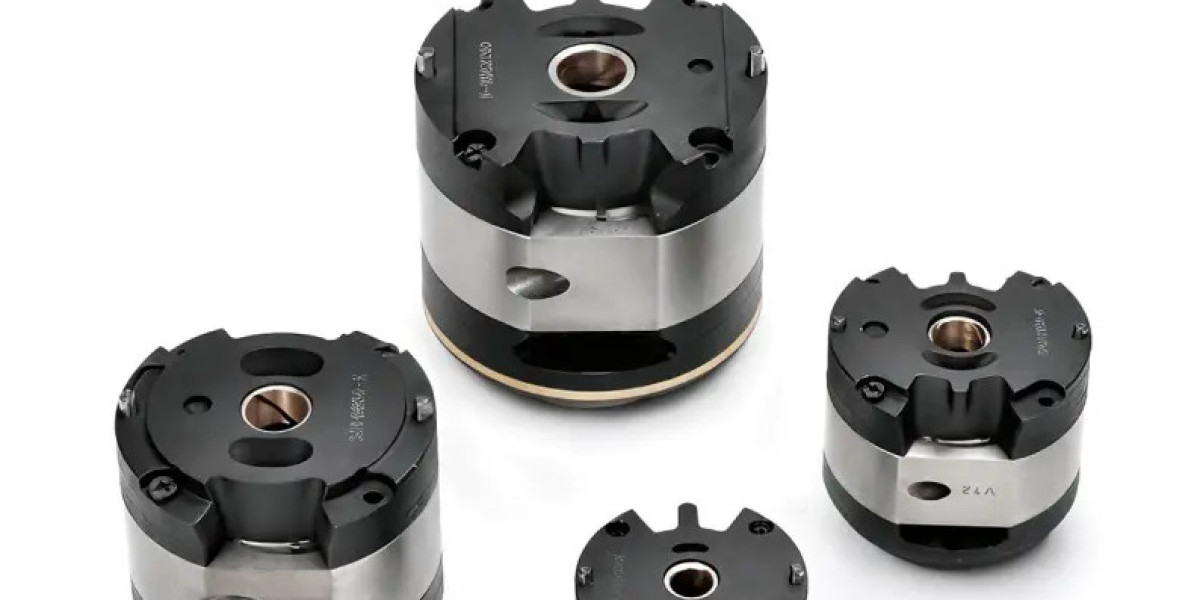

A Hydraulic Vane Pump is a type of positive displacement pump widely used in hydraulic systems where stable flow and moderate pressure are required. Its operation is based on a simple but highly efficient mechanical structure that converts rotational energy into hydraulic pressure through sliding vanes inside a rotor.
The core components include a rotor, vanes, a cam ring (stator), end plates, and inlet/outlet ports. The rotor is mounted off-center inside the cam ring, creating an eccentric motion path. As the rotor spins, centrifugal force and hydraulic pressure push the vanes outward, keeping them in contact with the cam ring surface. This contact forms sealed chambers between adjacent vanes.
During operation, these chambers continuously change volume. On the inlet side, the chamber volume increases, creating a vacuum that draws hydraulic oil into the pump. On the outlet side, the chamber volume decreases, compressing the fluid and forcing it out under pressure. This repeating cycle ensures smooth and continuous flow output.
Typical working pressure for a standard hydraulic vane pump is often in the range of 10–30 MPa, depending on design type and application requirements. Flow rates are generally proportional to rotor speed, commonly ranging from 10 L/min to over 200 L/min in industrial systems.
One of the main advantages of this mechanism is its low pulsation output. Compared with gear pumps, vane pumps produce smoother flow, reducing vibration and noise in hydraulic circuits. This makes them especially suitable for machine tools, plastic injection systems, and industrial presses.
However, vane pumps require clean hydraulic oil because contamination can affect vane movement and reduce sealing efficiency. Proper filtration is essential for long service life.
In summary, the Hydraulic Vane Pump delivers reliable, stable hydraulic energy through a simple but precise mechanical principle, making it a key component in modern hydraulic engineering.