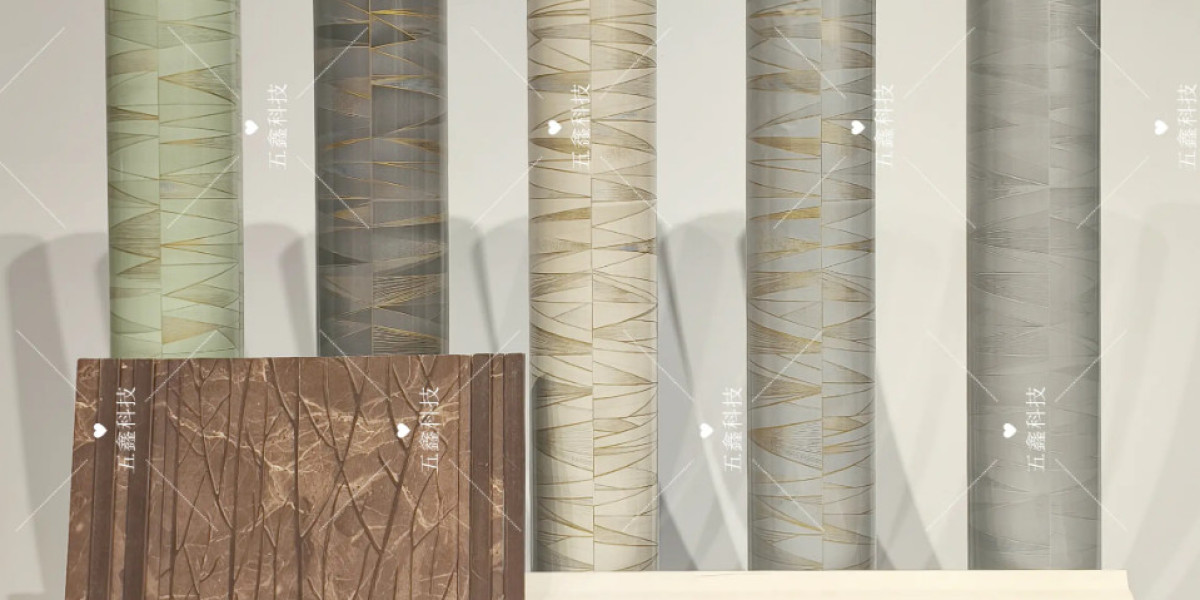

PVC Hot Stamping Foil is widely used in industrial decoration, packaging, and surface finishing applications due to its ability to transfer precise patterns and metallic effects under controlled heat and pressure. Its performance depends heavily on its multilayer structure and the interaction between those layers during the stamping process.
A typical PVC hot stamping foil consists of four functional layers. The carrier layer, usually a polyester film around 12–25 microns thick, provides structural stability during handling and processing. Above it is the release layer, which allows the decorative coating to detach cleanly once heat is applied. The third layer is the decorative or color layer, which can include metallic pigments, matte pigments, or holographic effects. Finally, the adhesive layer is activated during stamping, typically at temperatures ranging from 90°C to 140°C depending on substrate type.
During operation, heat and pressure are applied through a heated die or roller system. Under pressure levels of approximately 0.3–0.6 MPa, the adhesive layer softens and bonds to the substrate surface. Once cooled, the carrier film is peeled away, leaving a clean decorative finish.
One of the key advantages of this system is its ability to achieve sharp edge definition without the need for liquid inks or solvents. This makes it particularly suitable for PVC boards, plastic housings, furniture panels, and synthetic packaging materials. The absence of ink bleeding ensures high clarity even on detailed graphics.
Surface compatibility plays an important role in adhesion quality. Smooth PVC substrates typically achieve transfer efficiencies above 95%, while textured surfaces may require adjusted pressure or longer dwell times of 1–3 seconds. Temperature control is also critical—excess heat may cause distortion of the substrate, while insufficient heat leads to incomplete transfer.
PVC hot stamping foil is also valued for its chemical resistance and durability. Once bonded, it can withstand moderate abrasion, humidity exposure, and mild chemical contact, making it suitable for long-term decorative applications.
In modern manufacturing, process stability is achieved by carefully balancing temperature, pressure, and dwell time. Small variations in any of these parameters can significantly affect gloss level, adhesion strength, and color consistency.