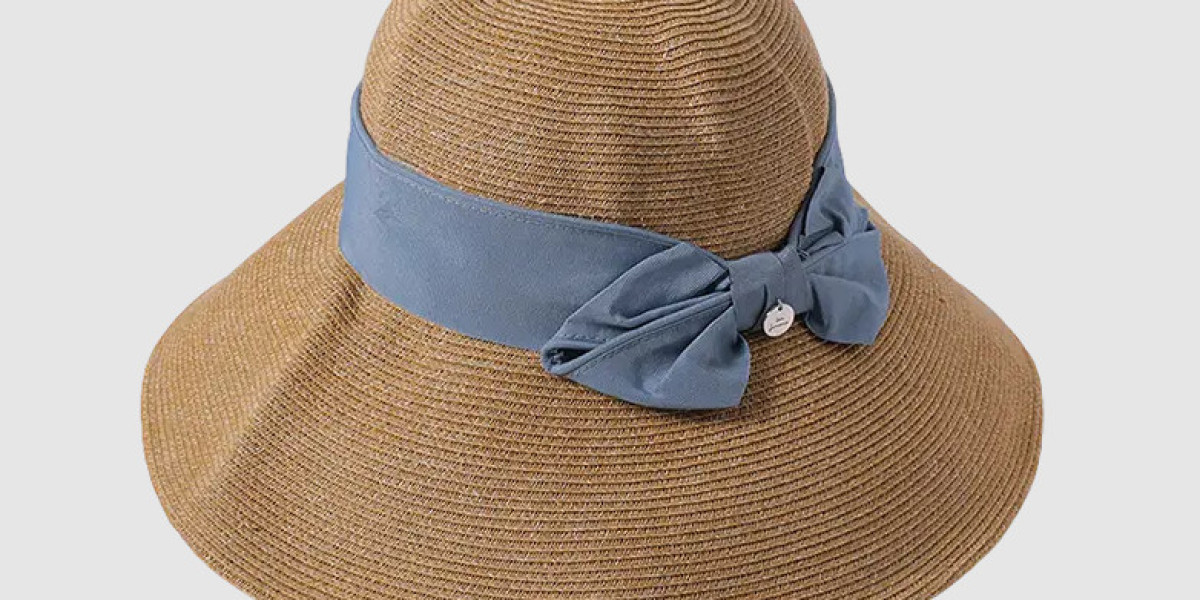

Handmade headwear has long been associated with craftsmanship, cultural heritage, and practical summer protection. Among these, Handcrafted Straw Hats for Women stand out as a blend of natural material engineering and artisanal weaving techniques that have been refined over generations.
Straw hats are typically made using plant-based fibers such as raffia palm, toquilla palm, or wheat straw. These fibers are processed into long strands that are either braided, coiled, or directly handwoven. One of the most traditional methods is spiral weaving, where a continuous fiber is shaped from the crown outward, creating a seamless structure that improves durability and breathability.
The quality of a straw hat is largely determined by weave density. Fine-grade hats can feature up to 12–16 stitches per inch, producing a tighter structure that resists deformation. Looser weaves, on the other hand, enhance airflow but reduce structural rigidity. This balance between ventilation and strength is a key factor in design.
Crown shaping is another technical aspect. Artisans use wooden blocks and steam forming to define crown height and brim curvature. A typical women’s straw hat may have a crown height of 10–12 cm and brim widths ranging from 7 cm to over 12 cm for sun protection purposes.
Modern handcrafted techniques still rely heavily on manual skill. Each hat may require 20–60 hours of labor depending on complexity. Despite technological advances, machine replication cannot fully reproduce the irregular charm and flexibility of handmade weaving.
Beyond function, these hats represent sustainable fashion choices. Natural fibers are biodegradable, lightweight, and breathable, making them ideal for warm climates.