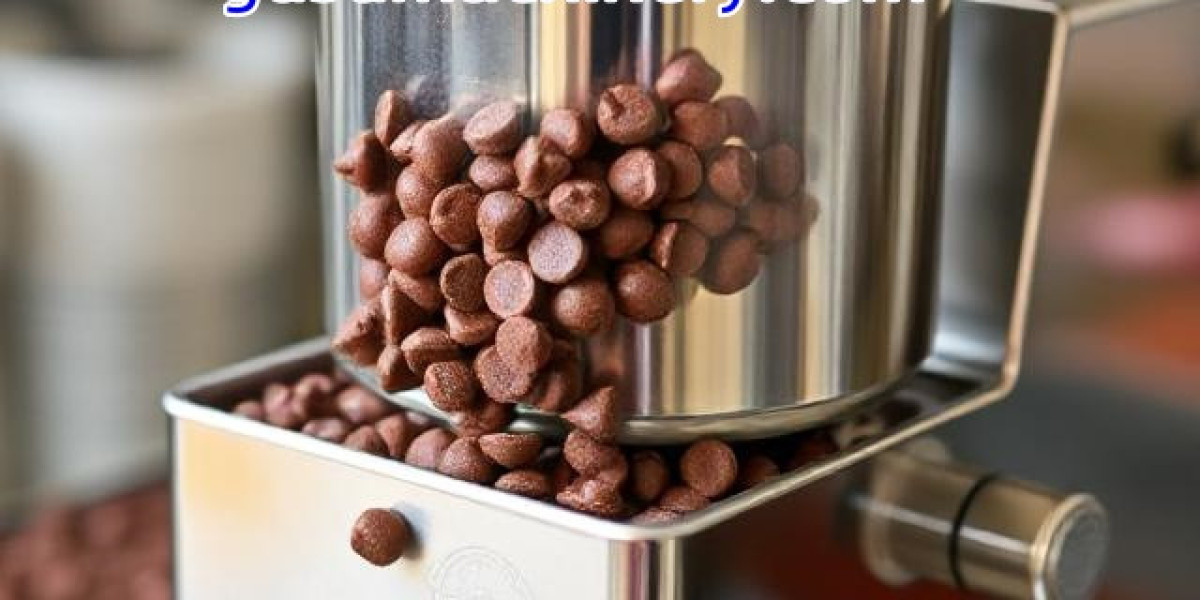

In confectionery manufacturing, a Chocolate Enrober can determine whether a product achieves a smooth and attractive finish, and a reliable Chocolate Enrober also helps factories maintain stable coating thickness across different production runs. For producers creating biscuits, wafers, cakes, candies, and snack products, the coating stage is not only about appearance. It directly affects texture, shelf appeal, product protection, and consumer perception. When the coating process is managed carefully, manufacturers can improve efficiency, reduce chocolate waste, and create products that look more refined in competitive retail environments.
1. Why Coating Consistency Matters in Confectionery
Chocolate coating creates the first visual impression for many confectionery products. Consumers often judge quality before tasting the product, which means uneven surfaces, inconsistent thickness, or visible defects can reduce product appeal immediately. A stable coating system helps manufacturers apply chocolate more evenly while reducing imperfections that may appear during cooling or packaging.
Consistency is also important for product protection. A balanced chocolate layer helps preserve texture and can improve handling stability during transportation and storage. If the coating is too thin, the product may lose structural integrity or appear incomplete. If it is too thick, production costs increase and texture balance may be affected. This is why manufacturers focus heavily on maintaining controlled coating conditions throughout the production cycle.
2. Managing Chocolate Flow and Surface Quality
Chocolate behaves differently depending on viscosity, temperature, and circulation speed. During coating operations, these variables must remain stable so the chocolate spreads smoothly over the product surface. If the chocolate becomes too thick, the coating may appear rough or uneven. If it becomes too fluid, excess chocolate may accumulate and create inconsistent product weight.
Surface quality also depends on airflow and vibration control during the coating stage. Proper management helps remove unnecessary chocolate while maintaining a smooth finish. This balance is essential because customers expect confectionery products to look polished and professionally made. Stable process control therefore improves both operational performance and final product presentation.
3. Hygiene, Cleaning, and Reliable Daily Operation
Food production systems must support practical sanitation procedures. Chocolate coating equipment should allow operators to access key surfaces easily so residue can be removed efficiently between production runs. If cleaning routines become too complicated, downtime increases and production scheduling becomes more difficult to maintain.
Reliable maintenance is equally important. Equipment that is easy to inspect allows technicians to identify wear before it causes larger operational problems. In chocolate production, even small interruptions can influence product appearance and batch consistency. A dependable system therefore combines coating performance with practical maintenance access, helping factories maintain stable operation over long periods of time.
4. Gusumachinery and Smarter Enrober Line Coordination
A coating line performs best when it works as part of an organized production sequence. Product feeding, coating, cooling, and transfer should all support one another in a logical flow so operators can monitor performance more effectively. When the workflow is structured clearly, manufacturers can reduce bottlenecks and improve overall efficiency.
Gusumachinery supports this practical production philosophy by emphasizing coordinated line planning and scalable manufacturing layouts. A well-organized coating system makes it easier to handle changing product styles, seasonal demand, and future capacity expansion. This flexibility is valuable for confectionery businesses that want to maintain stable quality while adapting to evolving market requirements.
5. Preparing for Long-Term Production Growth
Modern confectionery manufacturers often need to introduce new product types, coating styles, and packaging formats while maintaining consistent quality standards. A flexible coating process allows factories to adapt to those changes without creating unnecessary operational disruption. Stable equipment performance also helps manufacturers reduce waste and maintain predictable production costs over time.
Long-term success depends heavily on repeatability. Factories that consistently produce smooth, attractive chocolate-coated products are more likely to build strong customer trust and maintain competitive market positioning. Reliable coating systems support that consistency by helping manufacturers maintain stable chocolate flow, accurate coating control, and dependable production performance. For companies reviewing chocolate processing equipment and coating solutions, additional information is available at https://www.gusumachinery.com/product .