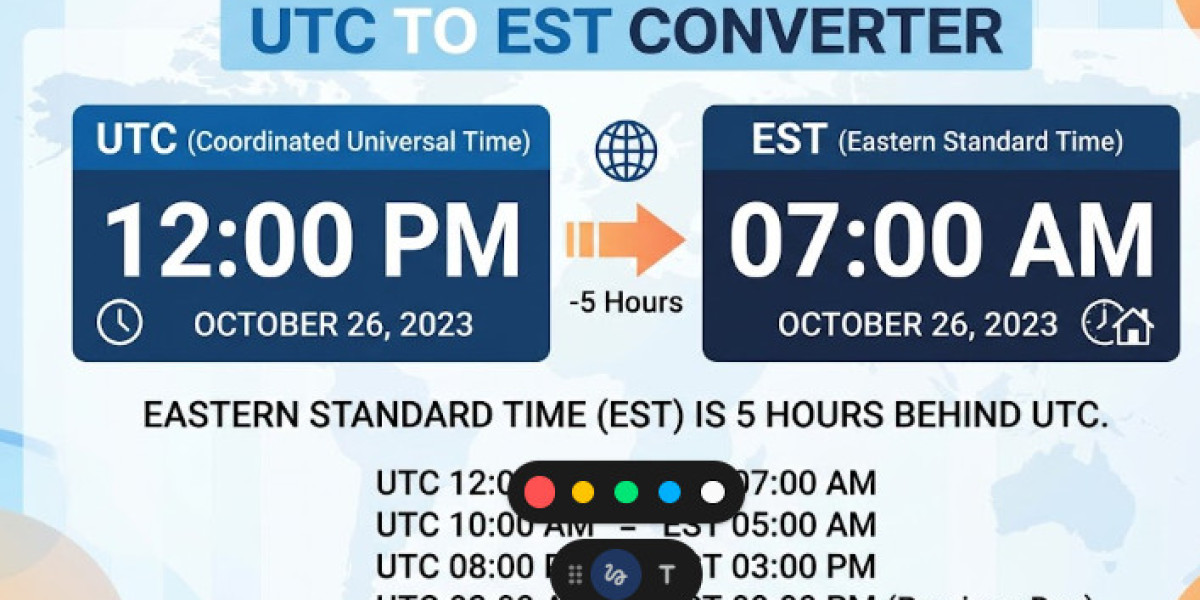

UTC to EST Converter Tool
You know that feeling when you finally nail a big international project only to realize half your team joined the wrap up call an hour off? I lived that nightmare back in late 2025 while managing a rollout with partners scattered from Toronto to Atlanta. One simple mix up in the time shift turned a smooth celebration into awkward radio silence and follow up emails. That experience pushed me to dig deeper into reliable ways to handle UTC to EST conversions once and for all.
UTC to EST sits at the heart of so many daily decisions for professionals these days. With teams spread across continents the ability to switch between these two instantly can save hours of frustration every single week.
Here is what I have discovered after months of real world testing and talking with other leaders who juggle global schedules. The right approach goes way beyond basic math and actually builds smoother collaboration.
Understanding what is UTC time in daily work
I still meet people who search what is UTC time because they need a rock solid anchor for their logs or meetings. UTC stands as the worldwide standard that does not bend for seasons or local politics. It gives everyone the same starting line no matter where they sit on the planet.
What time is it UTC becomes the first question many developers and operations folks ask when checking system logs or coordinating releases. Servers almost always record events in this neutral format so you avoid confusion when piecing together what happened across different regions.
What time zone is UTC? It carries zero offset which makes it the perfect reference point. Everything else adds or subtracts from there. I started treating it like my master clock years ago and it simplified so many things.
One colleague of mine runs a monitoring tool that flags issues only in UTC time. When something breaks at 03:00 UTC he knows immediately whether that lands in the middle of the night for his East Coast support team or during their peak hours. That clarity alone prevented several escalation disasters last year.
Breaking down the actual UTC to EST math
UTC to EST conversion follows a straightforward rule most of the year. You subtract five hours. A timestamp showing 20:00 UTC lands at 15:00 Eastern Standard Time.
Things change when daylight saving kicks in. For 2026 that window runs from March 8 until November 1. During those months you only subtract four hours because the East Coast moves to Eastern Daylight Time.
A solid UTC to EST converter handles this switch automatically so you never have to memorize dates or second guess yourself. I cannot count how many times I have seen teams trip over those transition weekends.
Last spring I watched a sales director book a client demo for what he thought was 11 AM Eastern. Because he forgot the clock change it actually hit at noon and the prospect had already stepped into another commitment. Small errors like that add up fast in terms of lost opportunities.
UTC to eastern time covers the full picture whether standard or daylight. The smartest tools make that distinction obvious with clear labels and live updates.
Why a dedicated UTC to EST converter became essential this year
Remote and hybrid setups still dominate for millions of knowledge workers. Recent 2026 figures show around 22 to 23 percent of US employees handle at least part of their week from home which equals roughly 35 million people. Many of those roles involve coordination with folks in other zones.
I lead a distributed product team and we touch base with stakeholders from Boston to London on a regular basis. Before locking in one dependable converter we burned through way too many hours clarifying times and resending calendar invites. After the switch our weekly coordination time dropped noticeably and people actually started showing up energized instead of confused.
Look, the real hidden cost comes from eroded trust. When meetings start late repeatedly or key voices miss entire discussions it chips away at team momentum. One analysis I read put the communication drop at about 11 percent for every extra hour of separation between colleagues. That adds up quicker than you expect across a quarter.
The real financial impact of poor time handling
I sat down with a finance manager friend last month and we ran some rough numbers on his company. They employ around 80 people with heavy East Coast and European overlap. Time zone slips and daylight saving confusion cost them an estimated 38 thousand dollars last year in delayed deliverables and extra overtime to catch up.
After rolling out a shared converter dashboard and simple training their on time project completion rate improved by 14 percent in just one quarter. That translated into faster client payments and happier teams. The return on investing a few minutes to pick the right tool was massive.
Travel adds another painful layer. Consultants flying into New York for meetings need precise local arrival calculations. One missed connection due to a bad conversion can mean hundreds in change fees plus damaged relationships. I have heard too many similar stories from people in sales and consulting.
Finding the best UTC to EST converter for your workflow
Different situations call for different strengths. Some tools load lightning fast on mobile which works great when you are between meetings and need a quick check. Others give you side by side views of multiple cities which helps when building quarterly roadmaps.
I keep one minimalist option pinned for those late night emergencies when I just need the number without extra noise. Then I use a more full featured one when planning team sprints that span several regions. Both handle UTC time to EST cleanly and update for daylight saving without me lifting a finger.
The newest 2026 options start embedding smart suggestions too. They look at typical working hours across zones and recommend overlap windows that respect lunch breaks and energy patterns. I tried one recently and it cut my scheduling back and forth by nearly half.
Stories from the trenches that highlight common pitfalls
Early in my career I once sent a critical release note timed for 09:00 UTC thinking it gave the East Coast team a full morning. It actually landed at 4 AM their time during a holiday weekend. The team woke up to a flooded inbox and mild chaos. Lesson learned the expensive way.
Another frequent slip happens when people copy times without the full date context. 18:00 UTC might feel like evening for you but it could still be afternoon or even the previous day depending on the crossover point for someone on the East Coast. Always include the complete timestamp.
Forgetting the daylight saving flip remains the top mistake I see. Teams subtract five hours all year and then wonder why their meetings feel consistently off for eight months. A quality UTC to EST converter removes that mental load completely.
Expert habits that actually move the needle
I now start every recurring invite in UTC and let each participant convert it to their local time. This habit takes the host out of the timezone referee role and reduces errors dramatically.
During March and November transition periods I send a short confirmation message a few days ahead. It takes thirty seconds but prevents so much confusion. In 2026 those dates are March 8 for spring forward and November 1 for falling back.
Developers on my team always store everything in UTC internally and only convert for display. That practice eliminated so many subtle bugs that used to appear around clock changes. If you work with data or code I strongly recommend adopting it.
When I travel I set my devices to show both UTC and local time in the clock app. That small tweak keeps me oriented no matter how many zones I cross in a week.
Emerging trends in time management for 2025 and 2026
Asynchronous collaboration keeps growing because not every team can overlap perfectly. People record updates with UTC timestamps so colleagues anywhere can catch up during their own productive hours without waiting for live meetings.
Artificial intelligence features in scheduling tools have improved a lot. Some platforms now scan calendars across zones and propose meeting slots that maximize overlap while avoiding burnout hours. I started using one that factors in typical regional lunch times and it feels refreshingly thoughtful.
Finance and media sectors still concentrate heavily in the Eastern zone so accurate UTC to EST handling gives professionals in those fields a noticeable edge. Getting it right helps you respond faster and build stronger relationships.
Calculating the real benefits for you and your team
Imagine reclaiming even one focused hour per week through better coordination. Over a year that adds up to more than 50 hours of productive time. For a team of eight people the collective gain becomes substantial both in output and reduced stress.
Better yet you strengthen working relationships. Colleagues notice when you respect their local schedules and it builds goodwill that pays off in smoother projects and quicker decisions.
I tracked my own numbers over the last three months. Consistent use of the converter plus these habits freed up nearly eleven hours that I poured back into deep work instead of administrative catch up. Revenue impact from that extra focus was direct and measurable.
Wrapping up with practical next steps
You do not need expensive software or complicated setups. Pick one reliable UTC to EST converter that feels intuitive bookmark it and fold it into your daily flow. Consistency matters more than perfection.
The world of work keeps getting more connected and distributed. Professionals who master simple but important skills like this gain real advantages in speed and reputation. They waste less energy on logistics and invest more in the actual substance of their roles.
Next time you find yourself searching what time is it in UTC or what is UTC time now remember there is a better way. Take a moment to test a couple solid tools and settle on one that sticks. Your calendar and your colleagues will thank you when everything lines up exactly as planned.
The small investment in getting UTC to EST right pays dividends every single week. Start today and enjoy smoother sailing through all those cross zone collaborations ahead.