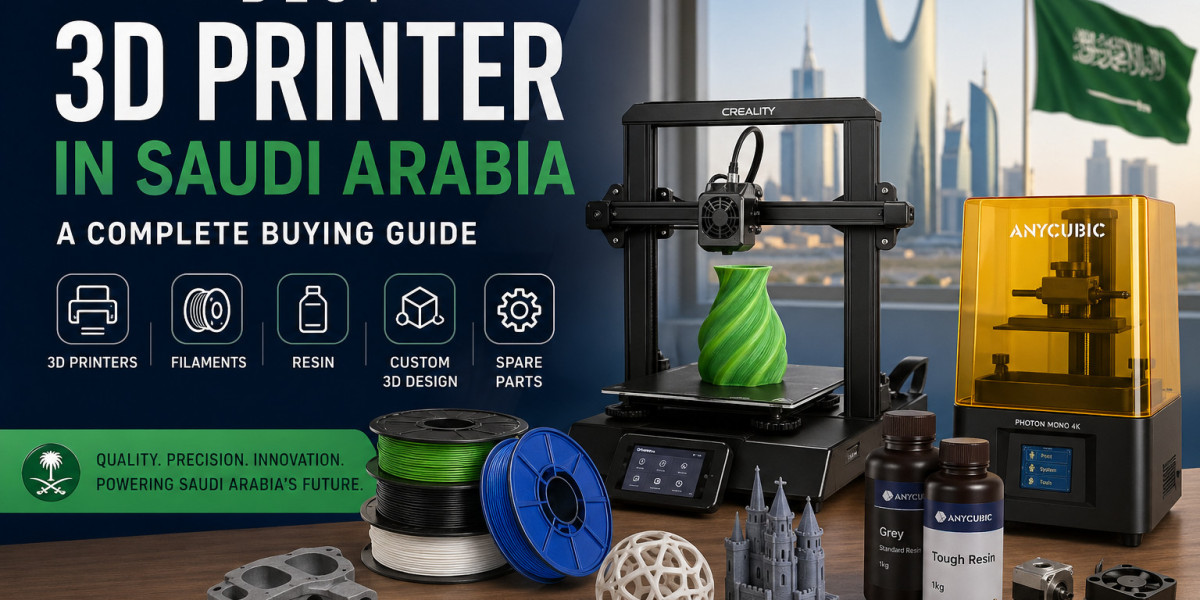

The 3D printer industry has transformed how businesses and hobbyists create products. From rapid prototyping to custom designs, 3D printing is now a core technology in manufacturing, education, and even home use.
If you're planning to buy a 3D printer or upgrade your setup, this guide will help you understand types, materials like PLA filament, popular options like Creality 3D printer, and factors that influence 3D printer price.
What is a 3D Printer?
A 3D printer is a machine that creates physical objects layer by layer from a digital file. This process is called additive manufacturing.
Unlike traditional methods that cut or mold materials, 3D printing reduces waste and allows for highly customized designs.
Key Benefits:
- Faster prototyping (up to 70% time savings)
- Reduced material waste
- Cost-effective for small production runs
- High design flexibility
According to industry reports, the global 3D printing market is expected to exceed $50 billion by 2030, showing strong growth across industries.
Types of 3D Printers Explained
Choosing the right type of 3D printer depends on your needs and budget.
1. FDM (Fused Deposition Modeling)
The most common type for beginners and businesses.
- Uses thermoplastic filaments like PLA
- Affordable and easy to use
- Ideal for prototypes and basic models
2. Resin (SLA/DLP) Printers
Perfect for high-detail prints.
- Uses liquid resin cured by light
- High precision and smooth finish
- Best for jewelry, dental, and miniatures
3. Industrial 3D Printers
Used for large-scale manufacturing.
- Expensive but highly advanced
- Supports multiple materials
- Used in aerospace, automotive, and healthcare
Why PLA Filament is the Best Starting Material
PLA filament is the most popular material for 3D printing, especially for beginners.
Advantages of PLA Filament:
- Easy to print (low warping)
- Eco-friendly (biodegradable)
- Low printing temperature (180–220°C)
- Minimal odor
Use Cases:
- Educational projects
- Decorative items
- Prototypes
Compared to ABS, PLA is safer and requires less setup, making it ideal for home users.
Creality 3D Printer: A Reliable Choice
When discussing affordable and reliable 3D printers, Creality 3D printer models are among the top choices globally.
Popular Models:
- Ender 3 Series
- CR-10 Series
- Ender 5
Why Choose Creality?
- Budget-friendly pricing
- Large community support
- Easy upgrades and spare parts availability
- Consistent print quality
Creality printers are widely used by beginners and professionals due to their balance of price and performance.
Understanding 3D Printer Price
The 3D printer price varies depending on features, size, and technology.
Price Breakdown:
| Category | Price Range | Best For |
|---|---|---|
| Entry-Level | $150 – $400 | Beginners, hobbyists |
| Mid-Range | $400 – $1,500 | Small businesses |
| Professional | $1,500 – $10,000+ | Industrial applications |
Factors Affecting Price:
- Build volume
- Print resolution
- Material compatibility
- Brand reputation
- Additional features (auto-leveling, touchscreen)
Pro Tip: Start with a mid-range printer if you plan to scale your work.
How to Choose the Right 3D Printer
Selecting the right 3D printer requires clarity on your goals.
Ask Yourself:
- What will I print? (Prototypes, models, functional parts)
- What material will I use? (PLA, resin, ABS)
- What is my budget?
Key Features to Look For:
- Print resolution (microns)
- Build size
- Ease of use
- Software compatibility
- Spare parts availability
Common Mistakes to Avoid
Many beginners make costly mistakes when buying their first 3D printer.
Avoid These:
- Choosing the cheapest option without research
- Ignoring filament compatibility
- Overlooking maintenance requirements
- Not considering future upgrades
Investing wisely saves time, money, and frustration.
Chart/Table Idea (For Visual Content)
Title: “3D Printer Comparison Chart”
Description:
A comparison table showing different 3D printer types (FDM vs Resin vs Industrial) based on:
- Price
- Print quality
- Speed
- Ease of use
- Best applications
This helps users quickly decide which printer fits their needs.
Real-World Applications of 3D Printing
3D printing is not just a hobby—it’s transforming industries.
Key Industries:
- Healthcare: Custom prosthetics and implants
- Automotive: Rapid prototyping
- Architecture: Scale models
- E-commerce: Custom products
In fact, companies report up to 50% cost reduction in prototyping using 3D printers.
Maintenance & Long-Term Value
A 3D printer is an investment. Proper maintenance ensures long-term performance.
Maintenance Tips:
- Clean the nozzle regularly
- Use high-quality PLA filament
- Keep the print bed level
- Store filament in dry conditions
Regular upkeep improves print quality and extends machine life.
FAQs About 3D Printers
1. What is the best 3D printer for beginners?
A beginner should start with an FDM printer like a Creality model due to its affordability and ease of use.
2. Is PLA filament better than ABS?
Yes, PLA filament is easier to use, eco-friendly, and ideal for beginners, while ABS is stronger but harder to print.
3. How much does a good 3D printer cost?
A good-quality 3D printer typically costs between $300 and $1,000 depending on features and brand.
4. Can I use different filaments in one printer?
Yes, but ensure your printer supports the temperature and requirements of the material.
Conclusion: Invest Smart in 3D Printing
The 3D printer market offers endless possibilities, whether you're a hobbyist or a business owner. By understanding printer types, choosing the right PLA filament, exploring reliable options like Creality 3D printer, and evaluating the 3D printer price, you can make a confident decision.
3D printing is no longer the future—it’s the present.
Call-to-Action
Ready to start your 3D printing journey?
Explore high-quality 3D printers, filaments, resin, and spare parts at Arkaki Shop today. Whether you're a beginner or a professional, find the perfect tools to bring your ideas to life.