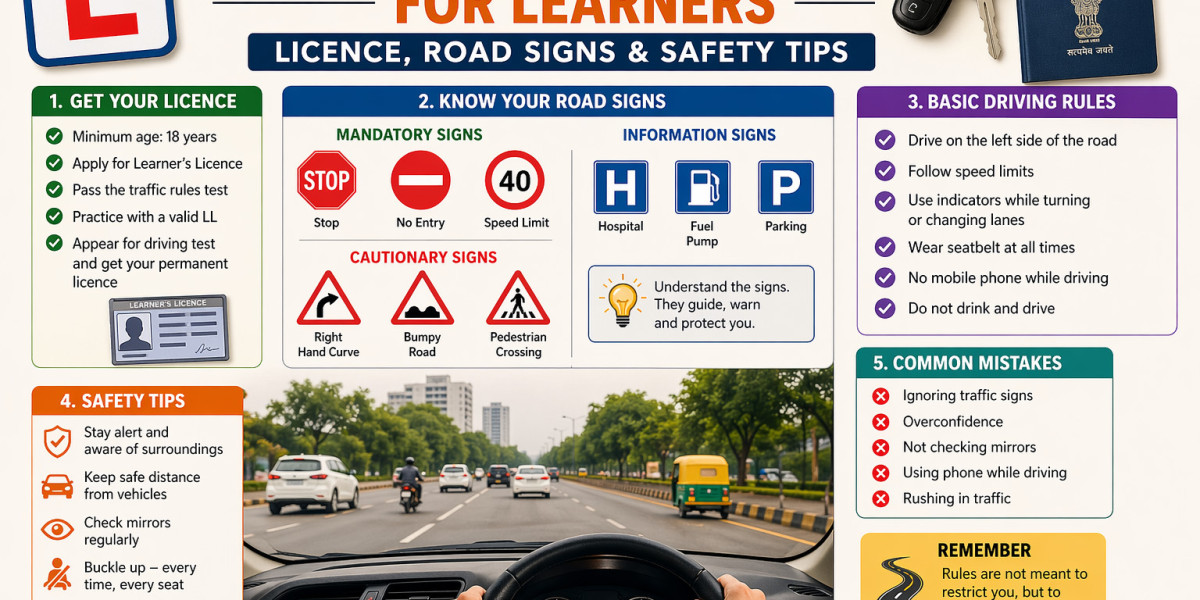

Learning to drive in India isn’t just about handling a car — it’s about understanding how the road actually works. With busy streets, mixed traffic, and changing conditions, knowing the basic driving rules in India becomes just as important as knowing how to steer or brake.
If you’re just getting started, this guide will help you understand the essentials — from getting your driving licence in India to recognizing traffic signs and following simple safety habits that make a real difference.
Getting a Driving Licence in India (What You Need to Know)
Before you start driving independently, you’ll need a valid licence. The process is fairly structured, though it can feel confusing at first.
It usually begins with a learner’s licence. To apply, you must:
Be at least 18 years old (for a private vehicle)
Submit basic documents (ID proof, address proof, age proof)
Pass a basic traffic rules test
This test checks your understanding of road signs, driving laws, and safety rules in India. It’s not overly difficult, but it does require preparation.
Once you have your learner’s licence, you can practice driving — but only under supervision. After a minimum period (usually 30 days), you can apply for a permanent driving licence by taking a driving test.
Understanding Traffic Signs in India
If there’s one thing every learner should focus on early, it’s traffic signs.
They’re not just symbols on the road — they’re instructions. Missing them can lead to fines or, worse, accidents.
Traffic signs in India are generally divided into three types:
1. Mandatory Signs
These are rules you must follow. For example:
Stop
No entry
Speed limit
Ignoring these can result in penalties.
2. Cautionary Signs
These warn you about upcoming conditions:
Sharp turns
Narrow roads
Pedestrian crossings
They don’t command, but they prepare you.
3. Informational Signs
These provide useful guidance:
Parking areas
Hospitals
Fuel stations
For beginners, learning the meaning of traffic signs in India is one of the quickest ways to drive more confidently.
Basic Driving Rules Every Learner Should Follow
Once you’re on the road, a few simple rules go a long way. These may sound obvious, but they’re often ignored.
Always drive on the left side of the road
Follow speed limits — especially in city areas
Use indicators before turning or changing lanes
Wear a seatbelt (and ensure passengers do too)
Avoid using mobile phones while driving
These are not just “good habits.” They are part of the official road safety rules in India.
Safety Tips for New Drivers
Driving in India can feel overwhelming at first. Traffic isn’t always predictable, and conditions change quickly.
A few practical tips can make things easier:
Start driving during less crowded hours
Keep a safe distance from other vehicles
Stay calm — rushing usually leads to mistakes
Watch for pedestrians, especially in busy areas
Use mirrors regularly, not occasionally
One thing many learners overlook is awareness. It’s not just about your driving — it’s about what others might do unexpectedly.
Common Mistakes Learners Make
Most beginners go through a similar learning curve. Some mistakes are almost expected.
Overconfidence after a few days of practice
Ignoring smaller traffic signs
Not checking mirrors frequently
Driving too fast to “keep up” with others
It’s better to drive slightly slower and stay in control than to match the speed of experienced drivers right away.
Why Following Driving Rules Matters
Sometimes, rules can feel restrictive — especially when others around you seem to ignore them. But they exist for a reason.
Following traffic rules in India helps:
Reduce accidents
Improve traffic flow
Protect both drivers and pedestrians
More importantly, it builds confidence. When you know what you’re doing and why, driving feels less stressful.
Using Tools to Improve Your Driving Knowledge
If you’re serious about learning, a few tools can help beyond just practice.
A traffic signs guide can help you memorize symbols quickly
Online mock tests for the learner’s licence exam
Basic awareness tools like a road safety checklist
Conclusion
Learning to drive in India is a process. It takes time, patience, and a bit of awareness.
Understanding driving licence rules, recognizing traffic signs, and following simple road safety tips can make that process much smoother. You don’t need to get everything perfect from day one — but building the right habits early makes a big difference.
In the end, safe driving isn’t just about passing a test. It’s about being consistent, staying alert, and making responsible choices on the road.