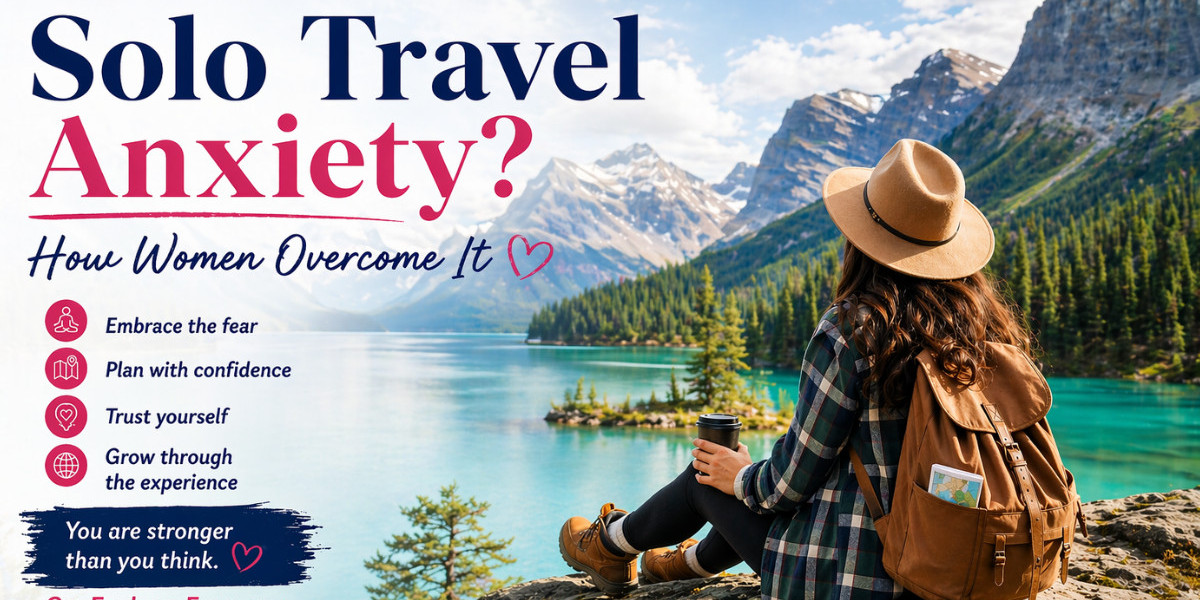

Every women travel blog you read will tell you that solo travel is life-changing — and it is. But very few talk honestly about solo travel anxiety: the racing heart before you board that flight alone, the stomach-drop moment you realise no one is coming to help you figure out the bus system. This article is for the woman standing at that exact edge — excited and terrified in equal measure.
Solo travel for women has never been more popular, yet the anxiety that accompanies it remains one of the most underreported parts of the journey. According to travel surveys, over 65% of women who travel alone say nerves almost stopped them from booking in the first place. The good news? Every single one of them is glad they went.
This women travel blog breaks down where solo travel anxiety comes from, what it really looks like on the ground, and — most importantly — the practical strategies women worldwide use to move through fear and into freedom.
Why Solo Travel Anxiety Is So Common Among Women
Women are socialised from childhood to see the world as a place requiring caution. We are taught to walk in pairs, text when we arrive, and avoid certain streets after dark. This conditioning doesn't simply disappear when you buy a solo plane ticket. It travels with you — sometimes louder than your carry-on wheels on cobblestones.
Solo travel anxiety for women often layers multiple fears together: safety concerns, the discomfort of being alone in public, fear of being perceived as vulnerable, and the social stigma of eating or exploring without a companion. Understanding this layering is the first step to unwinding it.
The Difference Between Anxiety and Intuition
One of the most empowering realisations women solo travellers report is learning to distinguish between anxiety (a general dread with no specific target) and intuition (a sharp, situational signal). Anxiety says: "Something bad might happen somewhere." Intuition says: "Leave this street right now." Trusting one while managing the other is a skill — and travel is the fastest classroom.
How Social Media Distorts the Picture
The highlight reels on every women travel blog and Instagram feed show golden sunsets and effortless smiles. They rarely show the hour spent lost, the loneliness of a Tuesday evening in a strange city, or the moments of real fear. When your reality doesn't match the curated content, anxiety spikes. Knowing this distortion exists helps you prepare for the full, messy, wonderful truth of solo travel.
Practical Strategies Women Use to Overcome Solo Travel Anxiety
There is no single cure for solo travel anxiety — but there is a toolkit. The women who travel most confidently aren't fearless; they are simply better equipped. Here are the strategies that consistently surface in conversations across the solo travel community.
1. Start Small and Build Evidence
Rather than launching straight into a six-week backpacking trip, many experienced solo travellers recommend a "proof of concept" trip: one night in a neighbouring city, or a solo weekend at a place you've visited before. Each successful solo experience deposits confidence into an internal bank account. By the time you land in a new country, you have evidence that you can handle the unexpected.
2. Over-Prepare the First Trip, Then Gradually Let Go
For your first solo journey, there is no shame in knowing your accommodation address by heart, downloading offline maps, and researching transport routes in advance. Preparation reduces the cognitive load anxiety feeds on. As you gain experience, you will find yourself needing less and less of this scaffolding — and enjoying the spontaneity more.
Pro Tip
Download Google Maps offline for your destination before you land. Knowing you have navigation even without data removes one of the most common anxiety triggers for first-time solo travellers.
3. Choose a Female-Friendly First Destination
Some destinations are statistically safer and culturally more welcoming for solo women travellers. Countries like Japan, Portugal, New Zealand, Iceland, and Taiwan consistently rank highly on solo female safety indices. Choosing a forgiving first destination — one with good infrastructure, English signage, and a strong tourist trail — lets you build skills without unnecessary difficulty.
4. Connect Before You Arrive
Online communities for solo women travellers are warm, vast, and remarkably generous with local knowledge. Joining a Facebook group or Reddit thread for your destination before you depart means you arrive with recommendations, warnings, and often a WhatsApp group of fellow travellers. Loneliness is one of the deeper drivers of solo travel anxiety — and community dissolves it.
Share your itinerary with a trusted person at home
Check in at regular intervals via a simple messaging routine
Use a travel safety app such as bSafe or TripWhistle
Keep digital and physical copies of key documents
Know the local emergency number before you need it
Trust your gut — always — above any travel advice
What Changes When You Actually Go
Every woman interviewed for this women travel blog piece reported the same phenomenon: the anxiety was worse in the days and hours before departure. Once they were actually on the ground, moving through the world, it transformed into something closer to alertness — a heightened, energised presence that felt nothing like the dread they'd expected.
Solo travel forces a kind of radical self-reliance. You make every decision. You eat where you want, linger where you want, leave when you want. This autonomy — which can feel terrifying in anticipation — becomes deeply nourishing in practice. Many women describe returning from solo trips feeling not just braver, but fundamentally more themselves.
The Unexpected Gifts of Going Alone
When you travel alone, locals approach you more readily. Fellow travellers share tables more easily. Conversations happen that simply don't when you are part of a pair or group. Solitude creates an openness — a social permeability — that group travel rarely allows. The very thing that sparked your solo travel anxiety becomes the source of your richest experiences.
Solo travel is not about being fearless. It's about deciding that the life waiting on the other side of your fear is worth more than the comfort of staying put. Every woman who has done it will tell you the same thing: go. The anxiety won't disappear overnight, but it will — journey by journey — shrink to its proper size.
Frequently Asked Questions
Answers to the questions women actually search before their first solo trip
1Is solo travel safe for women?
Solo travel can absolutely be safe for women, though safety levels vary significantly by destination. Millions of women travel alone every year without incident. The key is informed preparation: researching your destination's safety ratings for female travellers, understanding local customs and dress norms, staying in well-reviewed accommodation, and trusting your instincts at all times. Solo travel anxiety often exaggerates risk — but basic precautions are always sensible regardless of your confidence level.
2How do I manage solo travel anxiety before my first trip?
Managing solo travel anxiety before a trip involves both practical preparation and mindset work. Practically: research your destination thoroughly, book your first night's accommodation in advance, and download offline maps. Mentally: acknowledge that anxiety is normal, journal your specific fears to see them clearly, and remind yourself of times you have navigated difficult or unfamiliar situations successfully. Starting with a shorter or closer trip builds confidence before tackling longer or more remote journeys.
3What are the best solo travel destinations for women beginners?
For women new to solo travel, destinations that consistently receive high marks include Japan (incredibly safe, orderly, and welcoming), Portugal (relaxed, friendly, and well-connected), New Zealand (stunning nature with excellent infrastructure), Iceland (one of the safest countries in the world), and Ireland (English-speaking with a famously warm culture). These destinations offer manageable challenge without excessive risk, making them ideal for building solo travel confidence.
4How do solo female travellers avoid feeling lonely?
Loneliness is one of the most honest concerns about solo travel, and there are real strategies to address it. Staying in hostels — even in a private room — puts you around other travellers naturally. Joining day tours or cooking classes creates instant social connection. Online communities for solo women travellers are generous with meet-up suggestions. Apps like Meetup and Bumble BFF (in its travel mode) connect travellers in the same city. Many solo travellers also find that a certain quality of solitude — being alone but surrounded by a city's energy — is deeply pleasurable rather than lonely.
5What should I pack as a solo female traveller to feel safer?
Beyond standard travel items, solo women travellers often recommend: a door wedge alarm (jams hotel doors and sounds if disturbed), a personal alarm keychain, a portable phone charger (dead phone = elevated anxiety), a money belt for passports and cards, and a small first aid kit. Equally important is having digital backups of all documents stored in the cloud, and a clear plan for who you contact and how in the event of an emergency. Feeling physically prepared dramatically reduces solo travel anxiety.
6How do I handle unwanted attention while travelling solo as a woman?
Unwanted attention is a reality in some destinations and a minimal concern in others — understanding the local context helps. Strategies that work across cultures include: dressing modestly where culturally appropriate, projecting confident body language (head up, purposeful stride), walking into a shop or café if you feel followed, having a fictional partner ("my husband is meeting me here"), and not engaging with persistent approaches. Trust your instincts completely. Moving away from a situation that feels uncomfortable is always the right call, regardless of whether the threat turns out to be real.
7Can solo travel actually help with anxiety and mental health?
Many women and mental health professionals report that solo travel, practised safely, can meaningfully improve anxiety over time. Navigating unfamiliar situations builds what psychologists call self-efficacy — the belief in your own ability to handle challenges. Each successful solo experience rewires the brain's threat response gradually. Women who travel alone frequently describe growing calmer, more decisive, and less reliant on external reassurance. Of course, for anyone managing clinical anxiety, it is worth discussing travel plans with a mental health professional to ensure the approach is supportive rather than overwhelming.
8What are the best apps and resources for solo female travellers?
A well-stocked digital toolkit makes solo travel far less anxious. Top apps include: Maps.Me or Google Maps (offline navigation), bSafe (safety check-in with GPS sharing), TripIt (organises all bookings in one place), iTranslate (real-time translation), and Hostelworld or Booking.com (accommodation with verified female-traveller reviews). For the community, the Facebook group "Solo Female Travelers" has millions of members and is invaluable for destination-specific advice. Reading a dedicated women travel blog for your region or trip style also provides current, real-world insight that guidebooks often miss.
9How do I tell my family I'm travelling solo as a woman without them worrying?
Family worry often mirrors your own solo travel anxiety — and addressing it proactively helps everyone. Share your detailed itinerary, accommodation names, and check-in schedule in advance. Show them evidence of your preparation: travel insurance documents, safety app setup, and destination research. Acknowledge their concern honestly rather than dismissing it. Propose a regular check-in method that feels manageable (a daily voice message, for example). Many women find that once their family sees them return safely and happily from a first solo trip, subsequent conversations become significantly easier.
10Is it normal to feel regret or want to go home during a solo trip?
Completely normal — and rarely discussed. Almost every experienced solo traveller can recall a low moment, often around day two or three, where they questioned their decision entirely. This phase is so common it is sometimes called the "day three dip." It usually passes within 24 hours, especially if you push yourself to interact with someone new, change your environment, or simply give yourself permission to have a slow, nurturing day. Very few women who push through that initial dip regret doing so. If feelings of distress persist or intensify, there is no shame in adjusting your plans — solo travel should ultimately serve your wellbeing.