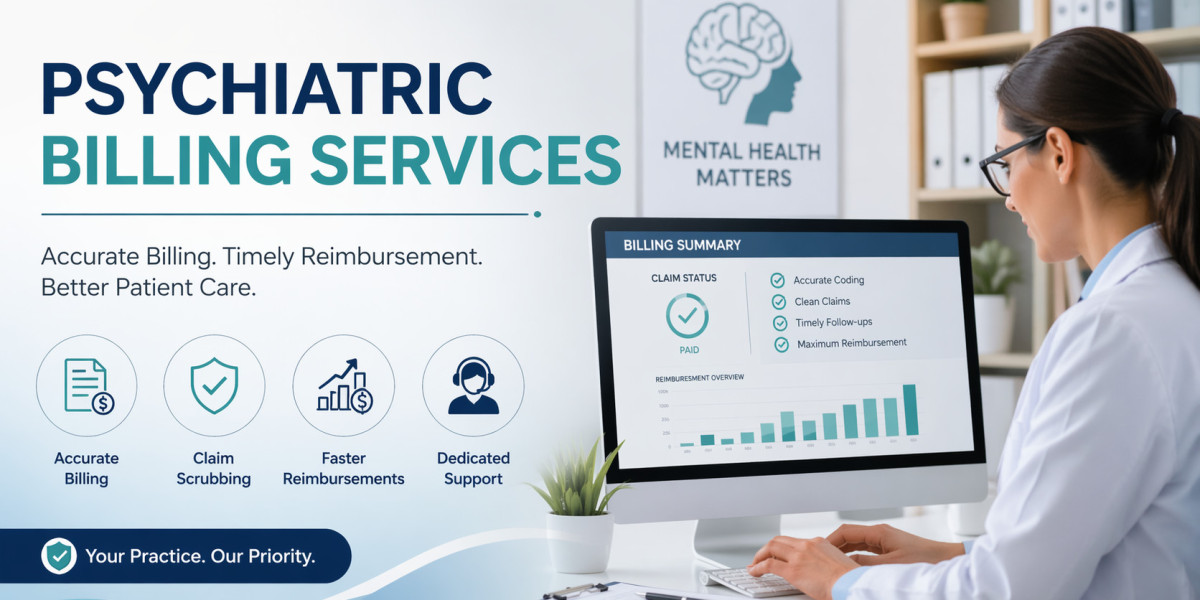

The Hidden Struggles Behind Psychiatric Billing (Pain-Point Intro)
Mental health providers already juggle a lot—patient care, emotional demands, compliance, and documentation. But one of the biggest silent burdens is billing. Psychiatric billing is not like general medical billing; it involves time-based codes, therapy session nuances, frequent claim rejections, and ever-changing payer rules. A simple coding mistake or missed modifier can delay payments for weeks or even months.
For many practices, in-house billing leads to revenue leakage, staff burnout, and compliance risks. According to industry data, nearly 20–30% of medical claims are initially denied, with a significant portion linked to coding or documentation errors. That’s a major hit for psychiatric practices operating on tight margins.
This is why many providers are choosing to outsource psychiatric billing—not just to save time, but to stabilize cash flow, reduce denials, and focus fully on patient care.
Why Psychiatric Practices Struggle with Billing
Psychiatric and behavioral health billing comes with its own set of challenges that make it more complex than most other specialties:
1. Complex CPT Coding Structure
Psychiatry relies heavily on time-based CPT codes (like 90834, 90837), add-on codes, and evaluation & management (E/M) services. Miscalculating session duration or missing an add-on can directly affect reimbursement.
2. Frequent Documentation Requirements
Payers require detailed notes to justify services. Missing elements like start/end times or medical necessity can result in claim denials.
3. High Denial Rates
Behavioral health claims face stricter scrutiny. Insurance companies often request additional documentation or reject claims due to minor inconsistencies.
4. Prior Authorization Challenges
Many psychiatric services require pre-authorization. Delays or errors here can lead to non-payment.
5. Insurance Variability
Coverage for mental health services varies widely between payers. Navigating different rules, limits, and reimbursement policies is time-consuming.
6. Compliance Risks
HIPAA regulations and mental health confidentiality rules are stricter. Errors can lead to legal and financial consequences.
Because of these complexities, relying solely on an in-house team can become inefficient and costly over time.
How to Choose the Right Psychiatric Billing Partner
If you’re planning to outsource psychiatric billing, choosing the right partner is critical. Not all billing companies understand the nuances of behavioral health.
Here’s what to look for:
- Specialty Expertise
Ensure the company has proven experience in psychiatric and behavioral health billing—not just general medical billing. - Certified Coders
Look for teams with CPC or equivalent certifications who understand therapy codes and E/M combinations. - Transparent Reporting
You should get clear insights into claims, denials, revenue cycle, and collections. - Denial Management Process
A strong billing partner should have a structured approach to identify, appeal, and reduce denials. - Technology Integration
Compatibility with your EHR/EMR system is essential for seamless workflows. - HIPAA Compliance
Data security must be non-negotiable, especially for mental health records. - Dedicated Account Manager
Personalized support ensures faster issue resolution and better communication.
Choosing the right partner isn’t just about cost—it’s about long-term revenue growth and operational efficiency.
7 Proven Ways to Reduce Claim Denials in Psychiatric Billing
Even with outsourcing, understanding denial prevention strategies can help your practice thrive:
1. Verify Insurance Eligibility Before Every Visit
Always confirm coverage, co-pays, and session limits to avoid surprises.
2. Use Accurate CPT and ICD-10 Codes
Incorrect coding is one of the top reasons for denials. Ensure codes match the service provided.
3. Document Thoroughly
Include session duration, treatment details, and medical necessity in every note.
4. Submit Claims Promptly
Delayed submissions can lead to automatic rejections due to timely filing limits.
5. Track Denial Patterns
Analyze recurring issues and fix root causes instead of repeatedly appealing.
6. Obtain Prior Authorizations
Never skip this step when required—it’s a guaranteed denial otherwise.
7. Regular Billing Audits
Periodic reviews help identify errors early and improve compliance.
Studies show that practices with structured denial management can increase collections by up to 15–20%, making a significant difference in overall revenue.
HIPAA Compliance & Technology in Psychiatric Billing
When you outsource psychiatric billing, data security and technology become even more critical.
HIPAA Compliance
Mental health data is highly sensitive. A reliable billing partner ensures:
- Secure data transmission
- Encrypted systems
- Strict access controls
- Regular compliance audits
Advanced Billing Technology
Modern billing companies use automation and AI-driven tools to:
- Reduce manual errors
- Speed up claim submissions
- Track claim status in real time
- Generate detailed financial reports
Integration with EHR systems ensures that documentation flows directly into billing, minimizing duplication and mistakes.
In short, the right technology doesn’t just improve efficiency—it protects your practice from compliance risks.
How 247 Medical Billing Services Helps Psychiatric Practices
When it comes to reliable support, 247 medical billing services stands out as a trusted partner for behavioral health providers.
Here’s how 247 medical billing services makes a difference:
Specialized Psychiatric Billing Expertise
Their team understands the nuances of therapy sessions, E/M coding, and behavioral health compliance—reducing costly errors.
End-to-End Revenue Cycle Management
From patient eligibility checks to final payment posting, they handle the entire billing lifecycle.
Proactive Denial Management
Instead of reacting to denials, they identify patterns and fix issues before they impact revenue.
Faster Claim Processing
With streamlined workflows and automation, claims are submitted quickly and accurately.
Transparent Reporting
You get clear insights into collections, outstanding claims, and financial performance.
Compliance & Security
They follow strict HIPAA guidelines, ensuring your patient data remains protected at all times.
By choosing 247 medical billing services, practices can reduce administrative burden, improve collections, and focus more on delivering quality mental health care.
Why Outsourcing Is the Future of Psychiatric Billing
The shift toward outsourcing isn’t just a trend—it’s a strategic move. As regulations become stricter and billing grows more complex, in-house teams often struggle to keep up.
When you outsource psychiatric billing, you gain:
- Access to specialized expertise
- Reduced operational costs
- Improved claim acceptance rates
- Faster reimbursements
- More time for patient care
For growing practices, outsourcing also provides scalability without the need to hire and train additional staff.
CTA Conclusion (100 words)
Psychiatric billing doesn’t have to be a constant source of stress, delays, and lost revenue. With the right strategy and expert support, your practice can achieve smoother operations and consistent cash flow. Choosing to outsource psychiatric billing allows you to eliminate errors, reduce denials, and focus on what truly matters—your patients. If you’re ready to streamline your billing process and boost profitability, partnering with 247 medical billing services can be the turning point your practice needs. Take the next step toward efficiency, compliance, and growth today.