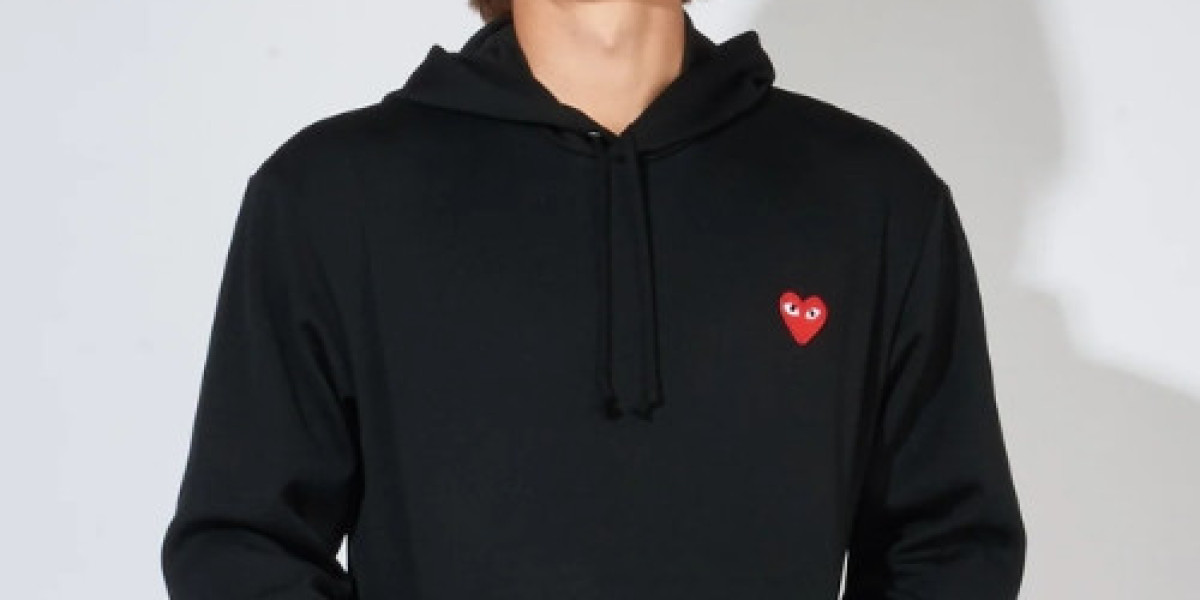

Comme des Garçons has long held a position in fashion that resists easy explanation. Its design language does not follow the familiar rhythm of seasonal expectations or predictable aesthetics. Instead, it builds meaning through tension, disruption, and thoughtful imbalance. The idea of contrast sits at the center of its creative identity, shaping garments that often feel closer to constructed ideas than conventional clothing. Understanding this design language requires attention to how form, fabric, and philosophy interact rather than relying on surface impressions.
The foundation of this approach can be traced to the brand’s rejection of traditional harmony in dressmaking. Rather than aligning silhouette, texture, and proportion in ways that soothe the eye, the work often places opposing ideas within the same garment. This may involve structure against softness, or irregular shaping against controlled tailoring. These decisions are not made for shock value but as part of a continuous inquiry into what clothing can communicate when it is freed from expectation.
Philosophy Behind Contrast and Form
The design language associated with https://commedesgarconjp.com/ is closely tied to a conceptual approach that treats fashion as a space for questioning. Garments are not only functional objects but also carriers of meaning. In this context, contrast becomes a method of thinking rather than a decorative choice.
One recurring principle is the refusal of symmetry as a default condition. While symmetry has long been associated with balance and order in fashion, here it is often interrupted or partially dissolved. A jacket may carry uneven volumes, or a dress may shift its visual weight toward unexpected areas. These decisions encourage the viewer to reconsider how balance is defined.
Another important aspect lies in the treatment of imperfection. Instead of correcting irregularities, the design process often preserves or emphasizes them. This allows garments to reflect a sense of construction that feels visible and intentional. The result is clothing that appears assembled through thought rather than simply assembled for appearance.
Material Choices and Structural Thinking
Material selection plays a significant role in shaping the contrast driven identity of the brand. Fabrics are often chosen not only for their appearance but also for how they respond to manipulation. Stiff materials may be placed next to softer ones, creating shifts in movement and silhouette. This interaction produces tension within the garment itself.
Structure is frequently treated as something exposed rather than hidden. Seams, layers, and internal shaping may be revealed rather than concealed. This approach challenges traditional tailoring methods, where the goal is often to hide construction in favor of a seamless exterior. Here, construction becomes part of the visual language.
In many collections, garments appear to question their own stability. Shapes may extend outward or collapse inward in ways that suggest movement even when the clothing is still. This gives the work a sense of internal dialogue between control and release. The wearer becomes part of that dialogue, as the body activates the structure in unpredictable ways.
The Role of Deconstruction in Design Language
Deconstruction is a key element in understanding the visual identity of Comme des Garçons. It does not simply mean taking garments apart, but rethinking how clothing is assembled in the first place. Traditional garment categories are often blurred or reinterpreted.
A single piece may contain references to multiple clothing types at once. A jacket might behave like a sculpture, while a dress may resemble layered fragments of different garments. This approach does not aim to confuse but to expand the vocabulary of fashion construction.
The process often involves breaking familiar silhouettes and rebuilding them in altered proportions. Sleeves may shift position, hems may lose their expected alignment, and volume may be redistributed across the body. These decisions create a sense of instability that encourages closer observation.
Contrast as Emotional Expression
Beyond structure and material, contrast also operates on an emotional level. The design language often carries a sense of tension between restraint and intensity. This is expressed through color choices, volume shifts, and spatial relationships within garments.
Dark tones may be paired with abrupt interruptions of brightness, not for decoration but to create visual interruption. Similarly, oversized forms may be placed against tightly controlled elements within the same piece. These contrasts generate emotional complexity without relying on narrative storytelling.
The emotional effect is not immediate in a conventional sense. Instead, it unfolds gradually as the viewer spends time with the garment. The absence of direct explanation allows interpretation to remain open, shaped by perception rather than instruction.
Construction as Intellectual Practice
A defining characteristic of Comme des Garçons design language is its relationship with intellectual inquiry. Clothing is treated as a medium for exploring questions about identity, form, and perception. This places the work within a broader cultural conversation rather than limiting it to fashion alone.
Each collection can be understood as a continuation of this inquiry. Rather than resolving ideas into fixed answers, the work tends to present evolving perspectives. This ongoing process reflects a commitment to experimentation that resists closure.
The act of making becomes a form of thinking. Pattern cutting, fabric manipulation, and assembly are not separate technical steps but parts of a continuous process of exploration. The outcome is clothing that carries traces of its own reasoning.
Influence of Contrast on Fashion Interpretation
The impact of this design language extends beyond individual garments. It has influenced how contrast can be understood within fashion as a whole. Rather than being treated as a decorative strategy, contrast becomes a structural principle that shapes entire collections.
This approach encourages a shift in how fashion is interpreted. Instead of focusing solely on surface appearance, attention moves toward underlying construction and conceptual intent. Garments are read as systems of ideas rather than isolated visual objects.
Over time, this has contributed to broader conversations about how fashion can function as an intellectual and cultural medium. The emphasis on contrast has helped expand the boundaries of what clothing can represent and how it can be experienced.
Experience, Expertise, Authority, and Trust in Design Perspective
The design language associated with Comme des Garçons reflects a sustained practice built over decades of experimentation. This continuity contributes to its authority within fashion discourse. The consistent use of contrast demonstrates a clear conceptual framework that is refined rather than repeated in a static form.
Expertise is visible in the handling of complex construction methods that challenge conventional tailoring norms. The garments show a deep understanding of material behavior and spatial composition. This technical awareness supports the conceptual intentions behind each piece.
Trust in this context is not about predictability but about coherence within an evolving system. Even when garments appear fragmented or irregular, they remain grounded in a consistent philosophy. This internal logic allows the work to maintain integrity across different collections and time periods.
Experience is reflected in the long term development of ideas rather than isolated statements. The design language evolves through accumulation, with each collection adding new dimensions to an ongoing conversation about contrast and form.
Conclusion
The design language of Comme des Garçons presents fashion as a field of continuous inquiry shaped by contrast. Through material tension, structural experimentation, and conceptual depth, garments become more than clothing. They act as expressions of thought processes that question familiar ideas of balance, beauty, and construction.
Rather than offering resolution, this approach sustains dialogue between opposing forces. It is within this space of contrast that the identity of the work takes shape, allowing fashion to function as a reflective and evolving practice.
FAQs
What defines the design language of Comme des Garçons?
It is defined by contrast, deconstruction, and experimental construction that challenges traditional fashion structure.
Why is contrast important in its design approach?
Contrast creates tension between forms, materials, and ideas, allowing garments to express conceptual depth.
Does the brand follow seasonal fashion trends?
It focuses more on conceptual exploration than following seasonal expectations or predictable trends.