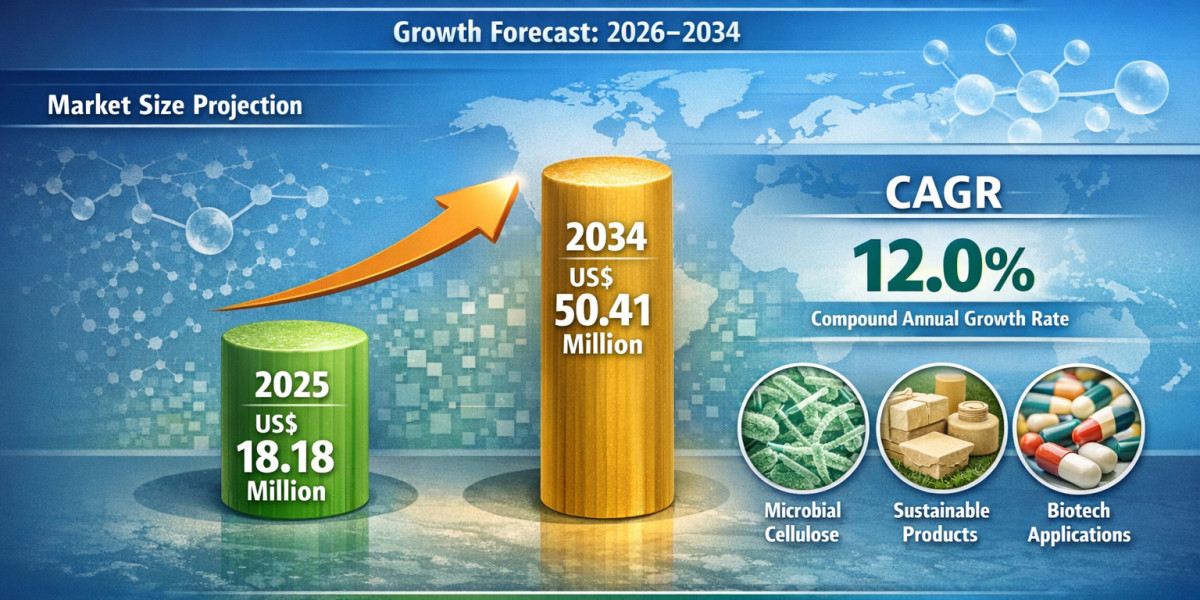

The global Microbial Cellulose Market Trends shaping this industry from 2026 through 2034 frame a market growing from US$ 18.18 million in 2025 to US$ 50.41 million by 2034 at 12.0% CAGR, characterized by the rising adoption of biodegradable and sustainable cellulose materials, accelerating medical application development, and the growth of eco-friendly textile innovations that are collectively positioning microbial cellulose at the intersection of biotechnology and sustainability-driven industry transformation.
The Insight Partners identifies these trend vectors as structurally reinforcing rather than competing, meaning each trend strengthens the overall market case rather than drawing attention or investment away from alternative applications.
Request Sample Pages of this Research Study @ https://www.theinsightpartners.com/sample/TIPRE00029951
Competitive Landscape
Key companies operating in the global microbial cellulose market include:
- ScobyTec GmbH
- BOWIL Biotech SP Zoo
- Polybion SL
- Bacpolyzyme Biyomuhendislik Ltd
- Axcelon Biopolymers Corp
- Bioweg UG
- Cellulose Lab Inc
- Bacterial Cellulose Solutions Inc
- Ashland Inc
- BIOINSPIRED MATERIALS SL
Key Trends Reshaping the Market
The rising adoption of biodegradable and sustainable cellulose materials is arguably the single most commercially transformative trend operating across the entire market. Regulatory momentum in Europe and North America against single-use plastics, combined with Asia Pacific's growing environmental consciousness, is creating a synchronized global movement toward bio-based packaging and ingredient alternatives that bacterial cellulose is well-positioned to serve. The trend has moved beyond consumer preference signaling into active regulatory compulsion, which fundamentally changes the commercial calculus for brand owners evaluating material substitution.
Market Drivers and Industry Trends
Increasing demand for microbial cellulose in medical applications is a trend that is being actively accelerated by healthcare system economics as much as by material science advances. Bacterial cellulose wound dressings demonstrate genuine clinical outcomes, including faster healing rates, reduced infection incidence, and improved patient comfort, that translate into cost savings for healthcare systems managing wound care budgets. As health technology assessment processes recognize these economic benefits, procurement pathways for bacterial cellulose medical products are becoming more standardized, reducing the commercial friction that has historically slowed adoption in regulated healthcare markets.
The growth of eco-friendly textile innovations is emerging as a genuinely exciting future trend area for microbial cellulose producers. Luxury fashion brands are investing in leather alternative development where bacterial cellulose-based composites offer aesthetic properties and structural characteristics that are difficult to replicate with other bio-based alternatives. Polybion SL and similar pioneers are advancing this application frontier with commercial prototypes and brand collaborations that signal the beginning of a meaningful new demand category.
Fermentation technology innovation is a production-side trend with profound demand implications. As synthetic biology tools enable the engineering of higher-yield bacterial strains and optimized bioreactor designs reduce energy costs and production cycle times, the cost-performance economics of microbial cellulose improve progressively. This cost reduction trajectory is essential for expanding the material's addressable market from premium niche applications toward higher-volume commercial uses where price competitiveness against conventional materials matters more than performance differentiation alone.
The integration of AI-driven bioreactor monitoring systems is an operational trend that is accelerating production scale-up across multiple producers simultaneously. Real-time fermentation parameter optimization reduces batch variability, improves yield consistency, and shortens the quality assurance cycle, collectively reducing time-to-market and per-unit production cost in ways that make bacterial cellulose commercially viable for new application categories.
What future trends will most significantly reshape the microbial cellulose market?
The rising adoption of biodegradable and sustainable cellulose materials in response to regulatory plastic reduction mandates, the increasing demand from the medical sector for biocompatible wound care and tissue engineering materials, and the growth of eco-friendly textile and leather alternative innovations are the three future trends identified by The Insight Partners as most likely to significantly reshape the microbial cellulose market through the 2026 to 2034 forecast period.
How is fermentation technology innovation changing microbial cellulose market dynamics?
Advances in bacterial strain engineering, bioreactor design optimization, and AI-assisted fermentation monitoring are progressively reducing the production cost and improving the yield consistency of microbial cellulose, broadening the material's commercially viable application range from premium medical and cosmetic niches toward higher-volume packaging and food ingredient markets where price competitiveness against conventional alternatives is increasingly achievable through the forecast period.
About Us
The Insight Partners is a global market research and consulting firm delivering comprehensive industry analysis and actionable insights across diverse sectors. Our research integrates both qualitative and quantitative approaches to help organizations track market trends, uncover growth opportunities, and make well-informed strategic decisions.
Also Available In Korean | German | Japanese | French | Chinese | Italian | Spanish