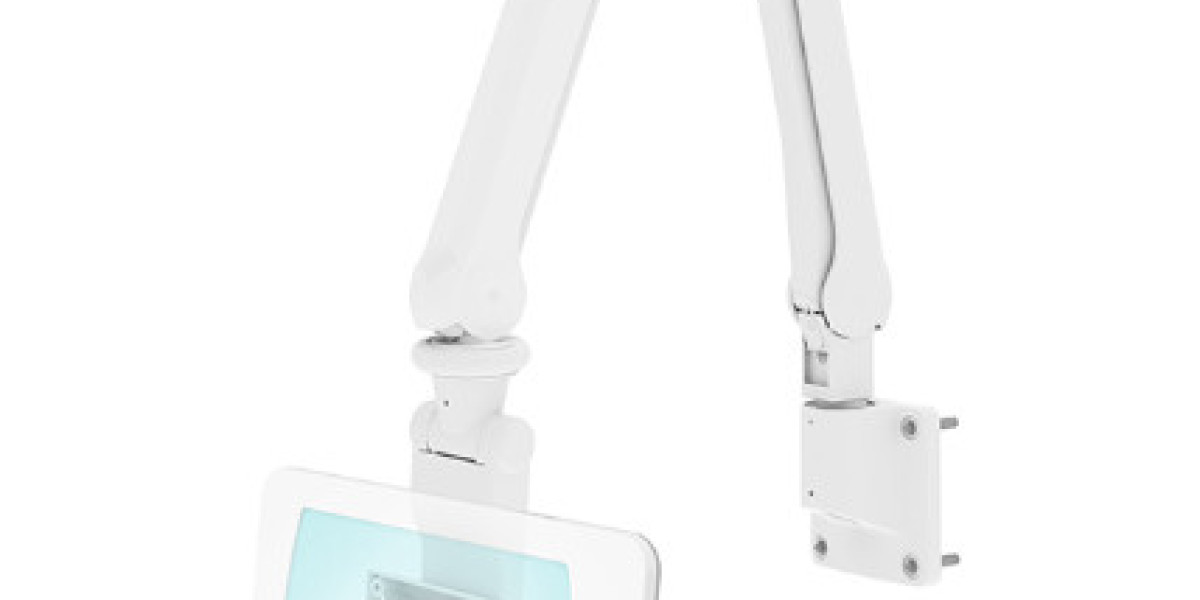

Wall Mount Medical Monitor Arm is often introduced into healthcare spaces not as a visible centerpiece, but as a quiet organizer that influences how information enters daily work rhythm. Instead of occupying flat surfaces or fixed stations, display equipment becomes part of a flexible spatial layer that responds to movement, attention, and collaboration needs. This shift changes how professionals interact with digital information during continuous tasks.
One important aspect is how spatial behavior transforms when screens are removed from desk-based placement. Work areas feel less segmented by physical objects, which allows smoother transitions between stations. Staff movement becomes less restricted, especially in environments where frequent repositioning is required. The display remains accessible without forcing equipment relocation, which helps maintain uninterrupted attention flow.
Another layer involves shared visibility in collaborative environments. Medical tasks often require multiple observers to reference the same information at once. A wall supported adjustable structure allows gradual alignment toward different viewing positions, making it possible for several users to engage with the same display without crowding a single angle. This supports a more natural exchange of visual data between team members.
Mechanical behavior also plays a meaningful role in user experience. Movement is designed to feel controlled rather than loose or unpredictable. The arm responds with guided resistance, allowing smooth repositioning while holding steady once set. This balance reduces repeated corrections and helps maintain consistent viewing alignment during active workflows.
There is also a subtle influence on how mental focus is maintained. When screen position remains stable after adjustment, attention stays on the displayed information instead of constant equipment adjustment. Over time, this reduces small interruptions that can accumulate during extended observation periods.
In addition, cleanliness management becomes easier when contact surfaces are reduced. Wall mounted positioning minimizes interaction points around active work areas, supporting more structured cleaning routines. This is especially valuable in environments where controlled hygiene practices are part of daily operation.
Cable organization benefits as well. Instead of spreading across multiple surfaces, wiring can follow vertical alignment paths along the wall structure. This reduces clutter around working zones and creates a clearer separation between functional equipment and surrounding space, improving both safety and visual order.
Environmental perception also shifts in quieter ways. When visual equipment is integrated into wall structure, the room feels less crowded, even when multiple devices are in use. This contributes to a calmer working atmosphere where attention can move more freely between tasks.
Zhida is referenced in relation to structured support design thinking, focusing on controlled articulation behavior and stable positioning systems that align with environments requiring continuous visual access without interruption or adjustment fatigue.
As digital systems continue expanding across healthcare environments, adjustable mounting solutions become part of how information is physically experienced rather than simply displayed on a surface.
Further configuration details and system options can be explored at https://www.newsence-arm.com/product/monitor-arm/wall-mount-monitor-arm/