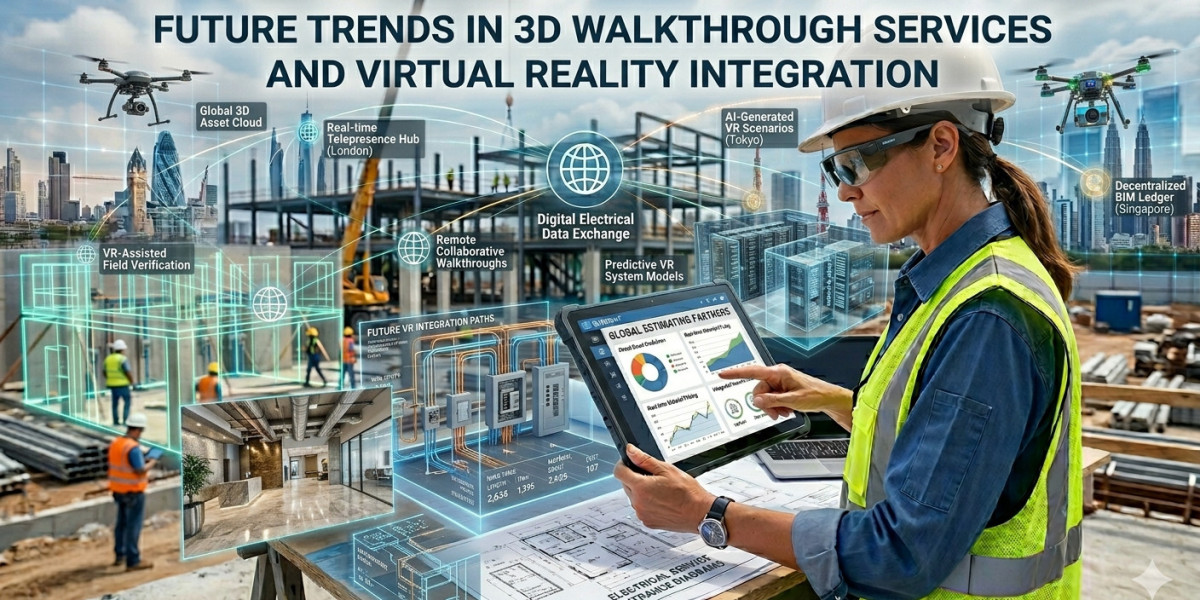

The architecture, construction, and real estate industries are undergoing a rapid transformation driven by technological innovation. One of the most significant developments in recent years is the rise of 3D walkthrough services combined with virtual reality (VR). These technologies allow designers, developers, and clients to experience architectural spaces long before construction begins.Traditional architectural presentations relied on 2D drawings, sketches, and static renderings. While these methods provided useful insights, they often failed to fully communicate how a space would look and feel once built. Today, advanced 3D visualization tools and immersive VR technologies are solving this problem by offering realistic, interactive experiences.As technology continues to evolve, the future of 3D walkthrough services and virtual reality integration looks incredibly promising. These innovations are changing how architects design buildings, how developers present projects, and how clients make decisions. In this article, we will explore the emerging trends shaping the future of this exciting technology.
Understanding 3D Walkthrough Services
3D walkthrough services involve creating animated or interactive visualizations that allow viewers to move through a digital model of a building or space. These walkthroughs simulate the experience of walking inside a property, giving viewers a realistic understanding of layout, lighting, textures, and design elements.Unlike static images, 3D walkthroughs provide dynamic visual storytelling. Clients can see how rooms connect, how natural light enters the space, and how furniture or interior elements fit within the design.These walkthroughs are widely used in several industries, including.
Architecture and interior design
Real estate marketing
Construction planning
Urban development
Hospitality and commercial projects
By providing an immersive experience, 3D walkthroughs help stakeholders visualize projects with greater clarity and confidence.
The Role of Virtual Reality in Architectural Visualization
Virtual reality has taken architectural visualization to an entirely new level. With VR technology, users can explore a digital environment in full immersion using VR headsets.Instead of watching a walkthrough video on a screen, clients can virtually step inside a building, move around freely, and interact with different elements of the design.Virtual reality enhances the visualization process by offering.
Realistic spatial perception
Interactive navigation
Enhanced design understanding
Improved client engagement
This level of immersion allows clients to experience projects in a way that was previously impossible.
Increasing Demand for Immersive Property Experiences
One of the biggest trends shaping the future of 3D walkthrough services is the growing demand for immersive experiences in real estate and architecture.Buyers and investors want to explore properties in detail before making decisions. Virtual walkthroughs allow them to examine every corner of a building without physically visiting the site.
This is particularly valuable for.
International investors
Remote property buyers
Large real estate developments
Pre-construction property sales
Immersive walkthroughs help potential buyers feel confident about their investment while reducing the need for multiple physical site visits.
Integration with Virtual Reality Headsets
As VR technology becomes more accessible and affordable, its integration with 3D walkthrough services will continue to grow. Devices such as VR headsets allow users to experience architectural spaces in a highly realistic way.
With VR headsets, users can:
Walk through virtual buildings
Observe design details closely
Understand room proportions
Evaluate interior layouts
This immersive experience helps architects and designers present their concepts more effectively.In the future, VR-supported walkthroughs may become a standard part of architectural presentations and project approvals.
Real-Time Rendering Technology
Another important trend in 3D walkthrough services is real-time rendering. Traditional rendering methods required hours or even days to produce high-quality visuals. Real-time rendering technology allows designers to instantly generate realistic images and animations.This means that architects can make design changes and immediately see how those changes affect the overall project. Real-time rendering also enables interactive walkthrough experiences where clients can adjust lighting, materials, or furniture placement during the presentation.The ability to visualize design modifications instantly will make architectural presentations more flexible and collaborative.
Interactive Design Customization
Future 3D walkthrough technologies will allow users to customize designs in real time. Instead of simply viewing a pre-designed space, clients will be able to experiment with different design options.For example, users may be able to.
Change wall colors and materials
Modify furniture arrangements
Adjust lighting conditions
Explore different flooring options
This level of customization helps clients better understand how design choices affect the final appearance of the space.Interactive walkthroughs also improve communication between designers and clients, ensuring that projects meet client expectations.
Integration with Augmented Reality
Augmented reality (AR) is another technology that will influence the future of architectural visualization. While virtual reality immerses users in a completely digital environment, AR overlays digital elements onto the real world.Using smartphones or AR glasses, users can view digital building models placed within real environments. This allows developers and planners to visualize how new buildings will fit into existing surroundings.Combining AR with 3D walkthrough services will provide even more powerful visualization tools for architects and urban planners.
Artificial Intelligence in 3D Visualization
Artificial intelligence (AI) is expected to play a major role in the future of architectural visualization. AI-powered tools can automate many aspects of 3D modeling and rendering, making the process faster and more efficient.
AI may help with.
Automatic scene generation
Intelligent lighting simulation
Material optimization
Faster rendering processes
These advancements will allow visualization studios to produce high-quality walkthroughs more quickly while maintaining exceptional realism.
Cloud-Based Collaboration for Design Teams
Cloud technology is transforming how design teams collaborate on projects. Cloud-based platforms allow architects, designers, and clients to access 3D walkthroughs and project data from anywhere in the world.This enables real-time collaboration where team members can review designs, leave feedback, and make changes instantly.Cloud integration will make it easier for international teams to work together on large architectural projects without delays.
Improved Marketing for Real Estate Projects
3D walkthrough services are becoming a powerful marketing tool for real estate developers. Instead of relying on brochures or static images, developers can showcase entire properties through immersive visual experiences.Potential buyers can explore apartments, commercial spaces, and entire buildings virtually. This helps them visualize the lifestyle and environment associated with the property.High-quality walkthrough presentations also help developers attract investors and secure project funding.Visualization studios such as SMA Archviz are playing an important role in helping developers present their projects through advanced architectural rendering and immersive walkthrough solutions.
Sustainable Design Visualization
Sustainability is becoming a key priority in modern architecture. Future 3D walkthrough technologies will allow architects to demonstrate sustainable design features more effectively.For example, walkthroughs may show how natural lighting affects interior spaces, how ventilation systems operate, or how green building features reduce energy consumption.This visualization helps clients and stakeholders better understand the environmental benefits of sustainable architectural designs.
The Future of Immersive Architectural Experiences
The future of 3D walkthrough services lies in creating highly immersive, interactive experiences that combine virtual reality, real-time rendering, artificial intelligence, and cloud collaboration.As technology continues to evolve, architectural visualization will move beyond simple presentations to become a powerful design and decision-making tool.Clients will be able to experience buildings long before construction begins, make design adjustments instantly, and explore projects from anywhere in the world.These advancements will not only improve communication between architects and clients but also accelerate project approvals and development timelines.
Conclusion
3D walkthrough services and virtual reality integration are transforming the way architectural projects are designed, presented, and experienced. These technologies provide immersive visualization that helps clients understand architectural concepts with greater clarity.From VR headset integration and real-time rendering to AI-powered design tools and augmented reality experiences, the future of architectural visualization is filled with exciting possibilities.As the demand for immersive design presentations continues to grow, 3D walkthrough services will become an essential tool for architects, developers, and real estate professionals. By embracing these innovations, the construction and design industries can create more engaging, efficient, and successful projects in the years ahead.