
Start With What Actually Matters
Choosing the right landscaping company comes down to three things: relevant experience, a clear design process, and the ability to deliver on time without cutting corners. Whether you are building a backyard for your home or developing outdoor spaces for a hotel, a poor choice leads to wasted money, delayed timelines, and results that look nothing like what was promised.
This guide breaks down the practical steps to identify the right partner for your project, based on how the industry actually works.
Understand the Difference Between Residential and Hospitality Landscaping
Many property owners assume any outdoor contractor can handle both residential and hospitality work. That is not the case.
Residential landscaping focuses on personal aesthetics, privacy, and functionality for a household. Think patios, garden beds, irrigation, and outdoor lighting.
Hospitality landscaping involves public facing spaces that must handle foot traffic, guest safety, brand alignment, and local code compliance. Hotels, resorts, and restaurants need landscapes that serve a business purpose, not just visual appeal.
Before reaching out to anyone, be clear about which category your project falls into. You want someone with proven results in your specific type of work.
Check Their Portfolio for Projects Similar to Yours
A portfolio tells you more than any sales pitch. Look for completed projects that match the scale and style of what you need.
For residential clients, look at:
Backyard transformations
Front yard curb appeal projects
Pool area and outdoor living spaces
For hospitality clients, look at:
Hotel entrance and lobby landscapes
Resort pool decks and common area planting
Restaurant patios and garden dining spaces
If a firm cannot show you relevant completed work, treat that as a red flag.
Ask About the Design Process
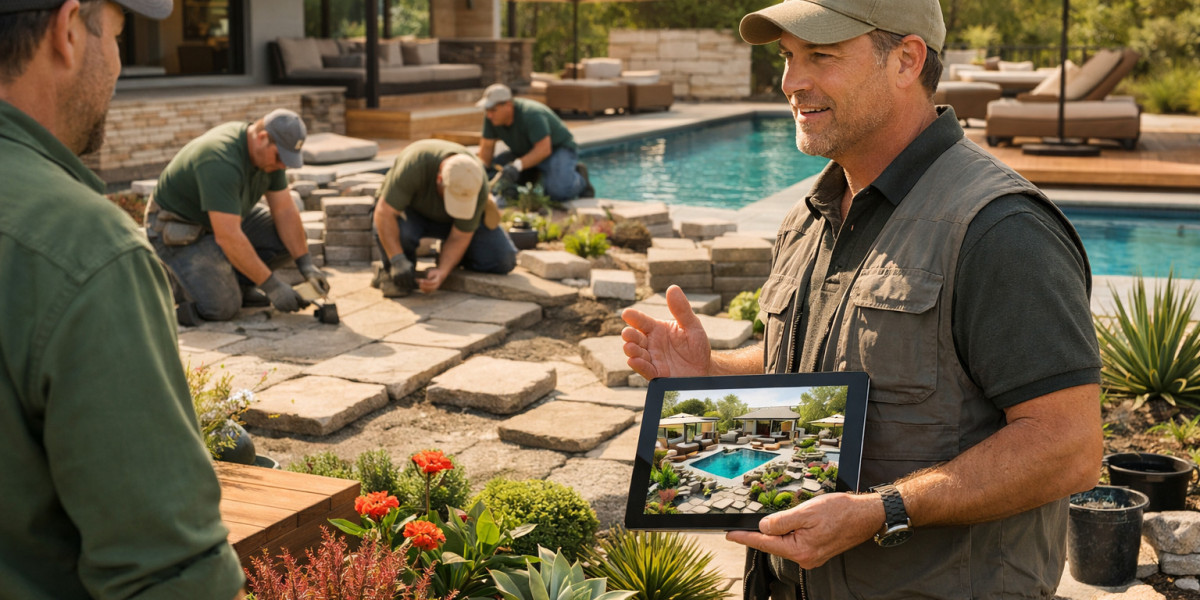
A reliable firm will have a defined process from consultation to final handover. Ask how they approach projects. Do they provide a site visit before quoting? Do they use design renderings or verbal descriptions only?
A good process usually looks like this:
Initial site assessment
Design concept with visuals or sketches
Material and plant selection
Phased installation plan
Post installation walkthrough
If the team jumps straight to pricing without understanding your space, they are likely more focused on volume than quality.
Evaluate Their Knowledge of Local Climate and Soil
This is one of the most overlooked factors. Plants and materials that work in one region may completely fail in another.
For example, a hospitality project in a coastal area demands salt tolerant plants and corrosion resistant materials. A residential garden in a dry climate needs drought tolerant species and efficient irrigation.
Ask the team what plant species they recommend and why. Their answer will tell you whether they understand the local environment or are simply following a template.
Look at How They Handle Timelines and Budgets
Delays and cost overruns are common in landscaping projects. Ask directly about their track record.
Do they provide a written timeline before work begins?
How do they handle weather delays or supply issues?
Is the quote fixed or estimated?
Hospitality projects are especially sensitive to delays because they often tie into larger construction schedules. A missed deadline can push back a hotel opening or seasonal launch.
Read Reviews, But Read Them Right
Online reviews are useful, but only if you read them with context. Focus on:
Specific mentions of communication quality
Comments about how problems were resolved
Whether the reviewer's project type matches yours
Patterns of the same complaint, like poor follow up or low quality materials, should raise concerns more than one isolated negative review.
Verify Licensing, Insurance, and Contracts
This step is non negotiable. Any landscaping company handling significant residential or hospitality work should carry proper licensing and liability insurance.
A clear contract should cover:
Scope of work
Payment schedule
Timeline with milestones
Warranty or maintenance terms
Skipping this step can expose you to financial and legal risk, especially on larger hospitality properties.
Consider Long Term Maintenance
A landscape is not a one time investment. Plants grow, irrigation systems need adjustment, and hardscapes age. Ask whether the firm offers ongoing maintenance plans or provides guidance for upkeep.
For hospitality properties, regular maintenance is critical. Guests notice neglected outdoor spaces immediately, and that reflects poorly on the business.
Conclusion
Focus on relevant experience, a defined design process, knowledge of local conditions, and transparent communication around timelines and costs. For hospitality projects, pay extra attention to code compliance, durability, and long term maintenance support. For residential projects, prioritize personal fit, design quality, and material selection. The right team will make the process straightforward and deliver results that hold up over time.
Frequently Asked Questions
Q.1 What should I look for in a landscaping firm for a hotel project?
Look for experience in hospitality or commercial outdoor spaces, familiarity with local codes, and the ability to work within larger construction timelines. Ask for references from similar projects.
Q.2 How much does residential landscaping typically cost?
Costs vary based on project size, materials, and location. A basic backyard redesign can range from a few thousand to tens of thousands of dollars. Always request a detailed, written quote before committing.
Q.3 Should I choose a firm that does both design and installation?
Yes. Working with a single team for both stages usually leads to better results. It reduces miscommunication and keeps the project on track.
Q.4 How long does a typical landscaping project take?
Residential projects can take a few days to several weeks. Hospitality projects often take months depending on scale. Ask for a timeline with clear milestones before work starts.
Q.5 Is it important for the firm to offer maintenance services?
It is not mandatory, but it is a strong advantage. Landscapes require ongoing care, and a firm that offers maintenance understands the full lifecycle of their work.