
The global allulose market is witnessing significant growth as consumers increasingly seek healthier alternatives to traditional sugar. Rising awareness about the health risks associated with excessive sugar consumption, including obesity, diabetes, and cardiovascular diseases, has encouraged both consumers and food manufacturers to explore low-calorie sweeteners. Among these alternatives, allulose has emerged as a promising ingredient due to its ability to deliver sweetness and functionality similar to sugar while containing significantly fewer calories. As a result, the demand for allulose is steadily increasing across various food and beverage applications worldwide.
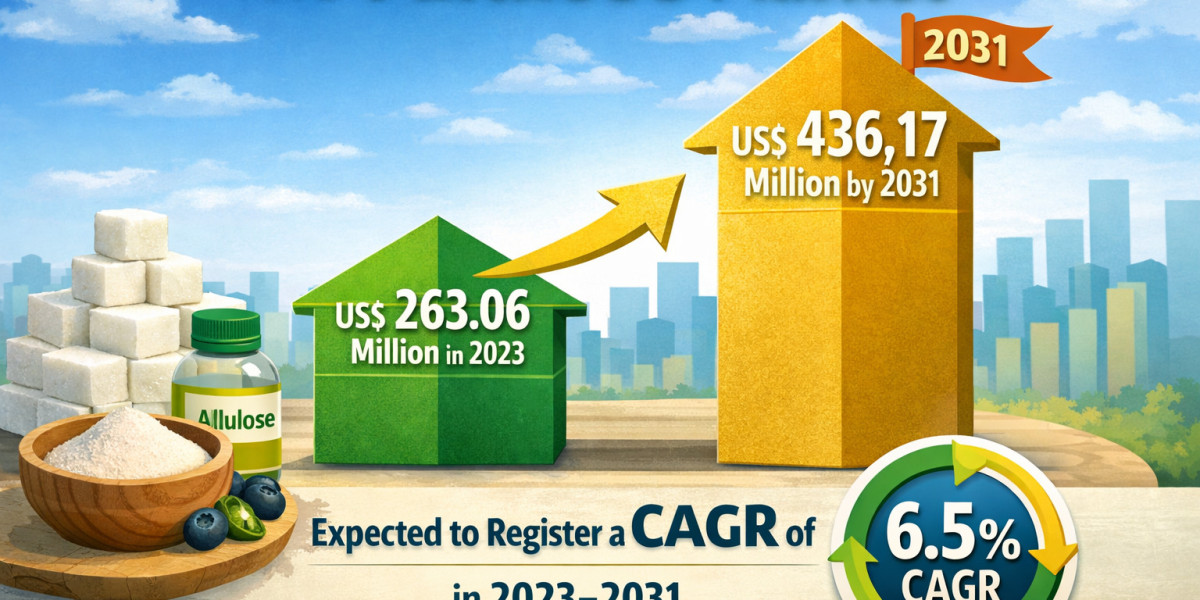
Allulose is a naturally occurring rare sugar found in small quantities in foods such as wheat, figs, raisins, and jackfruit. What makes allulose particularly attractive to food manufacturers is its ability to replicate the taste and texture of regular sugar without contributing substantially to calorie intake. The Allulose Market size is projected to reach US$ 436.17 million by 2031 from US$ 263.06 million in 2023. The market is expected to register a CAGR of 6.5% in 2023–2031. It provides approximately 70% of the sweetness of traditional sugar but contains only about 10% of the calories. Additionally, allulose has minimal impact on blood glucose and insulin levels, making it suitable for individuals managing diabetes or following low-carbohydrate diets.
Get Sample PDF @ https://www.theinsightpartners.com/sample/TIPRE00008140
The growing popularity of health-focused diets such as keto, low-carb, and reduced-sugar diets is playing a key role in boosting the allulose market. Consumers are increasingly prioritizing food products that support weight management and overall wellness. As a result, manufacturers are reformulating existing products and developing new offerings that incorporate low-calorie sweeteners like allulose. This shift toward healthier food options is driving the expansion of the global allulose market.
The food and beverage industry represents the largest application segment for allulose. It is widely used in bakery and confectionery products, dairy and frozen desserts, beverages, and other processed foods. In bakery applications, allulose helps maintain the desired texture, moisture, and browning characteristics of baked goods while reducing overall sugar content. Similarly, in confectionery products such as chocolates, candies, and syrups, allulose provides a clean sweetness and smooth mouthfeel that closely resembles that of traditional sugar.
Dairy and frozen desserts also represent a growing application area for allulose. Ice creams, yogurts, and frozen treats formulated with allulose offer reduced-calorie options without compromising taste or texture. Additionally, the beverage industry has begun incorporating allulose into a variety of products, including flavored waters, soft drinks, ready-to-drink teas, and energy beverages. As consumers increasingly demand healthier beverage choices, manufacturers are turning to alternative sweeteners like allulose to meet these evolving preferences.
In terms of form, allulose is available in liquid and powder or crystal forms. Powdered allulose is widely used in food processing due to its convenience in blending and formulation. It can be easily incorporated into dry mixes, baking ingredients, and powdered beverage formulations. Liquid allulose, on the other hand, is commonly used in beverages, syrups, and liquid food applications because of its easy solubility and consistent sweetness.
From a regional perspective, North America currently leads the allulose market, driven by strong consumer awareness of low-calorie sweeteners and supportive regulatory frameworks. The United States has been at the forefront of adopting alternative sweeteners, and the food industry in the region has actively integrated allulose into a wide range of products. The presence of leading food manufacturers and increasing innovation in sugar-reduction technologies further support market growth in this region.
The Asia-Pacific region is also experiencing notable growth in the allulose market. Rising disposable incomes, changing dietary habits, and increasing awareness of healthy lifestyles are contributing to higher demand for low-calorie food ingredients. Countries such as Japan, South Korea, and China are witnessing growing interest in functional food ingredients, including rare sugars like allulose. In addition, the expansion of the food processing industry across the region is creating new opportunities for market players.
Europe is gradually adopting allulose as part of the broader trend toward healthier food alternatives. Although regulatory approvals and consumer awareness have developed more slowly compared to North America, the region is expected to experience steady growth as demand for natural and clean-label ingredients continues to rise.
The competitive landscape of the allulose market is characterized by ongoing innovation and strategic investments by key industry participants. Companies are focusing on improving manufacturing processes, enhancing product quality, and expanding distribution networks to strengthen their market position. Research and development activities are also aimed at increasing the efficiency of allulose production, which can help reduce costs and make the ingredient more accessible to a broader range of food manufacturers.
Despite strong growth prospects, the allulose market faces certain challenges. High production costs and limited availability compared to traditional sweeteners can hinder widespread adoption. However, advancements in biotechnology and fermentation-based production methods are expected to improve manufacturing efficiency and reduce costs over time.
Related Report:
1) Manuka Honey Market Size, Share & Trends by 2034
2) Chicken Powder Market Size, Share & Forecast 2031
3) Demineralized Whey Powder Market Report
4) Fish Protein Hydrolysate Market Size and Growth
About Us -
The Insight Partners provides comprehensive syndicated and tailored market research services in the healthcare, technology, and industrial domains. Renowned for delivering strategic intelligence and practical insights, the firm empowers businesses to remain competitive in ever-evolving global markets.
Contact Information –
Email: sales@theinsightpartners.com
Phone: +1-646-491-9876
Also Available in : Korean German Japanese French Chinese Italian Spanish