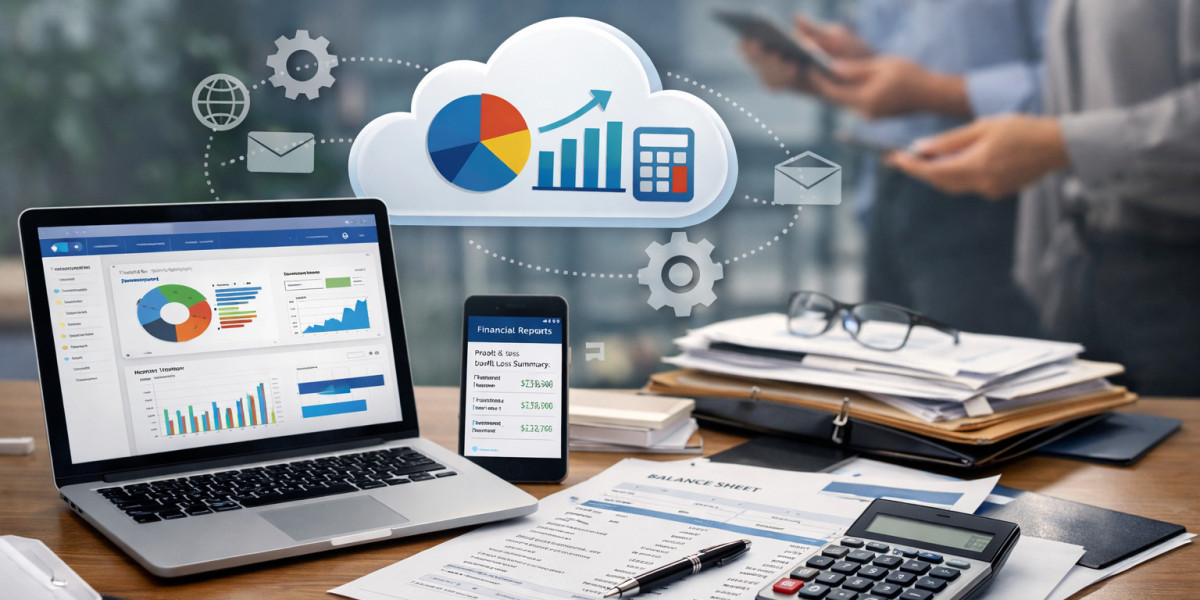

Cloud technology has transformed how modern businesses manage their financial operations. For Software-as-a-Service (SaaS) companies, cloud accounting is not just an option—it is a necessity. SaaS businesses operate with subscription billing systems, recurring revenue models, and global customers, which require real-time financial data and automated workflows.
However, integrating multiple financial systems—such as billing platforms, CRM software, and accounting tools—can be technically complex. Without proper integration, finance teams often struggle with manual data entry, inconsistent reporting, and delayed financial insights.
This is where saas outsourced accounting plays an important role. Outsourced accounting providers help SaaS companies integrate cloud accounting platforms with billing systems and financial tools to create a seamless financial ecosystem.
In this article, we’ll explore how SaaS outsourced accounting supports cloud accounting integration and why it is essential for efficient financial management in fast-growing technology companies.
Understanding Cloud Accounting in the SaaS Industry
Cloud accounting refers to the use of online accounting software that allows businesses to access financial data through the internet rather than traditional desktop systems.
Unlike legacy accounting software, cloud accounting platforms provide:
Real-time financial reporting
Automatic software updates
Integration with other business tools
Secure remote access to financial data
Automated workflows for accounting processes
For SaaS companies operating with distributed teams and global customers, cloud accounting provides flexibility and scalability.
However, cloud accounting works best when it is integrated with other business systems.
Why Integration Matters for SaaS Financial Operations
SaaS companies rely on multiple digital platforms to manage operations.
For example:
Billing platforms handle subscription payments
CRM systems track customer data
Accounting software manages financial transactions
Analytics tools monitor business performance
If these systems operate independently, finance teams must manually transfer data between them. This increases the risk of errors and slows down financial reporting.
Cloud accounting integration connects these systems so that data flows automatically between platforms.
For example, when a customer subscribes to a SaaS product, the billing platform automatically sends transaction data to the accounting system, which records the revenue and updates financial reports.
This automation improves both efficiency and accuracy.
The Role of SaaS Outsourced Accounting in Cloud Integration
Outsourced accounting providers bring specialized expertise in implementing and managing integrated financial systems for SaaS companies.
Their role includes:
Selecting the right cloud accounting platforms
Integrating billing and accounting systems
Automating revenue recognition workflows
Managing financial data synchronization
Maintaining compliance with accounting standards
By handling these technical and operational tasks, outsourced accounting teams allow SaaS companies to focus on product development and growth.
Key Cloud Accounting Tools Used in SaaS Businesses
SaaS outsourced accounting providers often implement integrated technology stacks that include several cloud-based financial tools.
Common platforms include:
Accounting Software
QuickBooks Online
NetSuite
Xero
Sage Intacct
Subscription Billing Platforms
Stripe
Chargebee
Recurly
Zuora
Customer Relationship Management (CRM)
Salesforce
HubSpot
When these systems are properly integrated, financial data flows automatically between platforms.
For example, a customer payment processed through Stripe can immediately update the company’s accounting records in QuickBooks or NetSuite.
Automating Revenue Recognition Through Integration
Revenue recognition is one of the most important financial processes for SaaS companies.
Under ASC 606 accounting standards, revenue from subscriptions must be recognized gradually over the service period rather than immediately.
For example:
If a customer purchases a $1,200 annual subscription, the company must recognize $100 of revenue each month.
When billing platforms are integrated with accounting systems, revenue recognition can be automated.
Each subscription payment automatically creates a revenue schedule that spreads income across the appropriate accounting periods.
This ensures compliance with accounting regulations while reducing manual work for finance teams.
Real-Time Financial Reporting Through Cloud Integration
One of the biggest benefits of cloud accounting integration is access to real-time financial data.
Outsourced accounting providers create financial dashboards that automatically update as transactions occur.
These dashboards typically track key SaaS performance metrics such as:
Monthly Recurring Revenue (MRR)
Annual Recurring Revenue (ARR)
Customer churn rate
Customer acquisition cost (CAC)
Customer lifetime value (CLTV)
With real-time financial reporting, SaaS executives can monitor business performance and make strategic decisions quickly.
For instance, if ARR growth slows down, leadership teams can analyze customer trends and adjust marketing or pricing strategies accordingly.
Example: Cloud Accounting Integration in a SaaS Startup
Consider a SaaS company that develops customer support software for e-commerce businesses.
Initially, the company processes subscription payments through Stripe while recording financial transactions manually in spreadsheets. As the business grows to 5,000 subscribers, manual data entry becomes inefficient and prone to errors.
The company partners with an outsourced accounting provider to implement cloud accounting integration.
The new system connects:
Stripe for billing
HubSpot for CRM
QuickBooks Online for accounting
Financial dashboards for reporting
With this integrated infrastructure:
Customer payments automatically update accounting records
Revenue recognition schedules are generated automatically
Financial reports are available in real time
Accounting errors are significantly reduced
This integrated cloud accounting system allows the company to scale efficiently without expanding its internal finance team.
Benefits of Cloud Accounting Integration with Outsourced Support
SaaS outsourced accounting provides several advantages when implementing cloud-based financial systems.
Improved Financial Accuracy
Automated data synchronization reduces manual errors.
Operational Efficiency
Finance teams spend less time on routine data entry and reconciliation.
Scalability for Growing Businesses
Integrated systems can handle increasing transaction volumes as the company grows.
Real-Time Financial Insights
Executives gain immediate access to financial data and SaaS performance metrics.
Regulatory Compliance
Automated revenue recognition ensures compliance with accounting standards like ASC 606.
The Future of SaaS Financial Operations
As SaaS businesses continue expanding globally, cloud accounting integration will become even more important. Companies that adopt modern financial systems early will gain significant advantages in operational efficiency and financial transparency.
Automation, artificial intelligence, and real-time analytics are already transforming financial operations for technology companies.
Outsourced accounting providers play a crucial role in implementing these innovations and helping SaaS businesses build scalable financial infrastructures.
Final Thoughts
Cloud accounting integration is a key component of modern financial management for SaaS companies. By connecting billing systems, accounting platforms, and financial analytics tools, businesses can automate financial workflows and gain real-time insights into performance.
SaaS outsourced accounting provides the expertise and technical support needed to implement these integrated financial systems effectively.
For high-growth technology companies, this approach not only improves accounting efficiency but also creates a strong financial foundation that supports long-term growth and global expansion.