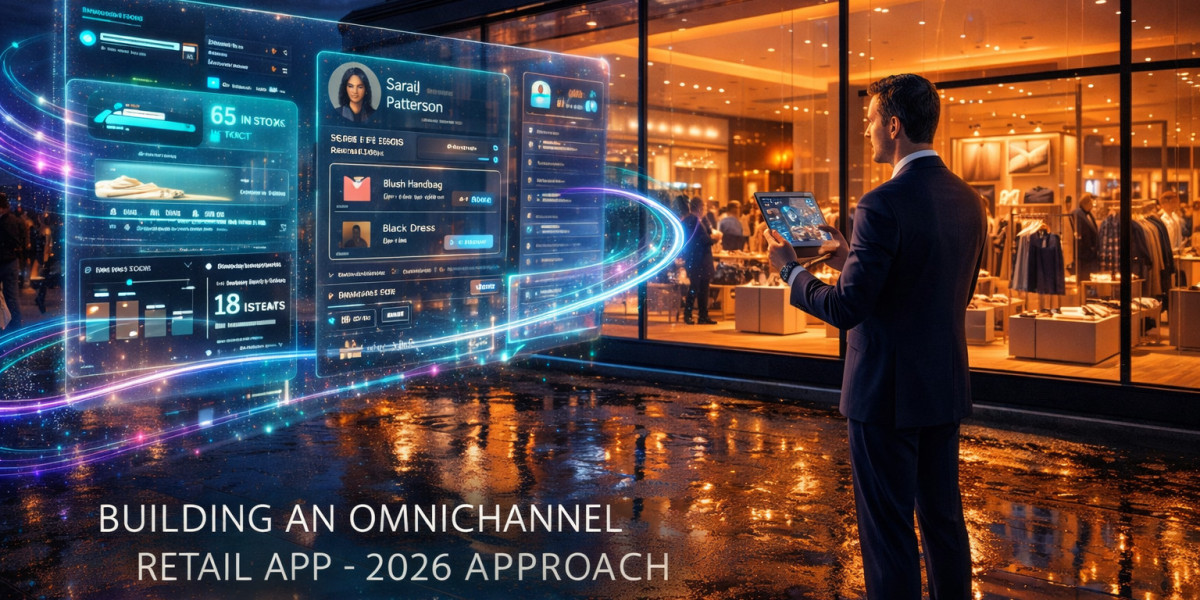

The Shift Toward Unified Commerce in 2026
By early 2026, the traditional distinction between "online shopping" and "in-store visits" has largely dissolved for the consumer. Modern retail success now depends on unified commerce, a centralized platform that handles all customer interactions regardless of the channel.
Recent industry data from the Retail Council of 2025 indicates that businesses utilizing a single-source-of-truth for inventory see a 14% higher retention rate compared to those running siloed systems. The "2026 approach" focuses on removing the friction between the digital browse and the physical purchase.
Current Challenges in Omnichannel Integration
Many retailers still struggle with "ghost inventory"—items appearing available in-app that are missing from store shelves. This gap creates significant customer friction. Additionally, the rise of privacy-first data regulations in 2025 has made third-party tracking more difficult, forcing retailers to rely on first-party data gathered through their own mobile applications.
Core Framework: The Three Pillars of 2026 Retail Apps
To build a high-performing retail app this year, development must prioritize three foundational pillars: Real-time Inventory Visibility, Personalized Proximity Marketing, and Frictionless Checkout.
1. Real-time Inventory Visibility
In 2026, "real-time" means sub-second updates. When a customer in-store picks up the last unit of a product, the app should reflect "Out of Stock" for local pickup immediately. This requires an API-first architecture that connects the app directly to the Warehouse Management System (WMS) and Enterprise Resource Planning (ERP) tools.
2. Proximity and Contextual Awareness
Apps are no longer just catalogs; they are in-store companions. Using Ultra-Wideband (UWB) and advanced Bluetooth LE, 2026 retail apps provide indoor navigation. If a customer has "Blue Jeans" on their digital wish list, the app can guide them to the exact aisle and shelf once they enter the physical store.
3. Unified Cart and Checkout
A customer might start a cart on their laptop, add an item via a social media link on their phone, and eventually want to pay via a kiosk in the store. The 2026 approach ensures that the cart persists across all devices and identifies the user via biometric or tokenized authentication.
Strategic Implementation for Growth
When scaling these digital solutions, geography and local expertise play a significant role in technical execution. For businesses looking to build robust, scalable architectures, partnering with specialized firms for Mobile App Development in Georgia provides access to a growing hub of engineers focused on high-concurrency retail systems.
Beyond the regional expertise, the integration of financial services directly into the shopping journey has become a standard. For a deeper look at how transaction layers are evolving, you may want to explore embedded finance in mobile apps, which covers the shift from external payment gateways to native financial ecosystems.
Real-World Application: The Hybrid Fulfillment Model
Consider a mid-sized apparel retailer implementing the 2026 approach. They move away from "Ship from Warehouse only" to a "Ship from Store" and "BOPIS" (Buy Online, Pick Up In-Store) focused model.
Scenario: A customer buys a jacket at 10:00 AM.
The System: The app identifies the store closest to the user has the item.
The Action: A store associate receives a notification on a handheld device, picks the item, and places it in a smart locker.
The Outcome: The customer receives a QR code via the app by 10:45 AM for contact-free pickup.
This level of synchronization reduces shipping costs by an estimated 22% and increases foot traffic for potential impulse buys.
AI Tools and Resources
Adobe Commerce (with Sensei AI) — An enterprise-level platform for managing multi-channel catalogs.
Best for: Large retailers managing 10,000+ SKUs across multiple regions.
Why it matters: Automates personalized product descriptions and visual search in 2026.
Who should skip it: Small boutiques or businesses with a limited product range.
2026 status: Fully active with enhanced predictive inventory modules.
Estimote UWB Beacons — Hardware and SDK for high-precision indoor positioning.
Best for: Large-format stores (big box retail) needing aisle-level navigation.
Why it matters: Provides 10cm accuracy for in-app store maps.
Who should skip it: Stores under 2,000 square feet where signage is sufficient.
2026 status: Newest "SpaceTime" firmware allows for multi-user coordination.
Stripe Terminal — Bridge between online payments and in-person card reading.
Best for: Creating a unified payment profile for customers across app and POS.
Why it matters: Consolidates data so "online" and "offline" customers aren't treated as strangers.
Who should skip it: Retailers locked into legacy bank-issued POS systems.
2026 status: Now supports biometrically authenticated "Tap-to-Verify" payments.
Risks, Trade-offs, and Limitations
While the omnichannel model is lucrative, it introduces technical and operational vulnerabilities that can lead to systemic failure if ignored.
When the Omnichannel Approach Fails: The Connectivity Dead Zone
In many large retail structures, cellular and Wi-Fi signals are inconsistent. If the app relies solely on a cloud connection for in-store features like "Scan & Go," the user experience will break the moment the customer enters a signal dead zone.
- Warning signs: High app abandonment rates specifically recorded at in-store geo-fences; "Network Error" logs peaking during peak shopping hours.
- Why it happens: Failure to implement local-first data syncing or "Edge" computing. The app tries to ping a distant server for every barcode scan.
- Alternative approach: Implement an offline-first architecture where the product database is partially cached locally on the device, syncing transactions only when a stable connection is re-established.
Key Takeaways for 2026
Centralize Data: Never build separate databases for web and mobile. A single API layer must serve all channels to ensure inventory accuracy.
Prioritize UX Utility: In-store app features should solve problems (finding an item, skipping the line) rather than just pushing advertisements.
Invest in Edge Computing: To avoid "dead zone" failures, ensure the app can perform basic functions without a constant high-speed connection.
Embrace Embedded Finance: Reduce checkout friction by integrating native payment and credit options directly into the app interface.