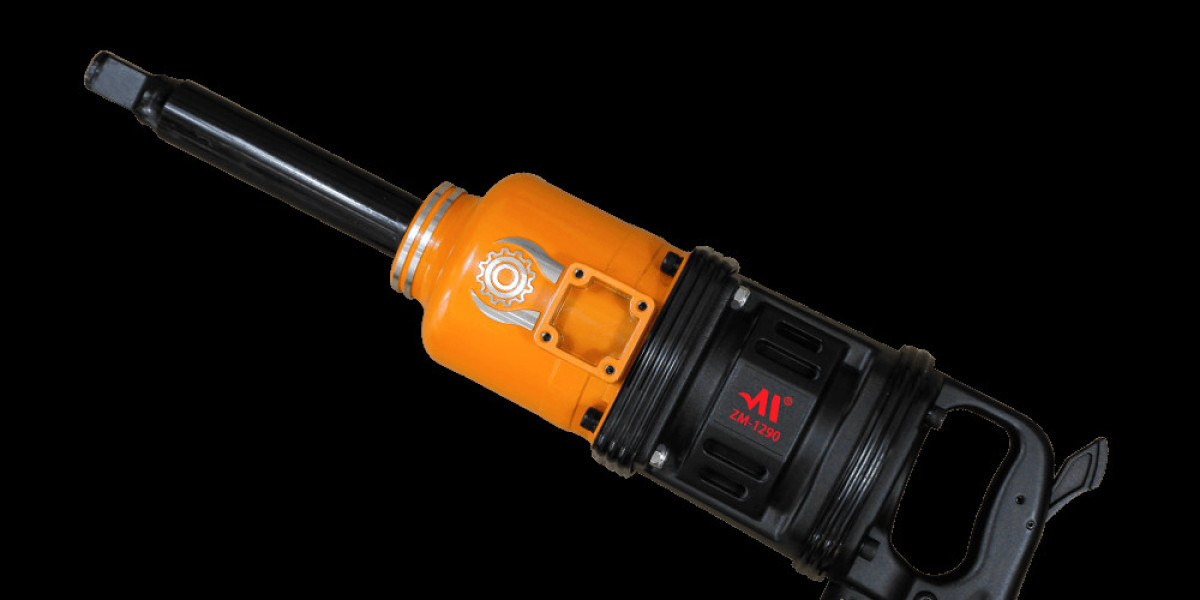

The distinctive performance of a Torque Air Wrench stems from its internal impact mechanism, designed to convert steady air pressure into intermittent, high-torque rotational pulses. When the trigger is pressed, compressed air flows into the tool, spinning a rotor. Attached to this rotor is a set of weighted hammers. As the rotor spins, centrifugal force throws these hammers outward until they strike a paired set of anvils connected to the output drive. Each impact delivers a short, powerful burst of torque to the socket. This hammer-anvil cycle repeats many times per second, allowing the fastener to be turned with a percussive action that overcomes friction and inertia much more effectively than continuous rotation.
Key components beyond the hammer mechanism include the air motor (vane type), the throttle valve controlled by the trigger, and the forward/reverse mechanism, which changes the direction of air flow to the motor. The housing is constructed from durable aluminum or composite materials to withstand jobsite impacts. Higher-end models may feature a regulator to adjust air flow and impact power, an ergonomic grip, and a silencer kit to reduce noise. The tool's torque output is not directly set on the wrench itself but is a function of air pressure and the duration of trigger application, requiring user skill for final precision tightening.
Maintenance focuses on the pneumatic system. Inline filters and lubricators in the air supply protect the tool from moisture and particulates, while daily adding a few drops of pneumatic tool oil into the air inlet ensures long vane and hammer life. The robust and relatively simple mechanical design of a Torque Air Wrench is the source of its longevity and power. This engineering provides a high power-to-weight ratio, making it a preferred tool for demanding fastening applications in construction, manufacturing, and vehicle service.