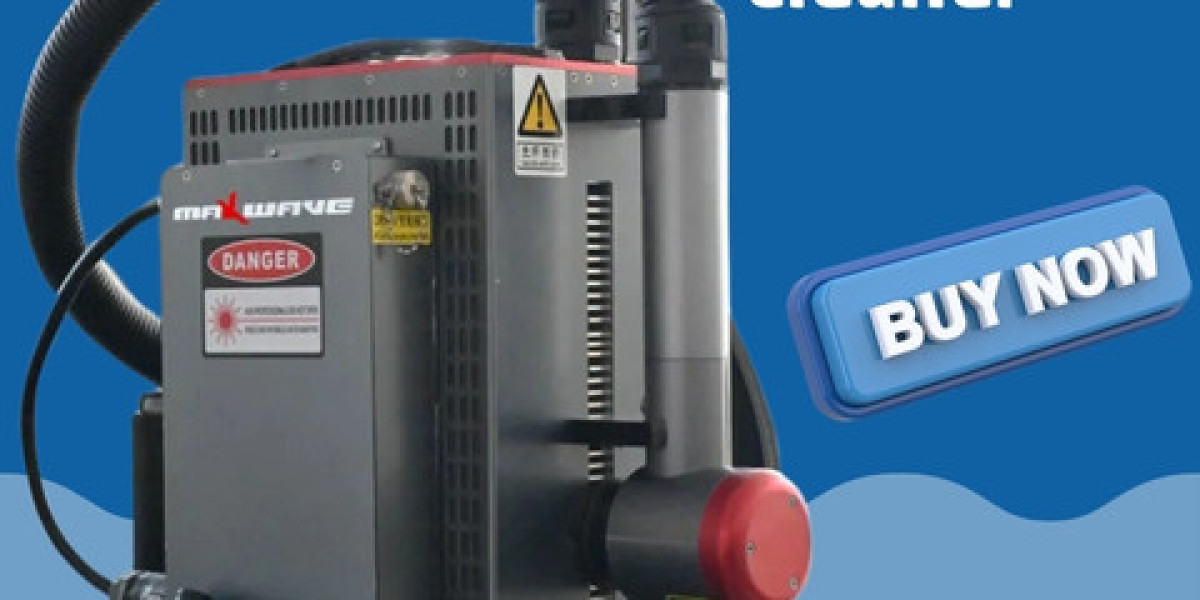

The handheld laser cleaner has rapidly become a preferred solution for surface preparation and material cleaning across multiple industrial sectors. This modern cleaning technology is designed to remove contaminants such as rust, paint layers, oil residues, oxides, and industrial coatings from metal and non-metal surfaces using controlled laser energy. Its compact handheld design allows operators to perform precise cleaning tasks with flexibility, making it suitable for workshops, factories, maintenance sites, and on-location industrial environments.
Unlike traditional mechanical or chemical cleaning methods, the handheld laser cleaner operates through a non-contact process. Laser pulses are directed onto the surface, where unwanted layers absorb the energy and are separated from the base material. The underlying surface remains intact and clean, which makes this technology highly valued in industries where surface integrity and accuracy are critical.
Working Principle of a Handheld Laser Cleaner
A handheld laser cleaner functions by emitting short, high-intensity laser pulses onto a contaminated surface. These pulses interact with the unwanted layer rather than the substrate itself. Due to differences in absorption rates between the contaminant and the base material, the contaminant rapidly heats and disintegrates or vaporizes, leaving the original surface exposed.
The operator guides the handheld cleaning head over the surface, allowing controlled and localized cleaning. This process does not rely on abrasives, chemicals, or excessive heat transfer, making it suitable for precision cleaning tasks. The laser parameters can be adjusted based on the type of contamination and surface material, ensuring consistent cleaning performance across various applications.
Industrial Applications of Handheld Laser Cleaner
The handheld laser cleaner is widely used in manufacturing, restoration, and maintenance operations. In the metal fabrication industry, it is applied before welding, coating, or bonding processes to ensure surface purity. Clean surfaces contribute to better weld consistency and coating adhesion.
In automotive and transportation sectors, handheld laser cleaners are used for mold cleaning, brake component maintenance, and removal of corrosion from structural parts. Aerospace and aviation industries rely on this technology for cleaning sensitive components without altering surface dimensions.
The shipbuilding and marine industries also utilize handheld laser cleaner systems for rust and coating removal on metal structures, decks, and pipelines. In power generation and oil & gas sectors, laser cleaning supports equipment maintenance by removing oxidation and deposits from turbines, valves, and pipes.
Role in Surface Preparation and Restoration
Surface preparation plays a vital role in industrial quality control. The handheld laser cleaner supports precise surface conditioning by removing only the targeted layer. This makes it suitable for heritage restoration, mold refurbishment, and industrial equipment renewal.
In restoration projects, such as cleaning historical metal artifacts or architectural components, laser cleaning allows selective removal of corrosion without damaging the original surface texture. This level of control is difficult to achieve using traditional cleaning techniques.
Handheld Laser Cleaner in Manufacturing Environments
Modern manufacturing processes demand high efficiency and repeatability. The handheld laser cleaner integrates seamlessly into production workflows for pre-treatment and post-processing tasks. It can be used for inline cleaning or as a standalone maintenance tool.
In electronics manufacturing, laser cleaning helps remove residues from connectors and precision components. In tool and die industries, it supports mold maintenance by cleaning surfaces without disassembly, reducing downtime and improving production continuity.
Portability and Operational Flexibility
One of the defining aspects of the handheld laser cleaner is its portability. The compact handheld cleaning head allows operators to reach confined or complex areas that are difficult to access with stationary systems. This flexibility supports on-site maintenance tasks and reduces the need to transport large components to dedicated cleaning facilities.
The handheld format also enables controlled cleaning on curved, uneven, or intricate surfaces. Operators can adapt the cleaning approach in real time based on surface condition and contamination level, enhancing overall cleaning precision.
Market Demand and Industry Adoption
Global demand for handheld laser cleaner systems has increased due to rising quality standards and the need for efficient surface treatment solutions. Industries are shifting toward laser-based cleaning technologies as part of modernization initiatives and automation strategies.
Manufacturers are investing in handheld laser cleaner solutions to improve process reliability and meet strict production requirements. The technology aligns with evolving industrial standards that prioritize precision, repeatability, and controlled material processing.
Integration with Modern Industrial Practices
The handheld laser cleaner complements digital manufacturing and smart factory environments. It can be integrated into standardized maintenance routines and quality assurance processes. Operators can document cleaning results and maintain consistency across multiple production cycles.
In research and development settings, handheld laser cleaner systems are used for experimental surface treatments and material testing. The ability to precisely control cleaning depth and area supports innovation in material science and industrial engineering.
Long-Term Industrial Value
The handheld laser cleaner represents a shift toward advanced surface treatment technologies. Its ability to perform controlled cleaning tasks without physical contact supports high-value manufacturing and maintenance operations. As industries continue to adopt advanced production methods, laser cleaning technology is expected to play a significant role in ensuring surface quality and process reliability.
By supporting precision cleaning, adaptability, and operational efficiency, the handheld laser cleaner continues to establish itself as a valuable tool across a wide range of industrial applications.