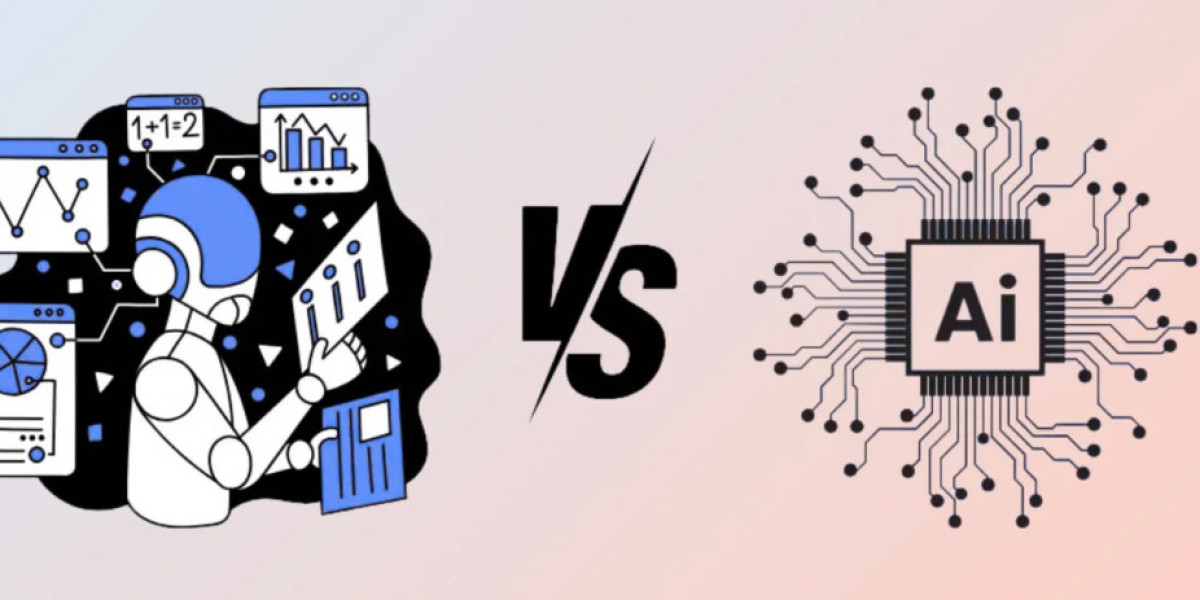

Artificial Intelligence (AI) and Machine Learning (ML) are no longer experimental technologies reserved for innovation labs. Today, an AI ML business strategy is a core driver of growth, efficiency, and competitive advantage. Organizations that successfully integrate AI and ML into their business models are transforming how they operate, serve customers, and make strategic decisions.
Rather than focusing on technology alone, an AI ML business approach aligns intelligent systems with business objectives—turning data into insights, automation into scale, and intelligence into measurable outcomes.
What Does AI ML Business Really Mean?
An AI ML business is one where artificial intelligence and machine learning are embedded into core processes, decision-making frameworks, and customer interactions. This goes beyond isolated automation projects and focuses on enterprise-wide value creation.
In an AI ML business:
Decisions are driven by predictive insights, not intuition
Processes adapt dynamically based on real-time data
Customer experiences are personalized at scale
Operations become proactive instead of reactive
AI provides the intelligence layer, while ML continuously improves accuracy and performance through data-driven learning.
Why AI ML Business Has Become a Strategic Priority
Businesses today face increasing complexity—volatile markets, rising costs, data overload, and growing customer expectations. Traditional systems struggle to keep up with this pace of change.
An AI ML business strategy addresses these challenges by:
Accelerating decision-making with predictive analytics
Improving efficiency through intelligent automation
Unlocking insights hidden in large datasets
Enabling scalable growth without proportional cost increases
Organizations that adopt AI and ML strategically gain resilience and agility in uncertain environments.
Key Pillars of a Successful AI ML Business
1. Data-Driven Decision Making
Data is the foundation of any AI ML business. ML models analyze historical and real-time data to uncover trends, predict outcomes, and support strategic decisions.
Examples include:
Sales and demand forecasting
Customer churn prediction
Risk and fraud analysis
When decisions are guided by data-driven intelligence, businesses reduce uncertainty and improve accuracy.
2. Intelligent Automation
AI enables automation that goes beyond repetitive tasks. Intelligent systems understand context, learn from outcomes, and optimize workflows automatically.
Business functions transformed by AI-driven automation include:
Customer support and service operations
Finance and accounting processes
Supply chain and logistics management
This reduces manual effort while improving speed and consistency.
3. Personalization at Scale
An AI ML business leverages ML models to deliver personalized experiences across digital channels. By analyzing customer behavior and preferences, businesses can tailor offerings in real time.
Applications include:
Product and content recommendations
Dynamic pricing strategies
Personalized marketing campaigns
Personalization improves customer engagement, loyalty, and revenue growth.
4. Predictive and Proactive Operations
AI and ML enable businesses to anticipate problems before they occur. Predictive insights help organizations manage risks, optimize resources, and maintain operational stability.
Examples include:
Predictive maintenance of equipment
Inventory and demand planning
Workforce scheduling optimization
This proactive approach reduces disruptions and operational costs.
AI ML Business Use Cases Across Industries
Manufacturing
AI and ML improve production planning, quality control, and equipment reliability. Predictive insights reduce downtime and increase throughput.
Retail and E-commerce
AI ML business models drive personalization, demand forecasting, and dynamic pricing—enhancing customer experience and profitability.
Finance and Banking
ML models detect fraud, assess credit risk, and automate compliance processes, improving security and efficiency.
Healthcare
AI supports diagnostics, patient monitoring, and operational planning, improving outcomes and resource utilization.
Across industries, AI and ML enable smarter, faster, and more scalable business operations.
Challenges in Building an AI ML Business
Despite its potential, transitioning into an AI ML business comes with challenges:
Data Silos: Disconnected systems limit model accuracy
Skill Gaps: AI and ML expertise is scarce
Integration Complexity: Legacy systems may resist change
Change Management: Employees may be hesitant to trust AI-driven decisions
Addressing these challenges requires leadership alignment, strong data governance, and a clear transformation roadmap.
Best Practices for AI ML Business Adoption
Start with Clear Business Objectives
AI initiatives should solve real problems—not showcase technology.Build a Strong Data Foundation
Invest in data quality, governance, and accessibility.Adopt Incrementally
Begin with high-impact use cases and scale gradually.Measure Business Impact
Track KPIs such as cost savings, productivity, and revenue growth.Partner with Experts
Experienced partners accelerate implementation and reduce risk.
The Long-Term Impact of an AI ML Business Strategy
Organizations that successfully adopt AI and ML gain:
Faster decision-making
Higher operational efficiency
Improved customer experience
Sustainable competitive advantage
An AI ML business is not a one-time transformation—it is a continuous journey of learning, optimization, and innovation.
Amatrons Technologies
At Amatrons Technologies, we help organizations build and scale a successful AI ML business. From defining strategy and preparing data to deploying intelligent systems and optimizing performance, we deliver AI and ML solutions aligned with real business goals.
If you are ready to transform data into intelligence and intelligence into growth, Amatrons is your trusted partner.
Partner with Amatrons Technologies to build a future-ready business powered by AI and Machine Learning.