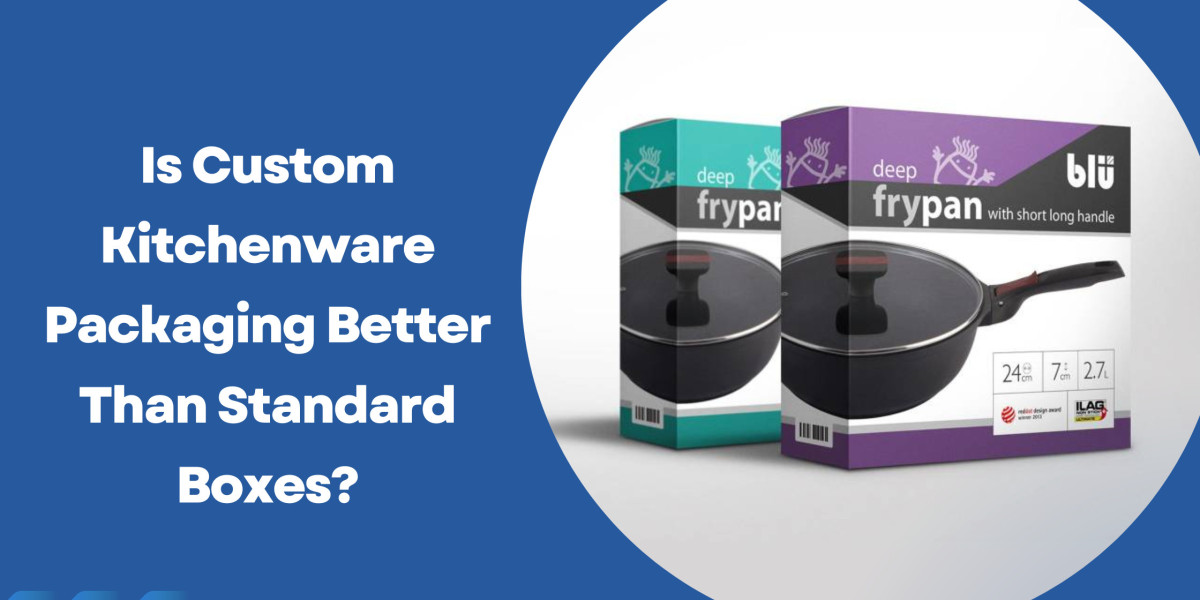

Kitchenware products—from cookware and utensils to appliances and dining accessories—require packaging that balances protection, presentation, and practicality. As competition grows in both retail and eCommerce markets, many brands ask an important question: Is custom kitchenware packaging better than standard boxes?
The short answer is yes. Custom packaging provides significant advantages in product safety, branding, customer experience, and long-term cost efficiency. Let’s explore why custom kitchenware packaging often outperforms generic, standard boxes.
What Is Custom Kitchenware Packaging?
Custom kitchenware packaging refers to boxes and packaging solutions designed specifically to fit kitchen-related products. These boxes are customized in terms of size, structure, material, printing, and inserts to match the product’s dimensions and brand identity.
Custom packaging is commonly used for:
Cookware and bakeware
Glassware and ceramic items
Cutlery and utensils
Small kitchen appliances
Storage containers and accessories
Unlike standard boxes, custom solutions are built with the product’s weight, fragility, and presentation needs in mind.
What Are Standard Boxes?
Standard boxes are generic, pre-sized packaging solutions made for general use. They are often used because they are readily available and initially cheaper.
However, standard boxes usually:
Do not fit products precisely
Require extra void fill
Offer limited branding options
Provide inconsistent protection
While they may work for short-term needs, they often fall short for kitchenware products that need durability and presentation.
Product Protection: Custom vs. Standard Boxes
Kitchenware items are often heavy, fragile, or oddly shaped. Custom packaging provides superior protection by reducing movement and impact during shipping.
Custom kitchenware boxes offer:
Precise sizing to prevent shifting
Built-in inserts, dividers, or molded trays
Stronger materials suited to product weight
Better resistance to crushing and breakage
Standard boxes rely heavily on fillers like bubble wrap or foam, which increases cost and still leaves room for damage.
Better Fit Means Lower Shipping Costs
Custom-sized kitchenware packaging eliminates wasted space. This directly affects shipping costs, especially for eCommerce brands.
Benefits include:
Reduced dimensional weight charges
Less filler material needed
More efficient pallet stacking
Lower risk of returns due to damage
Standard boxes often result in oversized shipments, leading to higher logistics expenses.
Branding & Shelf Appeal Advantages
In retail environments, packaging plays a major role in influencing purchasing decisions. Custom kitchenware packaging allows brands to showcase their identity clearly and professionally.
Custom boxes support:
Full-color printing and brand storytelling
Logo placement and consistent brand colors
Premium finishes like matte, gloss, or spot UV
Window cutouts to display products
Standard boxes offer minimal branding and often look generic, making it harder to stand out on crowded shelves.
Enhanced Unboxing Experience
For online shoppers, the unboxing experience shapes first impressions. Custom kitchenware packaging creates a sense of quality and care.
A well-designed box:
Builds customer trust
Increases perceived product value
Encourages social sharing and reviews
Improves brand recall
Standard packaging rarely delivers a memorable unboxing experience.
Material Quality & Durability
Custom kitchenware boxes are produced using materials chosen specifically for product requirements.
Common custom materials include:
Corrugated cardboard for heavy items
Rigid boxes for premium kitchenware
Kraft packaging for eco-friendly brands
Standard boxes may not provide the same level of strength, especially for cookware or glass products.
Sustainability Benefits of Custom Packaging
Custom packaging can be more sustainable than standard boxes. Proper sizing reduces material waste and shipping emissions.
Eco-friendly custom kitchenware packaging options include:
Recyclable cardboard and kraft materials
Minimalist designs with reduced ink usage
Biodegradable coatings and adhesives
Reusable or storage-friendly box designs
Standard boxes often require extra fillers, increasing waste.
Cost Comparison: Short-Term vs. Long-Term
While standard boxes may seem cheaper initially, custom kitchenware packaging often delivers better long-term value.
Custom packaging helps reduce:
Product damage and returns
Excess filler material costs
Shipping inefficiencies
Brand inconsistency
Over time, these savings can outweigh the higher upfront cost of customization.
Ideal Industries for Custom Kitchenware Packaging
Custom kitchenware boxes are especially beneficial for:
Retail kitchenware brands
eCommerce stores
Premium cookware manufacturers
Subscription box services
Corporate gifting businesses
Any brand selling kitchen products regularly can benefit from custom solutions.
Final Verdict: Is Custom Kitchenware Packaging Better?
Yes—custom kitchenware packaging is significantly better than standard boxes for most brands. It provides superior protection, stronger branding, lower shipping costs, better sustainability, and a more professional customer experience.
For businesses focused on growth, customer satisfaction, and long-term efficiency, investing in custom kitchenware packaging is a strategic move that delivers measurable results.