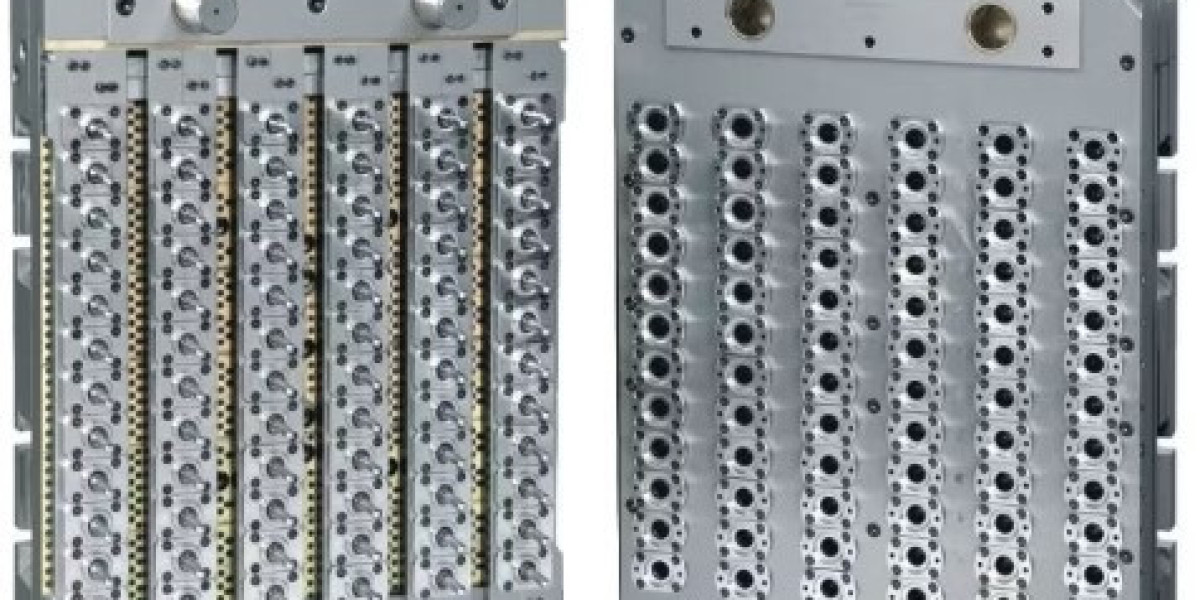

In modern plastic packaging production, choosing suitable moulding equipment is essential for achieving consistent bottle quality and efficient manufacturing. A well-designed PET Preform Mould helps manufacturers control preform dimensions, improve material distribution, and maintain stable production conditions. When evaluating a PET Preform Mould, buyers should consider cavity configuration, mould structure, cooling performance, and compatibility with their injection moulding machines. These factors influence the final appearance of preforms and the efficiency of subsequent bottle blowing processes.
Understanding the Role of PET Preform Moulds
PET preforms serve as the foundation for producing plastic bottles used in beverage packaging, household products, personal care containers, and other applications. Their dimensions, neck finishes, wall thickness, and weight distribution all influence the final bottle structure.
The mould plays an important role in shaping these characteristics during injection moulding. Its cavity design determines the preform's basic geometry, while the core structure and temperature control system contribute to consistent forming conditions.
Manufacturers need to consider the relationship between preform specifications and the intended bottle design. A properly configured mould can help reduce dimensional variations and support reliable production across different packaging requirements.
How Cavity Design Influences Production Efficiency
Cavity configuration is an important consideration when selecting injection moulding equipment. Multi-cavity moulds allow manufacturers to produce several preforms during one injection cycle, making them suitable for production environments that require continuous output.
However, increasing cavity numbers also creates additional requirements for injection balance, cooling distribution, and mould alignment. Each cavity should receive an appropriate amount of molten PET material to maintain consistent preform characteristics.
The runner system also deserves attention. Its structure influences material flow and filling conditions throughout the mould. A well-planned design can help manufacturers achieve balanced filling while reducing unnecessary material waste.
QH Preform Mould Technology and Structural Considerations
QH Preform Mould focuses on mould solutions designed for plastic preform manufacturing. When evaluating mould equipment from qhpreformmould, buyers can pay attention to several structural details that influence long-term operation.
Core and cavity materials affect mould durability, surface quality, and maintenance requirements. Their machining precision is equally important because even small dimensional differences may influence the finished preform.
Another consideration is the mould's cooling arrangement. PET processing requires suitable temperature management to support stable forming and effective cycle control. Cooling channels should be designed to distribute temperature evenly across the mould structure.
In addition, manufacturers should examine the accessibility of replaceable components. Practical maintenance arrangements can simplify cleaning, inspection, and component replacement during regular production operations.
Matching Mould Specifications with Bottle Applications
Different bottle applications require different preform designs. Beverage containers may need specific neck finishes and wall thickness distributions, while cosmetic and household packaging may involve different shapes and appearance requirements.
Before purchasing mould equipment, manufacturers should identify the intended bottle capacity, preform weight, neck dimensions, and material specifications. These details provide a useful foundation for determining cavity dimensions and mould compatibility.
Machine compatibility is another essential factor. Buyers should check installation dimensions, injection capacity, clamping requirements, and operating conditions before selecting a mould. Proper matching helps avoid unnecessary adjustments and supports smoother production integration.
Manufacturers should also consider future product development. A flexible production plan can make it easier to introduce additional bottle designs without creating unnecessary equipment changes.
Maintenance Practices for Reliable Mould Operation
Regular maintenance contributes to consistent mould performance and helps prevent unexpected production interruptions. Cleaning cavity surfaces, checking cooling channels, and inspecting moving components are useful parts of routine equipment management.
Operators should pay attention to wear on sealing surfaces and the condition of core and cavity components. Any unusual changes in preform dimensions or surface appearance may indicate that the mould requires inspection.
A suitable maintenance schedule should reflect production frequency, material characteristics, and actual operating conditions. Keeping maintenance records also helps production teams identify recurring problems and organize replacement components.
Selecting a suitable mould is only part of establishing an effective packaging production process. Equipment design, machine compatibility, operating conditions, and maintenance practices all contribute to manufacturing consistency. For businesses exploring preform mould solutions, product specifications and technical support should be considered together. Visit https://www.qhpreformmould.com/ to learn more about available mould products and explore solutions for different plastic packaging manufacturing requirements.







