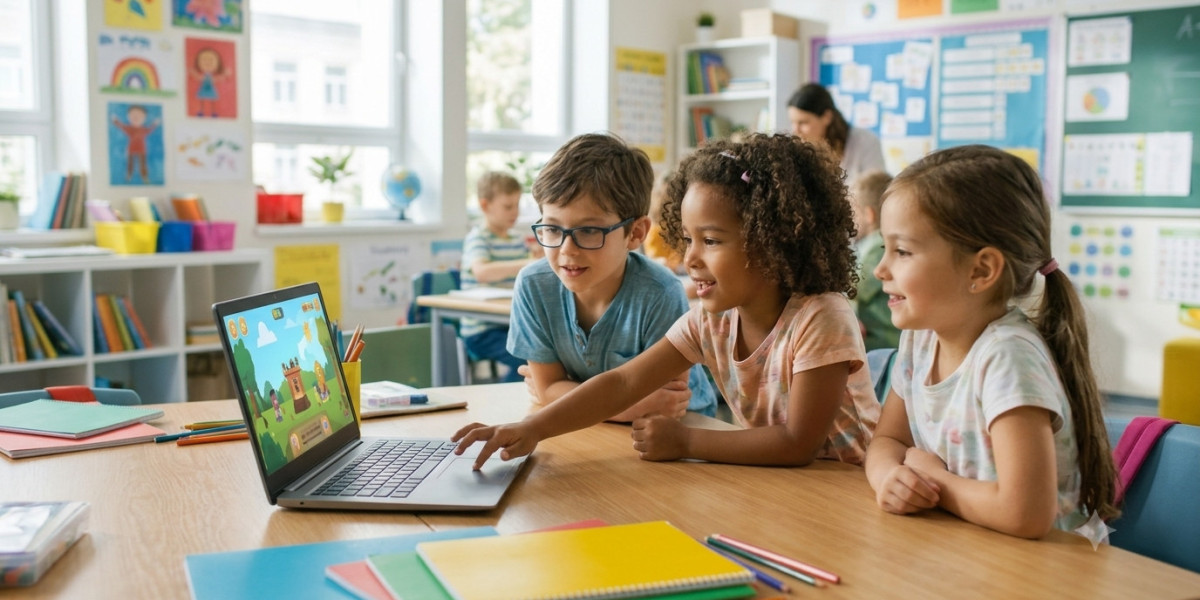

Children learn language through everyday experiences, conversations, play, and interaction with the people around them. While talking, reading stories, and exploring new things are important for communication growth, interactive games can make the learning process even more engaging. They give children opportunities to listen, understand, respond, and practise using words in enjoyable ways.
For parents, educators, and speech-language pathologists, games can be useful tools for encouraging communication skills. Activities such as picture matching, naming objects, storytelling, and listening games help children learn while keeping them interested.
Language Development in Children involves more than learning new words. It includes understanding instructions, expressing thoughts, forming sentences, asking questions, and participating in conversations. Interactive games can support these skills by creating meaningful opportunities for children to communicate.
1. Make Learning New Words Enjoyable
Building vocabulary is an important part of language development. Children need regular opportunities to hear, understand, and use new words in different situations.
Interactive games such as picture identification, object matching, and category sorting introduce vocabulary through visual and hands-on experiences.
For example, a picture-matching game can help children learn the names of animals, fruits, vegetables, colours, and everyday objects. Parents can ask questions such as:
What is this?
Where does this animal live?
Which fruit is yellow?
Can you find another vehicle?
These questions encourage children to identify objects, remember words, and use vocabulary in simple conversations.
2. Improve Listening and Understanding Skills
Good communication starts with listening and understanding. Children need to recognise spoken words, process information, and respond appropriately.
Interactive listening games provide opportunities to practise these abilities. Activities such as following directions, identifying sounds, and selecting pictures based on spoken instructions can improve listening comprehension.
For example, parents can play a simple game by saying, "Find the red ball," or "Put the small car under the table." As children become comfortable, instructions can gradually become more challenging.
These activities help children understand words, follow instructions, and respond to spoken language in everyday situations.
3. Encourage Sentence Formation
Learning individual words is only one part of communication. Children also need to understand how words combine to express complete ideas.
Interactive storytelling, picture sequencing, and sentence-building games can encourage children to create meaningful sentences.
For example, show a child a picture of a boy playing with a ball. Ask them to describe what is happening. If the child says, "Boy ball," you can model a longer sentence: "The boy is playing with a ball."
Other useful activities include:
Arranging pictures to create a simple story.
Completing sentences using picture clues.
Describing people, objects, and actions.
Answering questions about familiar situations.
Regular practice helps children become more comfortable expressing their thoughts.
4. Develop Communication and Social Interaction
Language is essential for building relationships and interacting with others. Children need opportunities to take turns, ask questions, answer, share ideas, and participate in conversations.
Interactive games can encourage these social communication skills through shared activities.
Turn-taking games, pretend play, role-playing, and simple guessing games help children understand the importance of listening and responding.
For example, during a pretend shopping game, one child can act as the shopkeeper while another acts as the customer. They can practise asking questions, requesting items, and responding politely.
Such experiences encourage meaningful communication in a relaxed environment.
5. Support Memory and Language Processing
Many language-learning games involve remembering words, recognising patterns, and connecting pictures with their meanings. These activities encourage children to process information and use language to complete tasks.
Some examples include:
Memory matching games: Children remember the positions of pictures and identify matching pairs.
What's Missing? Children look at a group of objects, identify what has disappeared, and name it.
Picture sequencing: Children arrange images in the correct order and describe what happens.
Guessing games: Children listen to clues and identify the correct object or animal.
These activities combine thinking and communication skills. They can also help children practise vocabulary, attention, and comprehension in an enjoyable way.
6. Make Language Practice More Engaging with Digital Games
Digital games can provide an additional way to practise communication skills. They often include colourful visuals, sounds, animations, and interactive tasks that encourage children to participate.
For example, a child may listen to a word and select the matching picture, identify objects on a screen, complete a sentence, or answer questions about a story.
Well-designed digital activities can support Language Development in Children by offering repeated practice and immediate feedback. They can also allow therapists to select activities based on a child's current abilities and learning goals.
However, digital games should be used thoughtfully. They work best when combined with real conversations, hands-on play, storytelling, and adult guidance. Parents and therapists can sit with children, discuss the activities, and encourage them to use newly learned words outside the game.
7. Adapt Games to Each Child's Communication Needs
Every child has different interests, abilities, and communication goals. A game that works well for one child may be too easy or challenging for another.
Choosing suitable activities is important for keeping children motivated and helping them practise specific skills.
Here are some ways to adapt games:
For children learning their first words, use simple picture identification and naming games.
For children combining words, introduce sentence-building and describing activities.
For children developing longer sentences, try storytelling and picture-sequencing games.
For children working on comprehension, use listening games and instruction-based activities.
For children practising social communication, introduce turn-taking and role-playing games.
Suitable Language Therapy Resources can help parents and therapists organise activities according to individual communication goals. These resources may include vocabulary games, comprehension exercises, sentence-building tasks, and interactive listening activities.
How Parents and Speech Therapists Can Use Interactive Games
Parents and speech-language pathologists both play an important role in encouraging communication through play.
At home, parents can include short language-learning activities in everyday routines. Playing naming games during mealtimes, discussing pictures in storybooks, or describing toys during playtime can create regular opportunities to communicate.
Speech-language pathologists can use structured games to work on specific communication goals. For example, they may select activities that focus on vocabulary, sentence formation, listening comprehension, or conversational skills.
For children who need additional language therapy for kids, a qualified professional can recommend suitable activities and provide language development therapy based on an individual assessment.
The goal is not simply to complete a game but to help children use the skills they practise in real-life situations. Consistent encouragement and meaningful interaction make this process more useful.
When Should Children Receive Additional Language Support?
Interactive games can encourage communication, but they are not a replacement for professional assessment or therapy when a child has ongoing language difficulties.
Parents should consider consulting a qualified speech-language pathologist if their child:
Has difficulty understanding simple instructions.
Uses fewer words than expected for their age.
Struggles to combine words into sentences.
Finds it difficult to express needs and thoughts.
Has trouble participating in everyday conversations.
Loses communication skills they previously developed.
A speech-language pathologist can assess the child's communication abilities and suggest appropriate language therapy for children. Depending on individual needs, the therapist may recommend speech therapy for kids, structured games, and other child development therapy resources.
Early identification and appropriate language support for children can help address communication challenges and build confidence.
Conclusion
Interactive games make language learning enjoyable by giving children opportunities to listen, understand, practise words, form sentences, and communicate with others. From simple picture-matching activities to digital learning games, different types of play can support important communication skills.
Supporting Language Development in Children requires regular practice, patience, and activities that match their individual needs. When parents, educators, and speech-language pathologists use games as part of meaningful interactions, children get more opportunities to develop communication skills that they can use in everyday life.