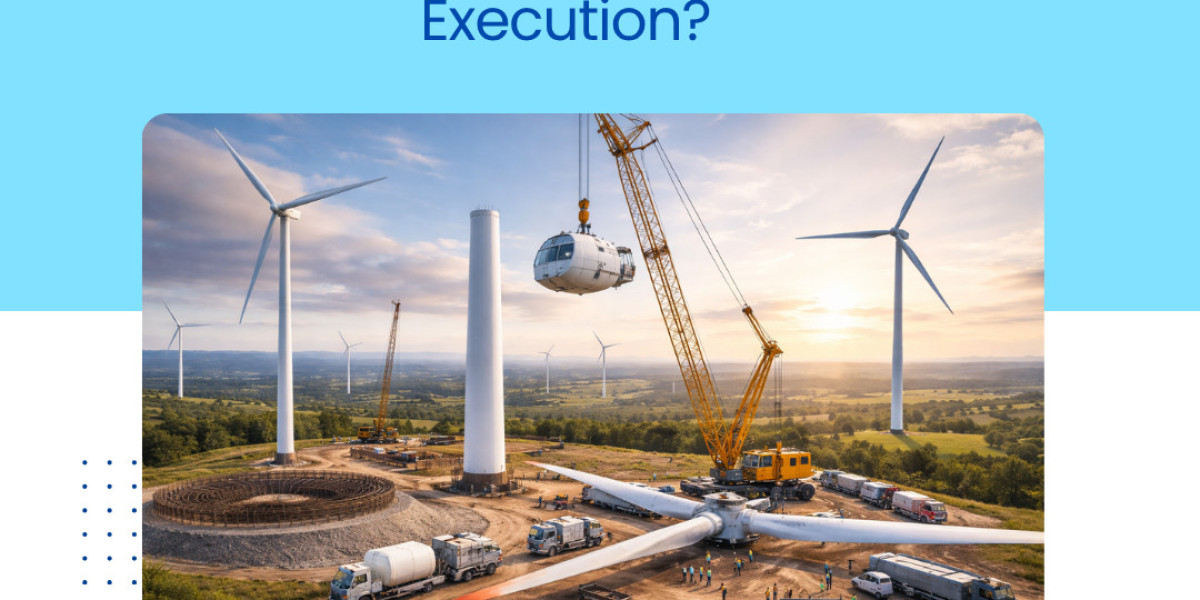

Wind farm construction involves several activities that must be completed in a planned sequence. These include site preparation, transportation of turbine components, crane mobilisation, turbine erection, electrical infrastructure development and commissioning. Coordinating these activities requires careful planning because delays in transportation or equipment availability can affect the entire construction schedule.
Project logistics plays an important role in connecting transportation, equipment mobilisation, material delivery and site operations. It helps project teams organise the movement of large wind turbine components from manufacturing facilities to installation locations while considering road conditions, access restrictions and handling requirements.
Understanding logistics planning helps explain how wind EPC contractors coordinate different construction activities and manage the requirements of large-scale Wind Energy Projects.
1. How Do I Understand the Role of Project Logistics in Wind Farm Construction?
Project logistics involves planning and coordinating the movement of equipment, materials and components required for wind farm development.
Wind turbine components are large and heavy, so their transportation requires specialised vehicles, suitable routes and careful delivery scheduling.
Important logistics activities include:
Planning transportation routes.
Assessing road and bridge conditions.
Selecting suitable heavy transport vehicles.
Coordinating loading and unloading activities.
Arranging transportation permits.
Scheduling component deliveries.
Coordinating equipment mobilisation.
These activities help construction teams receive components according to the project schedule.
Wind EPC contractors may coordinate logistics activities with manufacturers, transportation companies, crane suppliers and installation specialists, depending on their contractual responsibilities.
2. How Do I Connect WTG Transportation With Wind Farm Construction?
WTG transportation involves moving wind turbine components such as blades, tower sections, nacelles and hubs from manufacturing or storage facilities to wind farm locations.
Each component has different transportation requirements based on its weight, dimensions and handling instructions.
Route surveys are important before transportation begins. Logistics teams examine road width, turning radius, bridge capacity, overhead electrical lines, gradients and road surface conditions.
For example, a long turbine blade may not pass through a narrow road turn. The transportation team must identify this restriction and evaluate an alternative route or specialised vehicle configuration.
Blade trailers are specially designed vehicles used to transport long wind turbine blades. Depending on blade dimensions and route conditions, extendable trailers, rear-steering systems or blade-lifting arrangements may be required.
Proper transportation planning helps coordinate component deliveries with foundation readiness, crane availability and turbine erection schedules.
3. Why Are Crane Packages Important in Project Logistics?
Crane packages are essential for lifting and positioning heavy turbine components during installation. Their selection must be coordinated with transportation planning and site preparation.
Crane requirements depend on:
Turbine hub height.
Weight of tower sections and nacelles.
Component dimensions.
Required lifting capacity and radius.
Ground-bearing capacity.
Crane assembly space.
Site accessibility and weather conditions.
Crawler cranes, all-terrain cranes and auxiliary cranes may be selected according to project requirements.
A crane supplier near me can be evaluated based on equipment availability, technical suitability, operator qualifications, maintenance records and mobilisation arrangements.
Logistics teams must also coordinate crane delivery, assembly and positioning. If the crane arrives before the working platform is ready, additional storage or equipment management arrangements may be necessary.
4. How Do I Understand the Role of Wind EPC Contractors in Logistics Coordination?
Wind EPC contractors connect engineering, procurement and construction activities according to the agreed project scope.
Their coordination may involve transportation planning, equipment mobilisation, construction scheduling and communication between different contractors.
For example, transportation teams must deliver turbine components according to the planned erection sequence. Crane operators need suitable working platforms, while installation teams require components to be available at the correct time.
Wind EPC companies in India may manage these requirements across different geographical conditions, including coastal regions, hilly terrain and remote wind farm locations.
Similarly, wind EPC companies in Mumbai may coordinate project logistics and technical activities for wind energy developments located outside the city.
Clear communication between all project participants helps identify scheduling conflicts and manage potential delays.
5. How Does Project Logistics Affect Wind Turbine Installation Costs?
The wind turbine installation cost in India depends on several technical and operational factors. Transportation and logistics are among the important considerations when preparing a project budget.
Cost-related factors may include:
Transportation distance between manufacturing facilities and project sites.
Specialised vehicles required for turbine components.
Route modifications and transportation permits.
Crane mobilisation and demobilisation.
Loading, unloading and component handling.
Equipment waiting time caused by scheduling delays.
Site access and road preparation requirements.
The installation cost also depends on turbine capacity, foundation conditions, crane selection, electrical infrastructure and contractual scope.
A detailed logistics plan helps project teams identify transportation requirements and estimate related expenses before construction begins.
6. How Do I Coordinate Electrical BOP and Mechanical BOP Activities?
Wind farm construction includes electrical and mechanical infrastructure beyond the turbine itself.
Electrical BOP, also known as EBOP, refers to electrical balance of plant. Depending on the project design, it may include:
Electrical cable networks.
Transformers and associated equipment.
Earthing and lightning protection systems.
Substation infrastructure.
Protection and control systems.
Grid connection facilities.
Mechanical BOP generally covers mechanical infrastructure outside the turbine's main equipment. Its exact scope depends on project specifications and contractual responsibilities.
Logistics planning helps coordinate the delivery of cables, transformers, mechanical equipment and other materials according to construction requirements.
These activities must be aligned with turbine installation and testing schedules to avoid unnecessary delays.
7. How Do Wind Farm Management and Project Planning Improve Execution?
Wind farm management involves activities such as operational planning, maintenance coordination, performance monitoring and project documentation, depending on the assigned scope.
During construction, effective wind power project management helps connect engineering, transportation, crane operations and installation schedules.
Project teams may monitor:
Construction milestones.
Equipment and material availability.
Transportation progress.
Crane mobilisation schedules.
Contractor coordination.
Site safety requirements.
Quality inspections and documentation.
A Wind Energy Company in India must consider these activities when planning large Wind Energy Projects.
Effective logistics coordination also supports Green Energy Solutions by helping organise the infrastructure and equipment required for wind energy development.
8. What Challenges Do Wind Energy Contractors Face During Project Logistics?
Wind Energy Contractors may encounter several challenges while coordinating wind farm construction.
Common challenges include difficult road conditions, transportation restrictions, changing weather, limited equipment availability and delays in site preparation.
For example, heavy rainfall can affect access roads and crane platforms. Restricted bridge capacity may require alternative transportation routes, while limited crane availability can affect turbine erection schedules.
Wind turbine installation in India involves different geographical and infrastructure conditions. Therefore, logistics plans must consider the specific requirements of each project location.
Early route surveys, realistic delivery schedules, suitable vehicle selection and contingency planning help manage these challenges.
Frequently Asked Questions
1. What is project logistics in wind farm construction?
Project logistics involves planning and coordinating the transportation of turbine components, equipment mobilisation, material delivery and site access.
2. Why is logistics important for wind turbine installation?
It helps ensure that turbine components and installation equipment reach the project site according to the construction schedule.
3. What vehicles are used for WTG transportation?
Specialised trailers and heavy transport vehicles are used for blades, tower sections, nacelles and other turbine components.
4. How do blade trailers support wind farm construction?
Blade trailers transport long turbine blades and may use specialised configurations to manage difficult road turns and route restrictions.
5. How do crane packages influence project execution?
Crane packages provide the lifting equipment required for turbine erection. Their mobilisation and availability must match site readiness and installation schedules.
6. What is the difference between EBOP and mechanical BOP?
EBOP covers electrical infrastructure, while mechanical BOP generally covers mechanical infrastructure outside the turbine's main equipment.
7. What factors influence wind turbine installation cost in India?
Transportation distance, crane requirements, turbine specifications, site conditions, foundation work and electrical infrastructure can affect installation costs.
8. How can wind EPC contractors reduce logistics delays?
They can coordinate route surveys, equipment availability, transportation schedules, crane mobilisation and site readiness according to the project plan.
Conclusion
Project logistics improves wind farm construction and execution by connecting transportation, equipment mobilisation, crane operations and turbine installation. Route surveys, specialised vehicles, blade trailers, delivery scheduling and infrastructure coordination help project teams manage complex construction requirements.
Planning these activities early helps identify transportation challenges, organise equipment availability and prepare realistic construction schedules. Effective coordination between engineering, logistics and installation teams is therefore an important part of organised wind energy project execution.