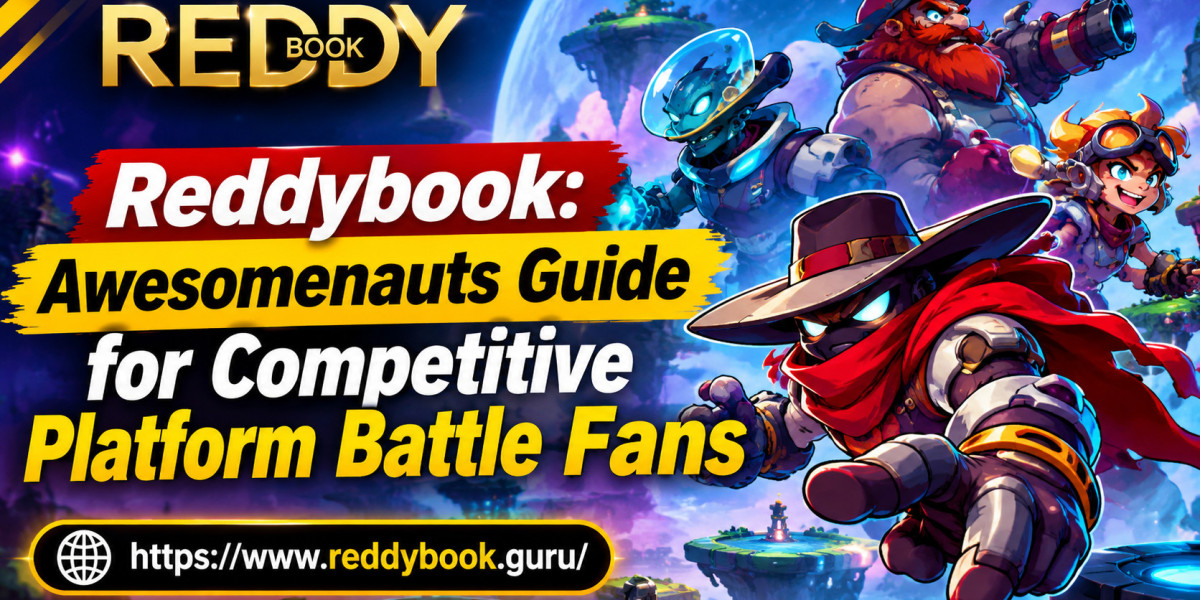

Competitive platform battle games combine fast movement, precise attacks, character abilities, and team coordination. Awesomenauts offers a distinctive take on this style of play by combining side-scrolling movement with multiplayer online battle arena mechanics. Players must understand their characters, cooperate with teammates, manage resources, and make tactical decisions while the battle develops.
For newcomers, the action can feel demanding at first. Experienced players must also keep adapting because a successful strategy depends on the opposing team, character matchups, and the state of the battlefield. Learning the basic mechanics and practising consistently can make matches easier to understand and more enjoyable.
This guide explains the central gameplay ideas behind Awesomenauts, including character selection, lane control, combat timing, teamwork, resource management, and improvement techniques. It also explores Reddybook in the context of online gaming platforms, giving readers a broader perspective on the digital gaming environment. Whether you are discovering Awesomenauts for the first time or looking to strengthen your competitive approach, understanding these fundamentals can help you make more informed decisions during a match.
Understanding Awesomenauts and Its Gameplay
Awesomenauts is a side-scrolling multiplayer battle arena game. Unlike traditional arena games that use a top-down view, it presents combat from a side perspective. Players control characters known as Nauts, each with distinct abilities and combat characteristics. Matches combine direct player-versus-player encounters with objectives that require teams to push through lanes and attack the opposing base.
The game's structure rewards more than individual combat ability. Players must balance fighting enemy characters with clearing waves of enemy units, protecting their own side, and creating opportunities to advance. Focusing only on eliminations can leave important objectives unattended, while ignoring enemy players can make it difficult to maintain control of a lane.
A useful starting point is to understand the match's main objectives. Players need to recognise how their team can move forward, what threatens their progress, and when it is safer to defend. This awareness helps turn fast encounters into decisions with a clear purpose.
New players should begin by learning the controls, movement options, basic attacks, and available abilities. Once these actions feel natural, it becomes easier to pay attention to enemy positions and team objectives. Understanding the flow of a match is often more valuable than trying to perform advanced combinations too early.
Choosing the Right Naut for Your Playstyle
Character selection is an important part of building a consistent strategy. Each Naut has a different set of abilities, strengths, and weaknesses. Some are better suited to dealing damage, while others can control space, support teammates, or survive difficult encounters. Learning these differences helps players choose a character that matches their preferred approach.
Players who enjoy aggressive combat may prefer characters that can pressure opponents and follow up quickly after an opening appears. Those who prefer a more tactical style may enjoy characters that control an area or use abilities to restrict enemy movement. Players who like supporting a team should consider how their chosen character can help allies survive, escape, or engage at the right time.
However, personal preference should not be the only consideration. A team benefits when its members can cover different needs. If every player focuses on the same kind of attack, the group may struggle against enemies that exploit its weaknesses. A team with complementary abilities often has more options during difficult fights.
Beginners should focus on learning one Naut before frequently switching between characters. Understand the character's effective range, ability timing, movement, and vulnerability. Practise using abilities in different situations rather than activating them whenever they become available.
As your experience grows, explore other characters and learn how their abilities interact. Understanding different playstyles also helps you anticipate opponents. When you recognise what an enemy character can do, you can better judge when to attack, maintain distance, or retreat.
Mastering Lane Control and Objectives
Lane control is central to Awesomenauts. Players must manage the space between their base and the enemy base while dealing with opposing characters and waves of units. A team that understands lane pressure can create opportunities to advance while making it harder for opponents to respond.
Clearing enemy units is important because it helps maintain progress and reduces pressure on your own side. However, players should not ignore enemy characters while focusing on units. An opponent may use that distraction to initiate a fight or force you away from a useful position.
Good lane management requires awareness of both immediate and longer-term goals. If an enemy has left the area, it may be a suitable time to clear units or advance. If several opponents are missing from view, pushing too far forward could expose you to an unexpected attack. Checking the situation before committing helps reduce unnecessary risks.
Players should also recognise when defending is more valuable than advancing. If a teammate needs help or the enemy is close to a key objective, leaving the area to pursue a distant opponent may create a serious disadvantage. Successful play often involves choosing the action that benefits the whole team, rather than the action that offers the most immediate excitement.
With practice, players can learn to judge when to push, when to hold their position, and when to move to another part of the map. These decisions become easier when they are based on the team's current needs instead of a fixed plan.
Improving Combat Timing and Ability Usage
Awesomenauts rewards players who understand how and when to use their abilities. Activating a powerful attack at the wrong moment can waste an opportunity, especially if the ability then becomes unavailable during a more dangerous encounter. Instead of using every ability immediately, consider the purpose of each action.
Before starting a fight, observe the opponent's position and available escape routes. Consider whether a teammate can help and whether the enemy is already dealing with another threat. An attack may be more effective when an opponent has limited room to move or has just used an important ability.
Movement is equally important. Jumping, changing direction, and making use of the environment can help players avoid attacks and reposition. Staying in one predictable location makes it easier for opponents to anticipate movement and land their abilities. Practising movement while maintaining awareness of the fight can improve both survival and offensive performance.
It is also important to understand the limits of your character. A character with low durability may need to rely on positioning and timing rather than standing close to an opponent for an extended fight. A character with stronger defensive options may be able to hold ground longer, but should still avoid unnecessary engagements.
Retreating is not a sign of poor performance. If a fight becomes unfavourable, escaping can preserve your ability to defend the lane and help teammates later. Competitive players improve when they learn to distinguish between a useful risk and an avoidable loss.
Teamwork and Communication in Competitive Matches
Even a highly skilled player can struggle without effective teamwork. Awesomenauts requires players to balance personal actions with the needs of the group. Team coordination can help create openings, defend important areas, and prevent opponents from isolating individual players.
Players should pay attention to where their teammates are and what they are trying to accomplish. Moving too far away from the group can make it difficult to provide support. At the same time, every player crowding into one area may leave other objectives unprotected. Good coordination involves maintaining useful spacing while staying close enough to respond when needed.
Communication should focus on information that helps the team act. Alert teammates to enemy positions, dangerous situations, or opportunities to advance. When playing with friends, discussing a basic plan before a match can make decisions more consistent. Randomly assembled teams can also benefit from observing each other's movement and responding to clear signals.
Team members should avoid engaging opponents one at a time when a coordinated attack is possible. If one player starts a fight before allies are ready, the enemy may gain an advantage. Waiting for support or choosing a safer position can improve the team's chances.
After a match, reflect on how the team worked together. Consider whether players supported each other, responded to threats, and focused on useful objectives. Reviewing these decisions can help build better habits without placing blame on a single teammate.
Managing Resources and Character Upgrades
Resources and upgrades can influence how a match develops. Players should understand how the game's progression system works and how available upgrades affect their character's strengths. A thoughtful upgrade choice can support a specific playstyle, while an unsuitable choice may offer little benefit in the situations encountered.
Rather than selecting upgrades automatically, consider what the team needs and what threats the opposing characters present. If survival is a problem, a defensive option may be useful. If the team struggles to pressure opponents, an upgrade that improves the character's offensive capabilities might be more appropriate. The best choice depends on the character and the current match.
Players should also learn the cost and benefits of available options. Experimenting in practice sessions can reveal how different combinations affect movement, damage, survivability, or utility. Avoid assuming that one upgrade path is always best, because the effectiveness of a choice depends on the circumstances.
Resource awareness extends beyond upgrades. Players should avoid unnecessary fights that interrupt their progress or expose the team to avoidable danger. A short pause to assess the situation can help determine whether to pursue an opponent, return to a lane, or assist an ally.
The goal is to use resources in ways that support the team's overall plan. Small decisions made consistently can influence how effectively a team handles later encounters.
Practical Ways to Improve Your Competitive Skills
Consistent practice is one of the most effective ways to improve. Begin by identifying the areas that cause the most difficulty. Some players need to work on movement, while others may struggle with ability timing, lane control, or recognising when to retreat. Focusing on one area at a time makes progress easier to measure.
Set a simple goal before each session. For example, focus on avoiding unnecessary fights, keeping track of enemy positions, or supporting teammates more consistently. After playing, consider whether you achieved that goal and what prevented you from doing so. This approach turns each match into an opportunity to learn.
Observing experienced players can also provide useful lessons. Pay attention to how they move, approach objectives, manage abilities, and respond when a fight becomes dangerous. Do not copy a tactic without understanding why it works. A strategy that suits one character or team composition may be ineffective in another situation.
It is also helpful to learn from losses. Instead of assuming that the opponent was simply better, look for specific decisions that could have changed the result. Perhaps you pushed too far without support, used an ability too early, or focused on combat while ignoring an objective. Recognising these patterns helps you make more informed choices in future matches.
Finally, maintain a healthy approach to practice. Take breaks when concentration drops, avoid letting frustration dictate your decisions, and remember that improvement takes time. A calm and focused player is better positioned to learn from mistakes and respond to changing situations.
Online Safety and Responsible Gaming
A good online gaming experience also depends on protecting personal information and using services carefully. Choose strong, unique passwords for accounts, enable additional security measures when available, and never share verification codes with another person. Be cautious of messages that promise special rewards or request private information.
Before downloading a game or related software, check that the source is legitimate. Avoid unfamiliar files and suspicious links, and review privacy settings where available. If an account or service offers support, verify the support channel independently before sharing any details.
Players should also set reasonable limits on gaming time. Regular breaks can help maintain concentration and keep entertainment balanced with other responsibilities. If a match becomes frustrating, stepping away is often more useful than continuing while upset.
For readers exploring gaming-related websites, including those looking up Reddybook login information, it is important to distinguish account access from the game itself. A website's presence online does not automatically establish its reliability or legal status. Review its terms, privacy policy, and security information before providing personal details.
In India, the Promotion and Regulation of Online Gaming Act, 2025, and the Promotion and Regulation of Online Gaming Rules, 2026 set restrictions on online money games and related activities. The Rules came into force on 1 May 2026. Users should consult official government information and ensure that any gaming-related service they consider using complies with applicable law.
Why Awesomenauts Appeals to Platform Battle Fans
Awesomenauts offers a combination of side-scrolling action and team-based strategy that can appeal to fans of competitive platform games. Movement and positioning matter because players must navigate the environment while responding to enemy attacks. Character abilities add variety, and lane objectives give teams a reason to coordinate beyond individual combat.
The game's strategic depth comes from the way these systems interact. A player may win a direct encounter but still leave the team at a disadvantage by ignoring an important lane. Another player may have fewer eliminations yet contribute greatly by defending an objective, supporting an ally, or creating space for teammates to advance.
This balance between individual skill and team awareness gives players several ways to improve. Learning a character can strengthen mechanical confidence, while understanding objectives and teamwork improves decision-making. Both areas are valuable for players who want to become more consistent.
Players should keep in mind that game availability, supported platforms, and online services can change over time. Checking current official game information is the best way to confirm access options and technical requirements before making plans to play.
Conclusion
Awesomenauts combines platform-style movement, character abilities, lane management, and team-based combat into a distinctive multiplayer battle arena experience. Players can improve by learning their chosen character, understanding the match objectives, managing abilities carefully, and communicating effectively with teammates.
The most useful approach is to make decisions with a clear purpose. Know when to advance, when to defend, and when a fight is too risky. Practise consistently, learn from mistakes, and adapt your strategy to the characters and conditions in each match.
For competitive platform battle fans, building these habits can make gameplay more rewarding and help develop a deeper understanding of team-based action. Pairing practical game knowledge with responsible online behaviour also helps create a safer and more enjoyable experience.