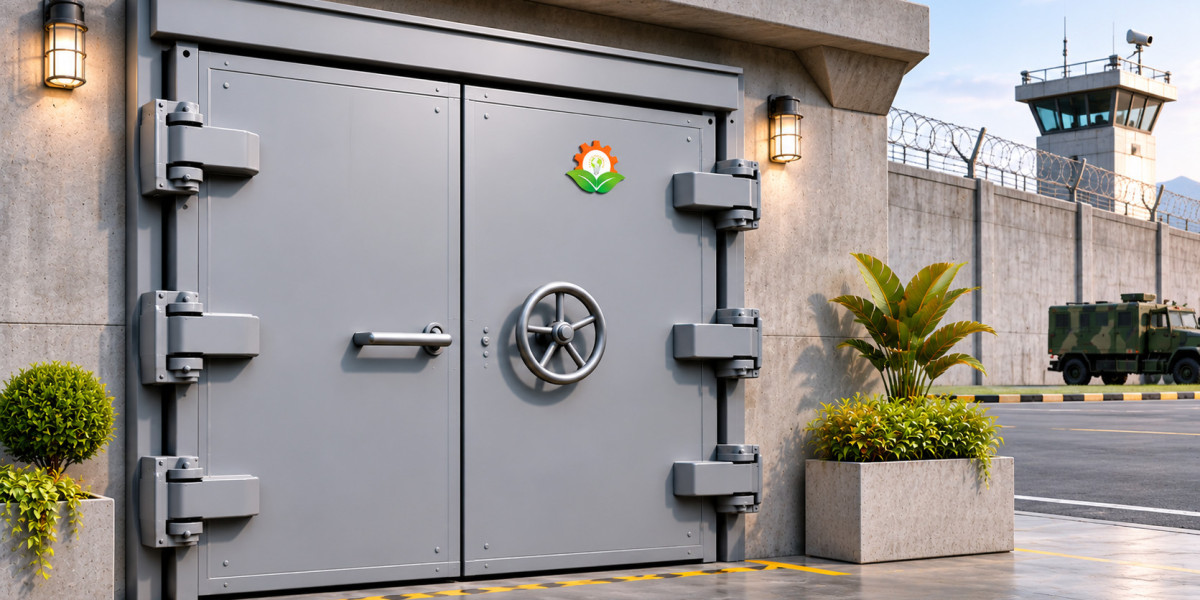

This level of protection is not achieved by conventional security doors. It is the result of a carefully engineered blast proof door designed specifically for high-risk environments where explosive forces are a realistic concern.
As security threats and industrial hazards continue to evolve, blast protection has become an essential part of modern infrastructure. A blast proof door is no longer limited to defence applications. Today, it plays a critical role in government facilities, oil and gas plants, power stations, embassies, data centres, and hazardous manufacturing units. Understanding where these specialised doors are used helps project owners specify the right protection for their facilities.
Where are Blast Proof Doors Used?
Blast protection doors are installed wherever an explosion could threaten human life, critical equipment, or business continuity. Every installation begins with a detailed engineering assessment that evaluates the expected blast loads, building construction, occupancy levels, and operational risks.
Unlike conventional industrial doors, blast protection systems are integrated into the building structure and designed to perform under extreme pressure conditions.
How Blast Door Design Supports Different Applications
Effective blast door design varies depending on the operational environment.
Engineers consider:
Expected blast pressure
Stand-off distance
Structural wall capacity
Occupancy requirements
Emergency evacuation needs
Environmental exposure
These factors determine the door's structural configuration, reinforcement, locking mechanisms, hinges, frame design, and anchoring system.
Defence and Military Installations
Defence facilities remain one of the largest users of blast proof door systems.
Typical applications include:
Ammunition storage bunkers
Underground command centres
Missile facilities
Military communication rooms
Aircraft shelters
Weapon maintenance buildings
These environments demand high blast resistance because personnel, equipment, and national security assets must remain protected during accidental or hostile explosive events.
Government Buildings and Administrative Facilities
Government offices responsible for emergency response, intelligence, or national security often require reinforced access systems.
Blast protection may be installed at:
Emergency operations centres
Secure archives
Crisis management rooms
Administrative headquarters
Strategic communication facilities
Properly engineered blast resistant doors help protect essential government operations while maintaining controlled access during emergencies.
Embassies and Diplomatic Missions
Embassies and consulates frequently operate in locations where enhanced physical security is necessary.
Blast-resistant entrances help safeguard:
Secure offices
Consular sections
Communication centres
Equipment rooms
Personnel shelters
These installations often combine blast protection with advanced access control and surveillance systems.
Oil, Gas, and Petrochemical Plants
Industrial explosions present significant risks within energy facilities.
Blast protection is commonly installed in:
Control rooms
Electrical substations
Process buildings
Chemical storage facilities
Compressor stations
Emergency shelters
Properly engineered blast resistant door systems help minimise structural damage while protecting operators responsible for maintaining critical plant operations.
Power Generation Facilities
Power plants require continuous operation even during emergency conditions.
Blast doors are frequently installed in:
Turbine control rooms
Electrical switchgear rooms
Emergency response centres
Fuel handling facilities
Generator buildings
Protecting these areas reduces downtime and supports operational continuity.
Data Centres and Critical Infrastructure
Modern data centres house equipment supporting financial institutions, healthcare networks, telecommunications, and government services.
Blast protection may be required for:
Server halls
Network operation centres
Backup power rooms
Communication hubs
Disaster recovery facilities
The objective is to minimise physical damage and maintain uninterrupted digital services.
Industrial Facilities Handling Hazardous Materials
Many manufacturing processes involve combustible chemicals or volatile materials.
Industries using blast protection include:
Chemical processing
Pharmaceutical manufacturing
Fertiliser production
Mining operations
Explosives manufacturing
Speciality industrial processing
Some facilities may also require explosion proof doors, depending on the specific hazards and applicable engineering standards.
Engineering Features That Make Blast Doors Effective
Regardless of the application, every blast protection system should include essential engineering characteristics.
Important features include:
High structural strength
Certified blast pressure rating
Corrosion-resistant construction
Fire resistance
Airtight sealing
Security-grade locking systems
Heavy-duty hinges
Durable protective coatings
Low maintenance requirements
Compliance with recognised certification standards
These features allow the door to perform reliably throughout its operational life.
Structural Performance During a Blast
A blast generates an intense pressure wave capable of damaging conventional building components within milliseconds.
A properly engineered blast proof door distributes these forces through reinforced steel construction, internal stiffeners, hinges, locking systems, and structural anchors. The surrounding wall and frame work together with the door to absorb and transfer blast energy safely.
This integrated structural response is essential for protecting occupants and maintaining building integrity.
Automation, Fire Protection, and Maintenance
Modern blast protection extends beyond resisting explosions.
Many systems incorporate:
Fire-rated construction
Smoke containment
Corrosion-resistant finishes
Electronic access control
Biometric authentication
CCTV integration
Building Management System (BMS) connectivity
Routine inspection of hinges, seals, anchors, coatings, and locking mechanisms ensures reliable long-term performance.
Cost and Investment Factors
The blast door price varies according to engineering requirements rather than appearance alone.
Key cost considerations include:
Required blast pressure class
Door size and configuration
Steel grade and plate thickness
Frame and anchoring engineering
Testing and certification
Automation and locking systems
Installation complexity
Site-specific structural assessment
Long-term maintenance planning
Projects with higher risk profiles generally require more advanced engineering and therefore higher investment.
Buyer's Guide: Choosing the Right Manufacturer
When evaluating blast proof door manufacturers in India, buyers should focus on engineering capability rather than quotations alone.
Look for manufacturers offering:
Proven industry experience
Structural engineering expertise
Independent testing credentials
Compliance with IS/BIS and international blast standards
Precision manufacturing
Custom design capability
Professional installation
Technical documentation
After-sales maintenance support
Reliable project experience
Working with a company that serves as both manufacturer and service provider often improves project coordination. Sigma Power Tech blast door solutions are supported by Sigma Power Tech manufacturer and service provider capabilities, providing integrated engineering, manufacturing, installation, commissioning, and lifecycle maintenance.
Common Mistakes to Avoid
Several common decisions reduce the effectiveness of blast protection systems.
Avoid:
Choosing products based only on price
Ignoring site-specific blast assessments
Incorrect frame and wall integration
Underestimating fire or corrosion risks
Failing to verify certification
Neglecting preventive maintenance
Overlooking future security and automation upgrades
Addressing these issues during the design phase improves both safety and long-term operational performance.
Conclusion
A blast proof door is an essential component of modern security infrastructure wherever explosion hazards could threaten people, equipment, or critical operations. From defence installations and embassies to oil refineries, power plants, data centres, and hazardous industrial facilities, these engineered systems provide reliable protection through certified design, structural integration, and rigorous testing.
Selecting the right blast protection solution requires careful evaluation of blast ratings, engineering credentials, installation quality, and long-term maintenance rather than focusing solely on upfront costs. A professionally engineered blast door system delivers lasting structural reliability, operational resilience, and dependable protection for the environments where safety cannot be compromised.