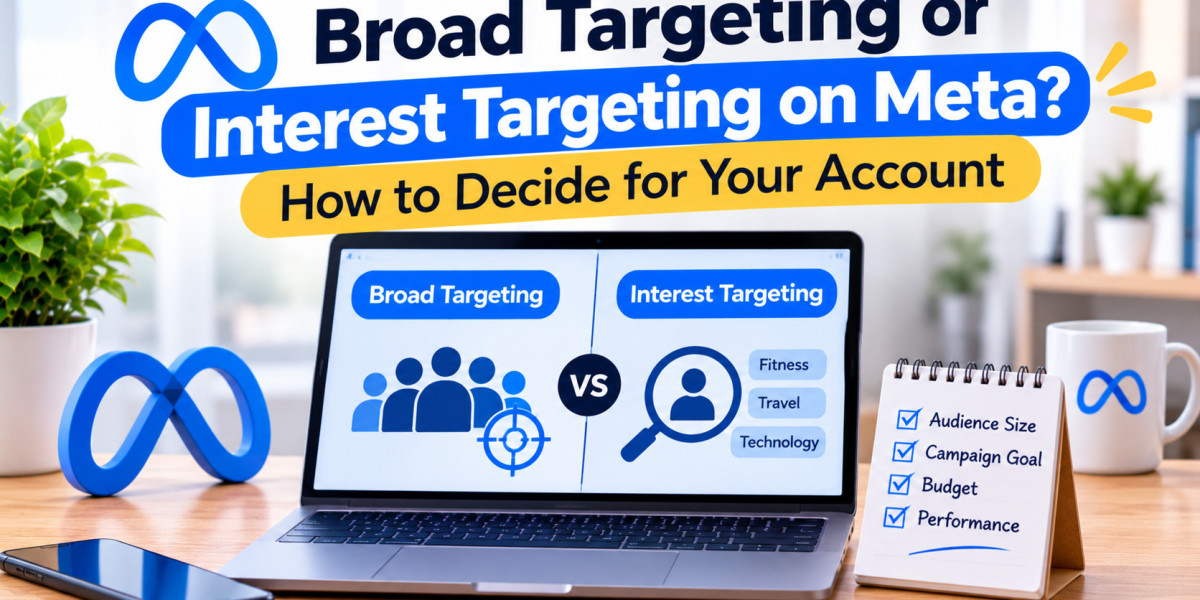

Few topics in paid social generate more confident opinions than audience targeting. One camp insists you should go completely broad and let the algorithm work. Another swears by carefully stacked interests. Both sides share screenshots, and both sound convincing.
The honest answer is that neither approach wins everywhere. The right choice depends on your account, your data and your creative. This guide explains how each option works and how to decide for yourself.
What Broad Targeting Means
Broad targeting means setting only the basics, such as location, age range and sometimes gender, and letting Meta's system decide who sees your ad. You are not telling it which interests or behaviors to look for. It uses signals from your conversion data, your ad engagement and its own understanding of users to find likely customers.
The idea is that Meta's system can often spot patterns that a manual list of interests would miss. It works best when there is plenty of data for it to learn from.
What Interest Targeting Means
Interest targeting lets you choose topics, pages and behaviors that you believe your customers care about, and the system focuses on people who match. It gives you more direct control and a clear starting direction.
It has become less central than it once was, but it has not disappeared. Many advertisers still use interests, particularly when an account is new or the product is niche.
Why Data Volume Matters Most
The deciding factor between the two is usually how much conversion data your account has. Broad delivery relies on the system learning who converts. If your pixel is new or your account records very few purchases or leads, the system has little to learn from, and broad delivery can waste money on exploration.
With plenty of conversion history, the situation reverses. The system has real examples of buyers to learn from, and narrowing the audience by hand can actually limit its ability to find them. Meta itself has said that over-narrowing audiences can reduce performance.
When Broad Targeting Tends to Work Well
Broad targeting is often a good fit when your account already records a steady flow of conversions, when your product appeals to a wide range of people and when your creative clearly signals who the ad is for. In that situation, giving the system room is usually sensible.
It is also worth remembering that, in a broad setup, your ad does much of the targeting. The message, the visuals and the opening signal who should stop and who should scroll. This is why creative variety matters so much with broad audiences.
When Interest Targeting Still Makes Sense
Interests can help when you are launching something new, when your account lacks conversion history, when your offer is genuinely niche or when you want to test a specific hypothesis about who your customers are.
Interests can also give the system a helpful starting point while data builds. Many advertisers begin with a few well-chosen interests and loosen them over time as the account gains data.
Do Not Forget the Other Options
The choice is not only broad versus interests. Custom audiences let you reach people who already visited your website or bought before. Lookalike audiences let you reach people similar to your existing customers. Meta also offers automated audience options that treat your choices as suggestions rather than strict limits.
Each has a place. Retargeting is usually handled separately from prospecting, and many accounts combine several approaches rather than relying on a single one.
How to Test the Two Fairly
Instead of trusting an article, run a simple test in your own account. Create one setup with broad targeting and one with your best interest audiences. Give them the same budget, the same objective and the same ads, so the audience is the only difference.
Run the test long enough to gather a meaningful pattern, then compare cost per result and the quality of the customers you get. If the results are close, the honest conclusion may be that either works, and the bigger lever is the creative.
If you want help structuring the test cleanly, a Meta ads specialist can set it up so the comparison is fair and the results are easy to read.
Let Creative Do More of the Work
Whichever option you choose, the ad itself plays a big role in who responds. A clear message about a specific problem attracts the right people and filters out the wrong ones. Disciplined creative testing often produces bigger gains than endless audience tweaking, because different angles reach different parts of your market.
Common Targeting Mistakes
The first mistake is narrowing too much, stacking so many interests that the audience becomes tiny. The second is switching everything to broad overnight without a test. The third is ignoring budget, because broad delivery needs enough volume to learn.
Another common issue is overlap, where several ad sets target similar people and compete against each other. Keep audiences clearly separated, and exclude retargeting groups from prospecting campaigns.
A Simple Way to Decide
Ask yourself three questions. How much conversion data does my account have? How clearly does my creative signal who it is for? How specific or niche is my product? Plenty of data and clear creative point toward broad. Little data or a very niche offer point toward interests, at least at first.
Whichever way you lean, treat the decision as a test, not a belief. Accounts change, and the answer that worked last year may not work next year.
When to Get Extra Help
If your audience setup feels tangled, results are inconsistent or you are unsure how your data affects delivery, it can help to bring in a performance media buyer to review the structure, tracking and budgets together.
Frequently Asked Questions
Is broad targeting better than interest targeting?
Not always. Broad often works well for accounts with plenty of conversion data, while interests can help new or niche accounts. Testing both in your own account is the best way to know.
Does interest targeting still work?
Yes, in the right situations. It tends to help most when an account is new or the product is niche, but it can limit results when over-narrowed.
How much budget does broad targeting need?
Enough for the system to gather meaningful data. Very small budgets can struggle, because there are too few results for the system to learn from.
Should I use lookalike audiences instead?
Lookalikes are another option, not a replacement. They can be useful, especially with good source data, but should be tested against other approaches.
Final Thoughts
Broad targeting and interest targeting are tools, not beliefs. Match the choice to your data, your product and your creative, test the two fairly in your own account and keep investing in the message, because that is often the biggest lever of all.