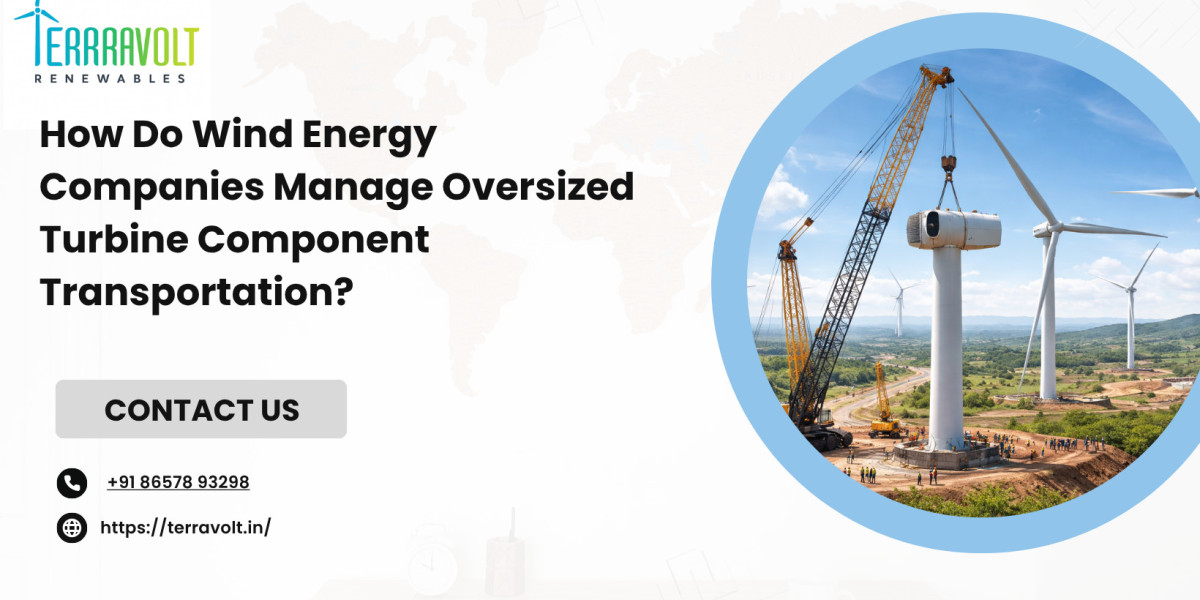

Wind turbines are made up of large and heavy components that require specialised transportation arrangements. Blades, tower sections, nacelles, hubs, and other equipment must travel from manufacturing facilities or storage locations to wind farm sites safely and according to project schedules. Because these components are oversized, their transportation involves detailed route surveys, suitable vehicles, loading arrangements, permits where required, and coordination with installation teams.
In India, wind energy projects are often located in areas with different road conditions, terrain, and accessibility challenges. Narrow roads, sharp turns, bridges, overhead cables, and steep gradients can affect the movement of oversized components. Therefore, Wind Energy Company in India project teams must plan transportation carefully before dispatching equipment.
If I want to understand how oversized turbine components reach a wind farm, I need to look at the complete transportation process. Wind EPC contractors, specialised vehicle operators, logistics providers, crane teams, and site supervisors all contribute to the movement of components. Effective project logistics helps connect transportation with the wider execution of Wind Energy Projects.
1. Why Is Oversized Wind Turbine Component Transportation Challenging?
Wind turbine components have different dimensions, weights, and handling requirements. A turbine blade is extremely long, while a nacelle is heavy and requires suitable support during loading and transportation. Tower sections also need vehicles capable of carrying large cylindrical structures.
Common transportation challenges include:
Long component dimensions and turning restrictions.
Road width and bridge capacity limitations.
Uneven surfaces and steep gradients.
Overhead electrical cables and other obstacles.
Traffic restrictions in populated areas.
Limited access to remote wind farm locations.
Safe loading, unloading, and component handling.
When I want to understand why specialised transportation is necessary, I should consider the difference between moving conventional cargo and transporting a wind turbine blade. A standard truck may not have the length, steering arrangement, or load capacity needed for oversized components.
For this reason, transportation planning must begin before components leave the manufacturing facility.
2. How Do Wind Energy Companies Plan Transportation Routes?
Route planning is one of the most important stages of oversized component transportation. Before selecting vehicles, logistics teams assess the complete route from the loading location to the project site.
A route survey generally considers:
Road width and surface condition.
Bridge load capacity and height restrictions.
Sharp bends and turning radius.
Road gradients and ground conditions.
Overhead cables and other obstructions.
Traffic movement and local restrictions.
Possible alternative routes.
Wind Energy Contractors coordinate with logistics specialists to identify transportation risks and determine suitable movement arrangements.
If I want to reduce transportation delays, I should ensure that route assessments are completed early. Identifying restrictions before dispatch can help project teams arrange alternative routes, required permissions, or necessary infrastructure modifications.
3. What Specialised Vehicles Are Used for WTG Transportation?
Different wind turbine components require different vehicle configurations. Selecting the correct vehicle depends on component dimensions, weight, loading arrangements, and road conditions.
Common transportation equipment includes:
Blade trailers for long wind turbine blades.
Extendable trailers for oversized components.
Multi-axle trailers for heavy loads.
Hydraulic modular trailers for selected heavy components.
Specialised vehicles with steering systems for difficult routes.
Blade trailers are designed to support long blades and improve manoeuvrability during transportation. Some configurations use hydraulic steering or blade lifting arrangements, depending on the route and transport requirements.
If I want to select a suitable transportation vehicle, I should consider the component specifications, axle load, turning radius, ground clearance, road restrictions, and operator experience.
The right vehicle configuration helps improve transportation control and reduces the risk of handling problems.
4. How Do Wind EPC Contractors Coordinate Oversized Transportation?
Wind EPC contractors may coordinate transportation as part of their engineering, procurement, and construction responsibilities. Their exact involvement depends on the contractual scope and the project delivery structure.
Coordination activities may include:
Reviewing turbine component specifications.
Preparing transportation schedules.
Coordinating with manufacturers and vehicle operators.
Reviewing route survey reports.
Arranging loading and unloading support.
Monitoring component delivery.
Aligning transportation with crane mobilisation.
Coordinating site access and storage arrangements.
Wind EPC companies in India often work with specialised transportation providers to move oversized components.
If I want to understand why coordination matters, I should consider what happens when a turbine component arrives before the installation area is ready. It may require additional handling or temporary storage, which can affect the project schedule.
Transportation planning should therefore remain connected with procurement, construction, and turbine erection schedules.
5. How Does Project Logistics Support Wind Turbine Installation?
Project logistics connects component transportation with the requirements of wind turbine installation. It covers the movement, delivery, handling, and scheduling of equipment needed at the project site.
For wind turbine installation, logistics planning may include:
Delivery of blades, nacelles, hubs, and tower sections.
Vehicle selection and mobilisation.
Loading and unloading arrangements.
Delivery sequencing.
Site access and storage planning.
Coordination with crane and erection teams.
Transportation documentation and monitoring.
If I want to improve wind turbine installation in India, I should ensure that transportation schedules match foundation readiness, crane availability, and manpower deployment.
This coordination reduces unnecessary waiting time and supports the planned execution of wind farm construction.
6. Why Are Crane Packages Important for Oversized Component Handling?
Transportation is not complete when a component reaches the wind farm. Large turbine components must also be unloaded, positioned, and prepared for installation using suitable lifting equipment.
Crane packages may include main cranes, auxiliary cranes, rigging equipment, lifting accessories, and technical support, depending on project requirements.
Crane selection depends on:
Component weight and dimensions.
Required lifting height and radius.
Ground-bearing capacity.
Site accessibility.
Crane assembly space.
Approved lifting procedures.
When I want to identify a crane supplier near me, I should check equipment capacity, technical suitability, availability, operator experience, and safety procedures. The nearest supplier may not necessarily have the equipment required for a particular turbine component.
Transportation and crane teams should coordinate delivery and unloading schedules to avoid unnecessary handling and equipment waiting time.
7. How Do Electrical BOP, EBOP, and Mechanical BOP Fit Into Project Coordination?
Oversized component transportation must be coordinated with other construction activities at the wind farm.
Electrical BOP means Electrical Balance of Plant, and EBOP is a commonly used abbreviation for the same term. Depending on the project scope, electrical infrastructure may include cables, earthing systems, transformers, substations, and electrical connections.
Mechanical BOP generally refers to mechanical balance-of-plant infrastructure and systems outside the turbine's internal equipment, according to the project's contractual scope.
Although these activities do not directly transport turbine components, they influence site readiness, access arrangements, construction sequencing, and installation schedules.
If I want to understand complete project execution, I should consider how transportation, mechanical infrastructure, and electrical work must progress together.
8. How Does Wind Farm Management Reduce Transportation Delays?
Wind farm management helps coordinate construction activities, equipment availability, manpower deployment, safety requirements, and delivery schedules.
During transportation and installation, project teams may monitor:
Component dispatch and arrival times.
Vehicle movement and route conditions.
Site access and unloading arrangements.
Crane mobilisation schedules.
Storage and handling requirements.
Turbine erection progress.
Weather-related transportation restrictions.
A Wind Energy Company in India may manage these activities directly or coordinate them through specialised contractors.
If I want to reduce project delays, I should ensure that transportation providers, installation teams, and site managers share updated schedules and communicate changes promptly.
9. What Factors Affect Wind Turbine Installation Cost in India?
The wind turbine installation cost in India can be influenced by transportation arrangements, equipment requirements, and site conditions.
Cost factor | Potential impact |
|---|---|
Transportation distance | Affects vehicle use, fuel, and travel time |
Component dimensions | Determines trailer configuration |
Route complexity | May require alternative routes or modifications |
Permits and approvals | Can affect transportation schedules |
Crane packages | Influence lifting and handling expenses |
Site accessibility | May require additional preparation |
Project schedule | Affects equipment mobilisation and utilisation |
Actual costs vary according to turbine specifications, project location, transportation route, and contractual responsibilities. If I want to prepare a realistic budget, I should assess these requirements before finalising the project schedule.
10. How Do Green Energy Solutions Benefit From Efficient Transportation?
Green Energy Solutions include renewable energy technologies and supporting infrastructure that contribute to sustainable electricity generation. Wind power is an important part of India's renewable energy development.
Efficient transportation supports the timely movement of turbine components from manufacturing facilities to project sites. When logistics, crane arrangements, and installation schedules are properly coordinated, project teams can manage construction activities more effectively.
If I want to understand the importance of transportation in renewable energy development, I should look at the complete lifecycle of a wind farm. Reliable component delivery supports installation, commissioning, and the preparation of infrastructure for electricity generation.
Frequently Asked Questions (FAQs)
1. What is oversized wind turbine component transportation?
It is the specialised movement of large turbine components, such as blades, nacelles, hubs, and tower sections, from manufacturing or storage locations to wind farm sites.
2. Which vehicles are used for WTG transportation?
Common options include blade trailers, extendable trailers, multi-axle trailers, and hydraulic modular trailers, depending on component requirements.
3. Why is route surveying important for wind turbine transportation?
It helps identify road restrictions, sharp turns, bridge limitations, overhead obstructions, and other challenges before transportation begins.
4. What is the role of wind EPC contractors in transportation?
They may coordinate transportation schedules, route assessments, delivery arrangements, and installation requirements according to their contractual scope.
5. How do crane packages support oversized component handling?
They provide lifting equipment and related support for unloading, positioning, and installing heavy turbine components.
6. How does project logistics improve wind turbine installation?
It coordinates vehicle selection, component deliveries, site access, unloading arrangements, and installation schedules.
7. What affects WTG transportation costs in India?
Transportation distance, component size, vehicle configuration, road conditions, permits, handling requirements, and site accessibility can affect costs.
8. What is the difference between EBOP and Mechanical BOP?
EBOP refers to electrical balance of plant, while Mechanical BOP covers relevant mechanical infrastructure and systems outside the turbine's internal equipment.
Conclusion
Oversized wind turbine component transportation requires specialised vehicles, detailed route surveys, safe handling procedures, and coordination between logistics and installation teams. Wind EPC contractors, Wind Energy Contractors, crane providers, and transportation specialists may work together to manage component movement from manufacturing facilities to wind farm locations. Effective project logistics supports timely delivery, organised turbine erection, and smoother execution of wind energy projects in India.