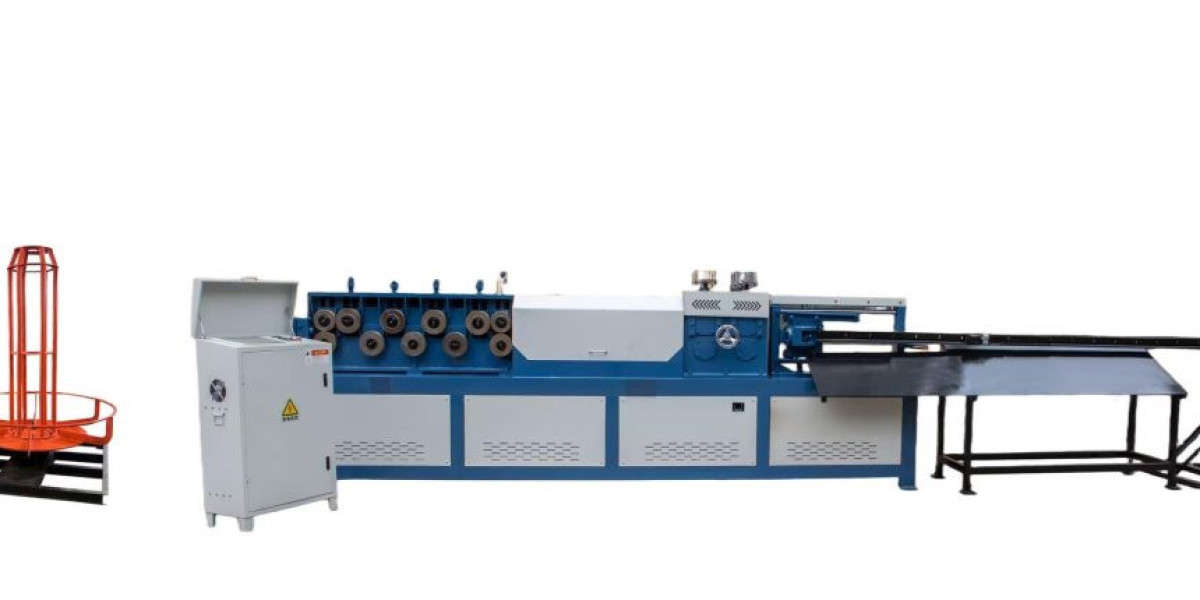

Reinforcement steel is widely used in construction projects to strengthen concrete structures, including buildings, bridges, foundations, and infrastructure. Before these bars can be used in fabrication or construction, they may need to be straightened to achieve the required shape and dimensions. A dependable rebar straightener helps fabrication businesses process reinforcement bars more systematically, reducing reliance on time-consuming manual methods. Straightening equipment is particularly valuable for operations that handle large quantities of steel and require consistent material preparation.
Understanding How a Rebar Straightening Machine Works
A rebar straightening machine is designed to correct bends and irregularities in reinforcement steel. Depending on its configuration, the equipment uses mechanical components such as rollers and feeding systems to guide steel through a controlled straightening process.
The machine applies controlled pressure as the material passes through its working mechanism. This helps produce straighter bars suitable for subsequent fabrication activities, such as cutting, bending, and reinforcement assembly.
Different machines support different material sizes and production requirements. Businesses should therefore evaluate equipment specifications before selecting a solution for their workshop.
Improving Productivity in Steel Fabrication
Manual straightening can require considerable time and physical effort, particularly when workers need to prepare large quantities of reinforcement bars. Repetitive handling may also slow down other fabrication activities.
Mechanical straightening equipment helps organize this process by providing a more consistent method of preparing steel. Depending on the machine's capacity and operating conditions, it can support continuous material processing and help workshops manage demanding workloads.
Improved material preparation can also make production planning easier. When straightening is integrated into the wider fabrication workflow, operators can coordinate cutting, bending, and assembly activities more effectively.
Achieving Consistent Material Preparation
Consistency is an important consideration in reinforcement processing. Bars with unwanted bends or irregular shapes can create difficulties during measurement, cutting, and installation.
A suitable straightening machine helps prepare reinforcement steel in a more controlled manner. Consistent feeding and appropriate machine adjustments can contribute to uniform processing, although the final result depends on the steel's condition, material properties, machine settings, and operator experience.
Operators should inspect processed bars to confirm that they meet the required project dimensions and quality standards before moving them to the next production stage.
Applications Across Different Industries
Rebar straightening equipment is used in various sectors that depend on prepared reinforcement steel. Construction companies and steel fabrication workshops are among its common users.
Typical applications include:
Building construction: Preparing reinforcement bars for foundations, columns, beams, and slabs.
Infrastructure projects: Processing steel used in roads, bridges, and other concrete structures.
Steel fabrication workshops: Preparing material for cutting, bending, and customized reinforcement work.
Precast concrete production: Supporting reinforcement preparation for concrete components manufactured away from construction sites.
Reinforcement processing facilities: Handling steel materials as part of larger fabrication operations.
The required machine capacity and configuration will depend on the material dimensions and production volume associated with each application.
Factors to Consider When Selecting Equipment
Choosing suitable straightening equipment requires more than comparing purchase prices. Businesses should assess their actual production requirements and the technical capabilities of available machines.
Important considerations include:
Steel Diameter Compatibility: Check the range of reinforcement bar diameters supported by the equipment.
Straightening Performance: Understand how the machine handles different material conditions and whether it suits the required processing standards.
Feeding and Operating System: Evaluate the material-feeding mechanism, controls, and ease of operation.
Production Capacity: Match the machine's expected output with the workshop's daily workload.
Maintenance and Support: Consider routine servicing, spare parts availability, and access to technical assistance.
Installation Requirements: Review the machine's dimensions, power requirements, workspace needs, and material-handling arrangements.
Comparing these factors helps businesses make informed purchasing decisions and avoid selecting equipment that does not match their operational needs.
Maintenance and Safe Machine Operation
Regular maintenance is essential for keeping straightening equipment in suitable working condition. Rollers, feeding components, electrical connections, and other working parts should be inspected according to the manufacturer's recommendations.
Operators should also follow proper safety procedures when loading and processing reinforcement bars. Appropriate protective equipment, trained personnel, and clear operating instructions help reduce workplace risks. Long steel bars should be supported and handled carefully to prevent uncontrolled movement during processing.
Routine inspections can help identify unusual wear or operating problems before they interrupt production.
Building a More Organized Steel Processing Workflow
Straightening is often one of the first stages in preparing reinforcement steel. Its effectiveness can influence the efficiency of later operations, including measuring, cutting, bending, and assembly.
Businesses can improve their overall workflow by coordinating material storage, machine operation, quality inspection, and production scheduling. Selecting equipment that matches the workshop's requirements also helps maintain a practical balance between processing capacity and operating costs.
Conclusion
Properly prepared reinforcement steel supports accurate fabrication and organized construction workflows. A suitable straightening machine can help businesses reduce repetitive manual work, improve material handling, and maintain greater consistency during steel processing. By evaluating machine specifications, production needs, maintenance requirements, and workplace safety, fabrication businesses can make better equipment decisions. Exploring a reliable rebar straightener is a practical starting point for companies looking to strengthen their reinforcement preparation capabilities.