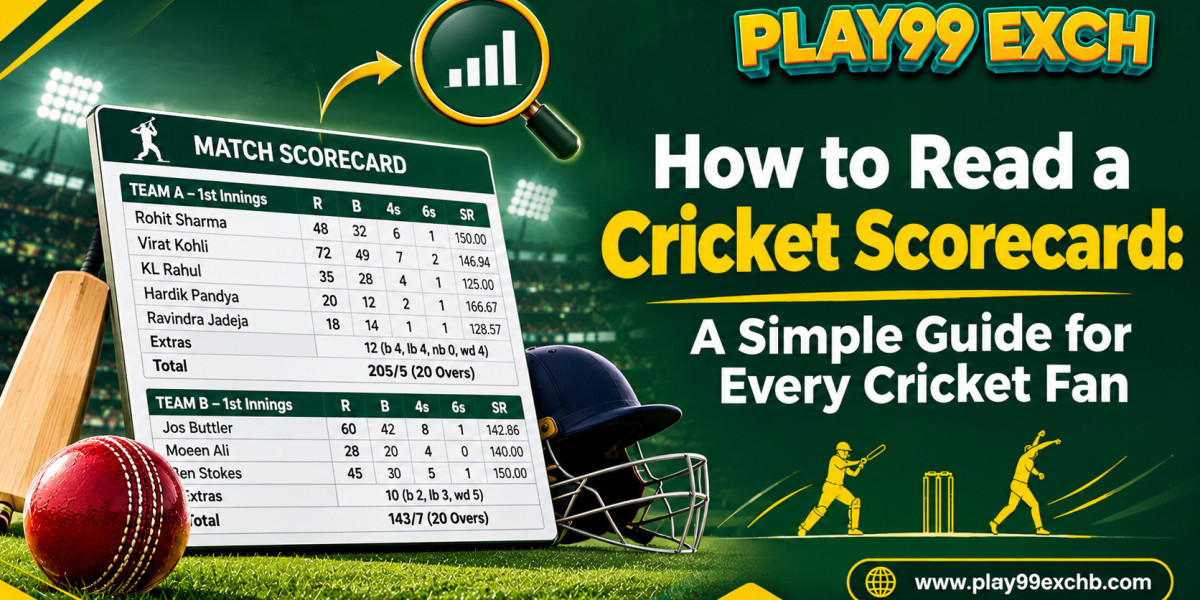

Let's look at the main parts of a cricket scorecard in simple words.
1. Runs and Wickets
The first thing you usually notice is the total score.
For example, if a team scores 175/6, it means they scored 175 runs and lost 6 wickets.
The runs show how much the team has scored, while the wickets show how many batters have been dismissed.
In limited-overs cricket, teams also have a fixed number of overs to score as many runs as possible.
2. Overs
Overs tell you how many sets of six legal balls have been bowled.
For example, 15.3 overs means 15 complete overs and 3 balls of the next over.
This is important because it helps you understand how quickly a team is scoring and how much of its allotted time remains.
Remember that 15.3 overs does not mean 15 overs and 30 percent. It means 15 overs and 3 balls.
3. Batters' Runs and Balls Faced
A batting scorecard shows how many runs each batter scored and how many balls they faced.
For example:
45 runs from 30 balls
28 runs from 22 balls
12 runs from 15 balls
These figures help you understand who scored the most runs and who scored quickly.
A batter who makes 45 runs from 30 balls has played at a faster rate than someone who makes 45 from 50 balls.
4. Boundaries
A scorecard also shows the number of fours and sixes hit by a batter.
A four means the ball reaches the boundary after touching the ground. A six is scored when the ball crosses the boundary without touching the ground.
These numbers give you a better idea of how a batter built their innings.
Some players score through regular singles and doubles, while others rely more on boundaries.
5. Bowling Figures
The bowling section tells you how each bowler performed.
You will usually see details such as:
Overs bowled
Runs conceded
Wickets taken
Economy rate
For example, a bowler who takes 2 wickets and gives away 24 runs in 4 overs has made a useful contribution.
The economy rate tells you how many runs a bowler gives away per over on average.
6. Extras
Extras are runs given to the batting team that are not credited to a batter.
They can include wides, no-balls, byes and leg-byes.
These runs are still added to the team's total. They can make a difference, especially in close matches.
7. Fall of Wickets
The fall of wickets section shows the team score when each batter was dismissed.
It helps you understand when the team lost wickets and whether those wickets came close together.
For example, losing three wickets for a small number of runs can put pressure on the remaining batters.
It is a useful part of the scorecard when you want to understand how an innings changed.
8. Reading the Full Match Picture
A scorecard gives you more than just the final result.
It can help you understand which batter made the biggest contribution, which bowler controlled the innings and when the match started moving in a different direction.
Fans who follow cricket through scorecards, match reports and online sports platforms such as Play99 Exch may find these details useful when keeping up with the game. It is always sensible to check important match information against official scorecards and trusted cricket reports.
Final Thoughts
Reading a cricket scorecard becomes easier once you understand the basic terms.
You do not need to remember everything at once. Start with runs, wickets, overs and bowling figures. With time, the other details will become familiar too.
The next time you watch a match, keep the scorecard open and follow the numbers. You may notice details about the game that you missed while watching.