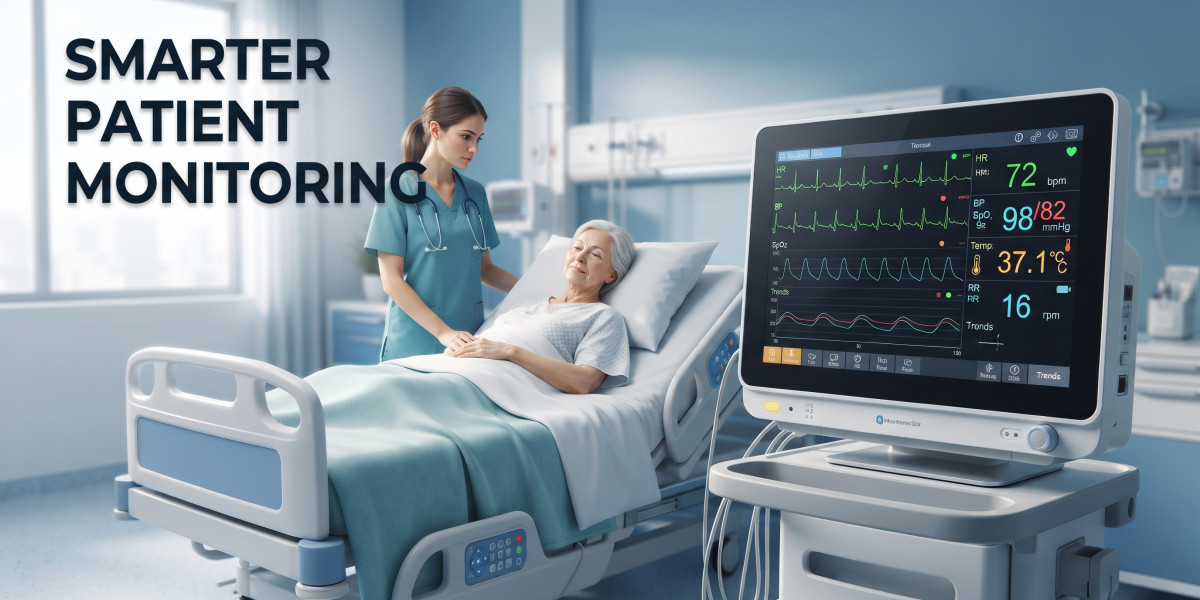

Healthcare facilities are under increasing pressure to deliver timely, accurate, and consistent patient care. As hospitals manage larger patient populations and increasingly complex medical conditions, collecting reliable physiological information has become an essential part of daily clinical operations. Modern vital signs monitoring devices contribute to this process by helping healthcare professionals gather important measurements and review patient conditions through organized digital systems.
The growing adoption of connected medical technology reflects a broader shift toward data-driven healthcare. Rather than relying exclusively on isolated manual assessments, medical teams can use integrated equipment to improve observation routines and maintain more consistent records.
The Importance of Consistent Patient Assessment
A patient's physiological condition can change throughout the day. Even individuals who initially appear stable may experience unexpected changes due to infection, medication reactions, dehydration, cardiovascular problems, or respiratory complications.
Regular assessment allows healthcare professionals to identify these developments and determine whether further investigation is necessary.
Measurements such as heart rate, blood pressure, respiratory rate, body temperature, and oxygen saturation provide valuable information about different bodily functions. When reviewed together, they help clinicians build a more comprehensive understanding of a patient's condition.
Consistency is particularly important because an isolated reading may not reveal a developing problem. Reviewing measurements over time provides additional context for clinical decisions.
Moving Away From Fragmented Clinical Workflows
Traditional measurement processes can involve several instruments, separate documentation procedures, and repeated manual entries.
In busy medical departments, these activities can increase administrative workloads and make information management more complicated.
Integrated digital equipment offers an alternative approach. Depending on its capabilities, a system may collect multiple measurements and display them through a centralized interface.
This can help medical professionals organize observations more efficiently while reducing unnecessary movement between different instruments.
However, digital equipment should support established clinical procedures rather than encourage staff to overlook necessary manual verification.
The Role of Automation in Patient Care
Automation is becoming increasingly relevant in modern healthcare operations.
Certain systems can automatically record measurements, organize historical information, and generate alerts when readings move outside predefined thresholds.
These capabilities can help healthcare teams recognize potential abnormalities and prioritize further assessment.
Automated alerts must be configured carefully. Excessive notifications can contribute to alert fatigue, making it harder for medical professionals to distinguish urgent concerns from less significant changes.
Effective implementation requires appropriate thresholds, staff training, and clearly defined response procedures.
Supporting Different Medical Environments
Healthcare facilities have different operational requirements depending on the patients they serve.
Emergency departments require equipment that supports rapid initial assessments. Intensive care units need more comprehensive observation because patients may experience significant changes in their condition.
General wards benefit from organized measurement procedures, while surgical recovery areas require close observation following medical interventions.
Home healthcare introduces another set of requirements, including convenient operation, reliable connectivity, and secure access to patient information.
Equipment selection should therefore reflect the intended clinical environment.
Important Factors When Evaluating Medical Equipment
Healthcare administrators should consider several characteristics before introducing new technology.
Measurement accuracy is essential because clinical decisions depend on reliable information. Facilities should also assess supported parameters, display readability, operating simplicity, and compatibility with existing systems.
Maintenance requirements deserve equal attention. Equipment needs appropriate cleaning, inspection, and calibration according to manufacturer guidance.
Data protection should never be overlooked. Connected systems must use suitable security measures to prevent unauthorized access to confidential medical information.
Preparing Healthcare Facilities for Future Developments
Artificial intelligence, wireless communication, and advanced sensor technology are creating new opportunities for patient observation.
Future systems may offer improved trend analysis, more flexible measurement methods, and better integration with electronic health records.
Nevertheless, technological development must remain connected to clinical evidence. A sophisticated interface cannot compensate for inaccurate measurements or poorly designed workflows.
Healthcare organizations should prioritize technologies that demonstrate practical value, reliable performance, and measurable improvements in patient care.
Frequently Asked Questions
Why is regular patient assessment important?
It helps medical professionals recognize changes in physiological conditions and determine whether additional evaluation is required.
Which measurements are commonly collected?
Common parameters include heart rate, blood pressure, respiratory rate, body temperature, and oxygen saturation.
Can digital equipment reduce administrative work?
Yes. Systems with automatic documentation and compatible software integration can reduce repetitive data entry.
What should hospitals prioritize when selecting equipment?
Accuracy, clinical validation, usability, maintenance, connectivity, and information security should all be considered.