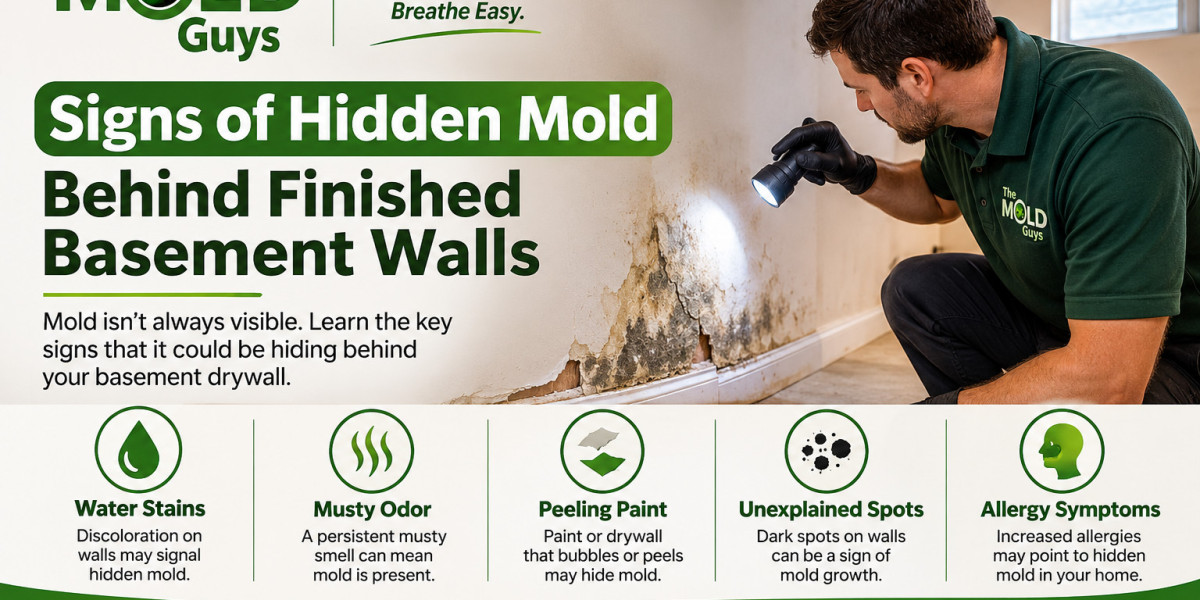

A finished basement adds useful space to a home. It also hides a lot. Behind the paint and drywall sit studs and insulation along with plumbing lines and the concrete foundation. If moisture reaches that cavity the damage can grow for months before anything shows on the surface. Many homeowners only learn about a mold basement drywall problem after a smell appears or a stain spreads or a wall starts to feel soft. Knowing the early signs gives you a chance to act while the repair is still small. This guide explains why basements are so prone to hidden growth and which signs matter most. It also covers where to look and how to respond safely and when it is time to bring in help.
Why Basement Walls Hide Mold So Well
Basements sit below ground level and are surrounded by soil. Soil holds water and that water pushes against the foundation all year. Concrete is porous so moisture vapor moves through it even when there are no visible cracks. In a finished basement that vapor meets the back of the drywall or the insulation and has nowhere to go.
Wall construction adds to the problem. The cavity between the concrete and the finished surface is dark and has almost no airflow. If insulation or drywall gets damp it can stay damp for a long time. Paper faced drywall is especially vulnerable because mold feeds on the paper. After a day or two of sustained moisture spores can begin to grow on the back of the board where nobody can see them.
Temperature plays a role as well. Basement walls are usually cooler than the air in the rest of the home. When warm humid air reaches those cool surfaces it condenses into water. In a warm climate like Southwest Florida this happens often because outdoor air carries so much moisture. The result is a wall that can be wet inside while the paint looks perfectly normal.
Visual Signs on the Wall Surface
The surface of a wall often gives the first clue. Not every sign means mold is present but several together deserve attention.
Stains and discoloration are the most common. Look for yellow or brown patches and gray or green spots. Stains that grow over time or return after cleaning suggest a moisture source behind the wall. Dark spots that look like pepper or small freckles can be early growth breaking through the paint.
Paint can also tell a story. Bubbling or peeling paint often means water is pushing from behind. Paint that cracks or flakes in one area while nearby walls look fine is another warning. A wall that has been repainted several times in the same spot is worth a closer look because the cause was likely never fixed.
Wallpaper and paneling show signs too. Wallpaper that lifts at the seams or wrinkles or develops stains has probably absorbed moisture. Wood paneling that warps or darkens near the floor points to the same issue.
White powder on concrete or along the bottom of a wall is sometimes mistaken for mold. It is usually efflorescence and consists of mineral salts left behind when water moves through concrete and evaporates. It is not mold but it does confirm that water is moving through the foundation. A wall with efflorescence nearby has the moisture needed for mold to grow.
Smell and Air Quality Clues
Odor is often the earliest sign and it appears before anything is visible. Active mold releases gases called microbial volatile organic compounds. These create the earthy and stale smell that people describe as damp or musty.
Pay attention to where the smell is strongest. Walk slowly along each wall and pause at corners and near closets and behind furniture. A smell that is stronger in one area points to a nearby source. A smell that gets stronger when the air conditioning starts may mean the growth is connected to the ductwork or that the return air pulls from the affected area.
Also notice whether the smell comes and goes. Odor often grows stronger on humid days and after rain because moisture levels rise and growth becomes more active. A basement that smells fine in winter and musty in summer usually has a humidity problem that deserves attention.
Do not rely on air fresheners or scented candles. They cover the smell for a short time but do nothing about the cause. If a musty smell returns within days no matter what you do a hidden source is the most likely explanation.
Physical Signs You Can Feel
Touch can reveal problems that the eye misses. Press gently on the drywall at the base of each wall and near windows and plumbing. Healthy drywall feels firm and dry. Drywall that has absorbed water may feel soft or spongy or slightly crumbly. A wall that gives under light pressure has lost strength and probably has growth inside.
Run your hand across the wall surface. A cool or clammy feeling compared with nearby walls suggests moisture. Check baseboards as well. Baseboards that swell or separate from the wall or show dark staining along the bottom edge often sit beside a wet cavity.
Look at the carpet and flooring along the wall. A damp edge on carpet or a musty smell from the padding can mean water is traveling along the base of the wall. Warped laminate or vinyl planks near an exterior wall point the same way.
Check the door frames and window trim too. Swollen wood and peeling paint around a basement window or door suggest that water is entering at or near that opening.
Health Signs That Point to a Hidden Problem
Hidden growth releases spores into the air even when nothing is visible. Some people notice nothing at all. Others develop symptoms that seem unrelated at first.
Common signs include sneezing and coughing and a stuffy nose. Some people notice itchy eyes or a scratchy throat or headaches. People with asthma may find that their symptoms get worse at home and improve when they leave. Children and older adults and anyone with a weakened immune system can be more sensitive.
One pattern is worth noting. If symptoms are stronger when you spend time in the basement or in rooms above it the basement may be the source. Air from below can travel through floor gaps and return vents into the rest of the house. Symptoms alone do not prove mold is present but combined with other signs they are a good reason to investigate.
Where to Look First
Mold tends to start in predictable places. Checking these locations first saves time.
Look along the bottom twelve inches of each wall. Water usually collects at floor level and wicks upward into the drywall. Check the corners where two exterior walls meet since they are often the coolest and dampest spots. Inspect the areas around basement windows and window wells and around any door that leads outside.
Plumbing deserves close attention. Check around water heaters and washing machine hookups and utility sinks. Look at walls near bathrooms and laundry areas. A slow drip inside a wall can feed growth for months without leaving a puddle.
Look behind furniture and storage that sits against exterior walls. Blocked airflow lets moisture build up. Check inside closets and under stairs because these spaces have almost no ventilation. Inspect the ceiling as well. Stains below a bathroom or kitchen on the floor above often come from plumbing leaks.
Simple Checks You Can Do at Home
A few inexpensive tools can add useful information.
A flashlight held at a low angle against the wall shows texture changes and small bumps in the paint that normal light hides. A moisture meter gives a reading of how much water is in the drywall. Readings that stay high over several days point to a wet cavity. A hygrometer measures humidity in the room. A reading above 60 percent for long stretches creates ideal conditions for mold.
A plastic sheet test helps tell where the moisture comes from. Tape a square of plastic firmly to the wall and leave it for 24 to 48 hours. If water droplets form on the wall side the moisture is coming through the wall. If droplets form on the room side the cause is condensation from humid indoor air. Both can lead to mold but the fix is different.
These checks can point you in the right direction. They cannot confirm that mold is growing inside a wall. Only proper testing and inspection can do that.
Common Causes of Hidden Basement Mold
Understanding the cause makes the fix last. Several sources appear again and again.
Groundwater pressure pushes water through foundation walls and floor joints. Poor grading around the house and clogged gutters make this worse because water collects near the foundation. Plumbing leaks are another leading cause and can be slow enough that nobody notices. A failed sump pump or a backed up drain can flood a basement in hours and leave walls wet.
Condensation is common in warm climates. Humid air meets cool walls and turns to water. Poor ventilation keeps that moisture in the space. Past flooding that was not fully dried can also leave hidden growth behind. If a basement flooded years ago and the walls were only dried on the surface growth may still be inside.
What to Do If You Suspect Hidden Mold
Take a careful approach. Cutting open a wall yourself can release a large number of spores into the room and spread them through the house.
First protect yourself. Wear an N95 respirator and gloves and eye protection if you need to work near a suspect wall. Keep children and pets away. Second look for the moisture source and stop it if you can. Repair obvious leaks and clear gutters and extend downspouts away from the foundation. Run a dehumidifier to bring humidity below 50 percent.
Third document what you see. Take photos of stains and note smells and record moisture readings. This helps a specialist understand the history and helps with insurance if a claim is needed. Fourth avoid painting over stains. Paint traps moisture and hides warning signs while growth continues behind it.
Then decide whether the problem is small or whether it needs help. A small surface spot on a firm wall with a known and fixed moisture source can often be handled at home. Anything beyond that calls for a closer look.
Cleaning Light Surface Growth the Right Way
Light surface growth on a firm wall is the one situation where home cleaning makes sense. The product should match the material.
Drywall absorbs liquid quickly so heavy scrubbing and soaking can damage it. The best mold remover for drywall is usually a gentle one such as diluted white vinegar or a mild detergent solution applied sparingly with a cloth. Wipe the area and dry it right away. If the board is soft or stained all the way through or the growth keeps coming back no cleaner will fix it and the section should be cut out and replaced. Our guide on the best mold remover for drywall explains how to judge whether a board can be saved.
Painted walls call for a method that cleans without stripping the finish. The best mold remover for painted walls begins with warm water and mild dish soap on a soft cloth. For stubborn spots a three percent hydrogen peroxide solution or diluted vinegar can help. Test a small hidden area first to check for fading. Dry the wall fully afterward because leftover moisture invites regrowth.
Bleach is often the first product people reach for but it works well only on hard nonporous surfaces such as tile. On drywall it does not reach growth below the surface and the added water can feed it. Never mix bleach with vinegar or ammonia because the mixture creates dangerous fumes.
When to Call for Help
Some situations are beyond a safe home project. Consider outside help when the affected area is larger than about ten square feet or when drywall is soft or crumbling. Call when a smell is strong but you cannot find the source or when stains return after cleaning. Call when a flood or leak soaked the wall or when anyone in the home has asthma or a weak immune system. Also call when mold may be connected to the air conditioning system.
In these cases the real size of the problem is unknown. Trained technicians can inspect the wall without tearing it apart and can contain the work area so spores stay out of clean rooms.
What Professionals Do for Hidden Basement Mold
A proper process follows clear stages. Skipping any of them weakens the result.
The first stage is assessment. Technicians use moisture meters and thermal imaging cameras to find wet areas behind the surface. A borescope is a small camera on a flexible cable that can look inside a wall through a tiny hole. Air sampling compares spore levels inside the home with an outdoor sample. Together these tools show how large the problem is and where the moisture comes from.
The second stage is containment. The work area is sealed with heavy plastic sheeting and negative air machines pull air out through HEPA filters. Vents in the work zone are covered. This keeps spores from traveling into clean rooms while the wall is opened.
The third stage is removal and cleaning. Drywall and insulation with active growth are cut out and bagged. Porous materials cannot be cleaned deeply enough to remove embedded growth so they are replaced. Framing and concrete are cleaned with HEPA vacuums and treated with approved products.
The fourth stage is drying and repair of the moisture source. Industrial dehumidifiers and air movers bring the structure back to normal levels and moisture meters confirm progress. The final stage is verification. Air samples taken after the work show whether spore levels have returned to normal before walls are rebuilt. Reliable professional mold removal services include this testing and share the results with you.
Choosing a Local Company
The company you hire has a large effect on the result. When you search for mold removal services near me compare more than price. Ask whether the technicians hold current IICRC certification. Ask whether the company inspects before it quotes and whether the estimate is in writing and clear about the scope of work. Ask how the work area will be contained and whether the moisture source will be addressed. Ask whether air testing is done after the work and whether a guarantee is offered.
A local team understands the climate and common building styles in your area. That knowledge matters in Florida where humidity and heavy rain create specific patterns in basements and lower level rooms. Be cautious with any company that quotes a price without seeing the property or promises that a single spray will solve the problem. Vague answers about containment and testing suggest the process may not be thorough.
Preventing Hidden Mold From Returning
Removal lasts only when the conditions that caused the growth are controlled. A few steady habits protect basement walls.
Keep indoor humidity below 50 percent with a dehumidifier and keep its drain clear. Direct water away from the foundation by cleaning gutters and extending downspouts and grading soil so it slopes away from the house. Seal visible cracks in the foundation and check the sump pump twice a year.
Inspect plumbing for drips every few months and repair leaks as soon as you find them. Keep furniture a few inches away from exterior walls so air can move. Use mold resistant drywall when rebuilding a damp area and keep stored items off the floor.
Check the basement regularly for new stains or smells. Early action costs far less than repairing a wall full of growth.
Conclusion
Hidden mold behind finished basement walls rarely announces itself. Stains and peeling paint and a musty smell along with soft drywall and stubborn symptoms are the usual clues. Basements hold moisture and finished walls hide what happens inside them. Learning the warning signs lets you act early and avoid larger repairs. If you suspect a mold basement drywall problem start by controlling moisture and documenting what you see and then arrange a proper inspection instead of cutting into the wall yourself. The Mold Guys have served homeowners across Southwest and Central Florida for over 25 years and offer mold inspection and testing and mold removal along with water damage restoration. Choosing trained professional mold removal services gives you a clear plan and a result you can verify.
FAQs
Q: How can I tell if mold is growing behind my basement drywall?
A: Common signs include a musty smell and bubbling paint along with soft drywall and stains that return after cleaning. A moisture meter and thermal imaging can confirm hidden dampness. A professional inspection is the most reliable way to confirm growth inside the wall.
Q: What is the best mold remover for drywall in a basement?
A: A mild detergent or diluted white vinegar works for small surface spots on firm drywall. Drywall absorbs liquid so avoid soaking it. If the board is soft or stained through or growth returns the section should be removed and replaced.
Q: What is the best mold remover for painted walls?
A: Warm water with mild dish soap on a soft cloth is the safest start. Diluted vinegar or three percent hydrogen peroxide can help with stubborn spots. Test a hidden area first and dry the wall fully to protect the paint.
Q: Should I cut open the wall to check for mold myself?
A: It is better not to. Opening a wall can release many spores and spread them through the home. Technicians use moisture meters and cameras to limit how much material must be opened and they contain the work area first.
Q: How do I find reliable help for basement mold?
A: Search for mold removal services near me and compare certifications and written estimates. Ask about containment and moisture source repair and air testing after the work. Reliable companies explain each step clearly and stand behind their results.








