
INTRODUCTION
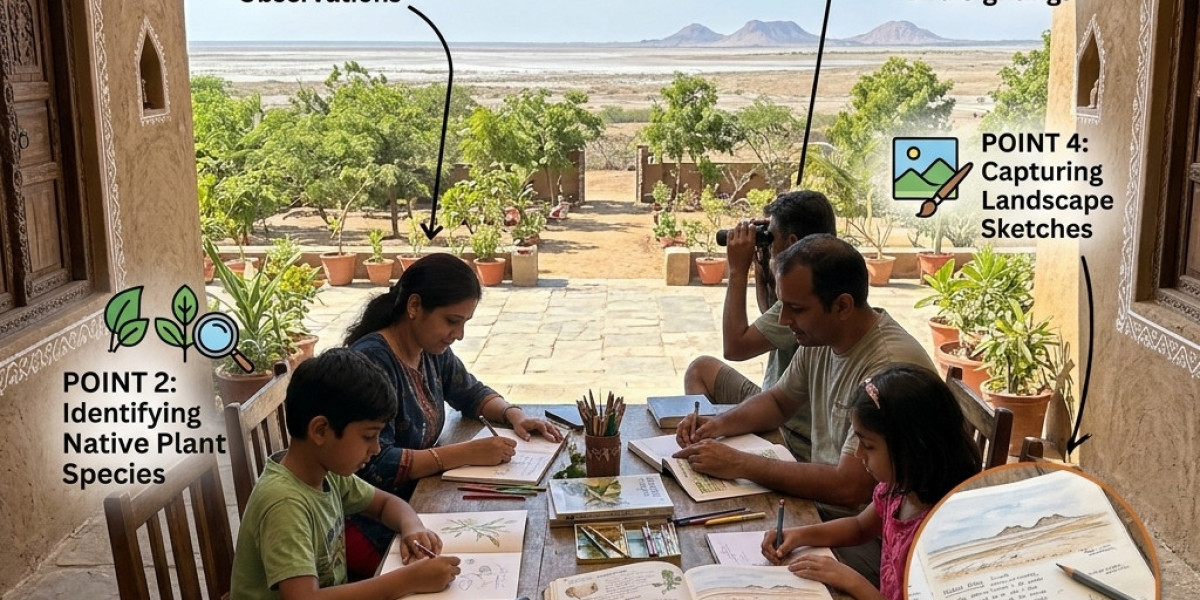
A family holiday can become more meaningful when everyone takes time to notice the natural world and record their observations together. From changing cloud patterns to bird calls, interesting plants, and the colours of the landscape, simple discoveries can turn an ordinary day into a memorable learning experience. Choosing a homestay in Bhuj can provide a comfortable base for families who want to combine local exploration with a creative nature diary activity. Children can draw what they see, parents can record observations, and grandparents can share stories about seasonal changes and the environment. With Raahghar, families can plan a stay around their interests while checking which accommodation features and nearby outdoor spaces suit their needs.
Bhuj, located in Gujarat's Kutch region, offers a distinctive setting for observing landscapes, exploring gardens, and learning about local surroundings. Families can also plan visits to suitable outdoor destinations, including Hamirsar Lake and Bhujia Hill, depending on weather, access, and the family's schedule. The key is to keep the diary activity simple, enjoyable, and appropriate for every age group.
What Is a Family Nature Diary Activity?
A family nature diary is a shared notebook or journal where family members record things they notice outdoors. It can include sketches, short descriptions, photographs, weather observations, leaf shapes, bird sightings, and reflections on the day's discoveries.
The purpose is not to identify every plant or animal correctly. Instead, it encourages curiosity, patience, creativity, and awareness of the environment. Children can draw a tree they noticed, while adults record the time, weather, and location. Older family members can contribute memories of how the landscape or seasons have changed over time.
A nature diary can be maintained throughout a short holiday or continued after returning home. Each day, family members can add one observation, creating a collection of shared memories from the trip.
Why Choose a Homestay in Bhuj for a Family Nature Diary?
A homestay in Bhuj may be a useful starting point for families who want a relaxed itinerary with time for both indoor creativity and outdoor exploration. Depending on the property, families might have access to a courtyard, balcony, terrace, garden, or shared seating area where they can write and draw together.
A quiet space is particularly helpful after an outdoor outing. Children can compare their sketches, adults can organise photographs, and everyone can discuss what they noticed during the day. If the property has suitable outdoor seating, the family might also complete a short observation session in the morning or evening.
However, not every homestay offers the same facilities. Before booking, ask the host whether shared outdoor areas are available, whether children can use them safely, and whether there are nearby places suitable for short walks. Confirm the property's location and facilities rather than assuming that a garden or nature view is included.
Raahghar can be part of your accommodation research as you compare options for a family holiday. Choose a property based on your family's practical needs, preferred surroundings, and planned activities.
Homestays in Bhuj: Choosing a Suitable Base for Families
When comparing homestays in Bhuj, think about how the accommodation will support your nature diary routine as well as your sightseeing plans. A family may prefer a property with a comfortable common area where everyone can sit together, while another may prioritise convenient access to outdoor attractions.
Consider these points before confirming your stay:
- Space for family activities: Check whether there is a table or shared seating area for writing, drawing, and organising nature photographs.
- Outdoor access: Ask whether the property has a courtyard, balcony, terrace, or garden that guests can use.
- Family comfort: Confirm room arrangements, bathroom access, and any facilities needed by children or older family members.
- Nearby surroundings: Check the distance to accessible gardens, lakeside areas, and walking routes.
- Safety: Ask about stairs, balconies, traffic near the entrance, and any restrictions on children's use of shared spaces.
- Quiet time: Find out whether the accommodation has a suitable place for family members to work on their diaries without disturbing other guests.
A thoughtful choice can make the activity easier to maintain. The goal is not to find the most elaborate accommodation but to select a comfortable base that allows your family to explore, reflect, and spend time together.
Best Homestay in Bhuj: Features to Look For
The best homestay in Bhuj for a family nature diary is one that matches your family's needs and gives you a practical setting for your planned activities. A spacious shared area, easy access to suitable outdoor destinations, and a comfortable environment can be more valuable than a long list of features that your family will not use.
Look for accommodation where you can organise notebooks and art materials without cluttering shared walkways. If you intend to observe the sky or draw the landscape from the property, ask whether there is a permitted outdoor area with a suitable view. Families travelling with young children should check supervision requirements and avoid using balconies or terraces as play areas.
It is also worth asking the host for suggestions about appropriate local walking routes or outdoor locations. Hosts may be familiar with the neighbourhood, but verify opening hours, access conditions, and travel arrangements independently when necessary.
Raahghar encourages travellers to compare property information carefully and confirm essential details directly. A suitable homestay should support your itinerary while allowing enough flexibility for rest, meals, and spontaneous discoveries.
How to Create a Nature Diary During Your Bhuj Holiday
1. Prepare a Simple Family Diary Kit
Pack a notebook for each family member or use one shared journal. Include pencils, erasers, coloured pencils, a ruler, and a few sheets of plain paper. A phone or camera can help capture observations, but drawing and writing by hand can make the activity more engaging for children.
Bring a reusable water bottle, sun protection, and comfortable footwear for outdoor sessions. Keep the kit small so it is easy to carry on walks.
2. Begin with Weather Observations
Start each day by recording the date, time, temperature if known, cloud cover, wind, and any rainfall. Family members can describe the sky using their own words or draw what they see.
Bhuj's conditions can vary considerably through the year, so observations may look different from one visit to another. Encourage children to compare the morning sky with the evening sky without expecting the weather to follow a fixed pattern.
3. Notice Plants, Birds, and Landscape Details
During a suitable walk, look for visible differences in leaves, tree shapes, flowering plants, insects, or bird behaviour. Record only what can be observed without disturbing wildlife or damaging vegetation.
Families can also note the texture and colour of soil, the shape of hills in the distance, or the way sunlight changes the appearance of buildings and open spaces. Avoid collecting plants, feathers, or other natural objects from protected areas.
4. Turn Observations into Creative Pages
After returning to the homestay, let each family member create one diary page. Children might draw a bird or tree, while adults write a short paragraph about the outing. Add the location and time so the family can remember where each observation was made.
If photographs are included, use captions rather than printing every image. A few carefully chosen details can make the diary easier to revisit.
5. Share the Day's Discoveries
Set aside ten minutes each evening for everyone to share one thing they learned or found interesting. There is no need to correct every drawing or turn the activity into a formal lesson. The aim is to help family members listen to one another and appreciate different perspectives.
Family-Friendly Places to Inspire Nature Observations
Bhuj and the wider Kutch region offer several places that may inspire diary entries. Choose destinations according to travel time, weather, mobility, and current access conditions.
Hamirsar Lake: Families can observe the water, surrounding views, clouds, and bird activity from appropriate public areas. Follow local guidance, stay within safe viewing areas, and avoid approaching the water's edge unnecessarily.
Bhujia Hill: The landscape around the hill can inspire sketches of the terrain and views of the city. Before visiting, check the route, weather, access, and whether the walk is suitable for all family members.
Gardens and open spaces: A public garden or accessible green area can be a convenient place to study leaf shapes, shade, flowers, and small changes in the environment. Confirm opening times and follow site rules.
Regional Science Centre, Bhuj: Families who enjoy combining observation with learning can consider this attraction, which includes themed galleries and a bonsai garden. Check current visitor information before planning your visit.
For a longer excursion, the wider Kutch landscape offers distinctive natural features, including the White Rann. Its appearance changes with seasonal conditions, so check local guidance and access arrangements before travelling.
Making the Activity Enjoyable for Every Generation
A family nature diary works best when every person can participate in a way that feels comfortable. Younger children can use simple drawings, shapes, and colours. Older children might record bird behaviour, cloud patterns, or differences between two locations. Adults can write short reflections, while grandparents can share observations from earlier trips or memories of seasonal changes.
Keep each session short, particularly in hot weather. Plan outdoor activities for cooler parts of the day, carry water, and take breaks in shade. If the weather is unsuitable, continue indoors by sketching from photographs, describing a previous walk, or comparing the day's observations.
Respect local residents and other visitors. Ask permission before photographing people, avoid entering private land, and do not feed or disturb wildlife. A nature diary should encourage appreciation of the surroundings, not interfere with them.
Planning Your Stay with Raahghar
Before travelling, prepare a flexible itinerary with time for outdoor observation, sightseeing, rest, and diary writing. Check the weather forecast and confirm the opening hours of any attractions you want to visit. Pack basic stationery and decide whether you prefer a shared journal or individual notebooks.
When researching accommodation through Raahghar, compare the property's location, family arrangements, common areas, and confirmed facilities. Ask the host any questions that may affect your plans, especially if you need outdoor seating or space for children to work on their diaries.
Leave room for unexpected discoveries. A changing sky, an unfamiliar plant, or an interesting landscape may become the highlight of the day. The most valuable result is not a perfectly completed notebook but the time your family spends observing, learning, and creating memories together.
Conclusion
Yes, a family nature diary can be a rewarding activity while staying at a homestay in Bhuj. It gives family members a shared purpose, encourages children to observe their surroundings, and creates a lasting record of a holiday. By combining simple outdoor observations with drawing, writing, and evening conversations, families can enjoy a different side of their trip beyond sightseeing.
When comparing homestays in Bhuj, consider practical features such as shared seating, family comfort, outdoor access, and proximity to suitable places for nature observation. The best homestay in Bhuj for your family will be one that fits your needs and allows you to balance exploration with relaxation. With thoughtful planning and accommodation research through Raahghar, your Bhuj holiday can become an opportunity to connect with nature and with one another.
Frequently Asked Questions
1. Can children maintain a nature diary while staying at a homestay in Bhuj?
Yes. Children can draw plants, describe the weather, record bird sightings, and write about places visited during the holiday. Keep the activity simple and age-appropriate.
2. What should families pack for a nature diary activity?
Pack notebooks, pencils, coloured pencils, erasers, water bottles, sun protection, and comfortable walking shoes. A camera or phone can also help document observations.
3. Do homestays in Bhuj usually have outdoor spaces for family activities?
Facilities vary by property. Ask the host whether a garden, courtyard, balcony, terrace, or shared seating area is available and whether guests can use it.
4. Which places near Bhuj can inspire a family nature diary?
Hamirsar Lake, suitable areas around Bhujia Hill, public gardens, and the Regional Science Centre can provide inspiration. Check access and conditions before visiting.
5. How can grandparents participate in a family nature diary?
Grandparents can share memories of seasonal changes, describe landscapes, write short reflections, or help children identify visible features without disturbing plants or wildlife.