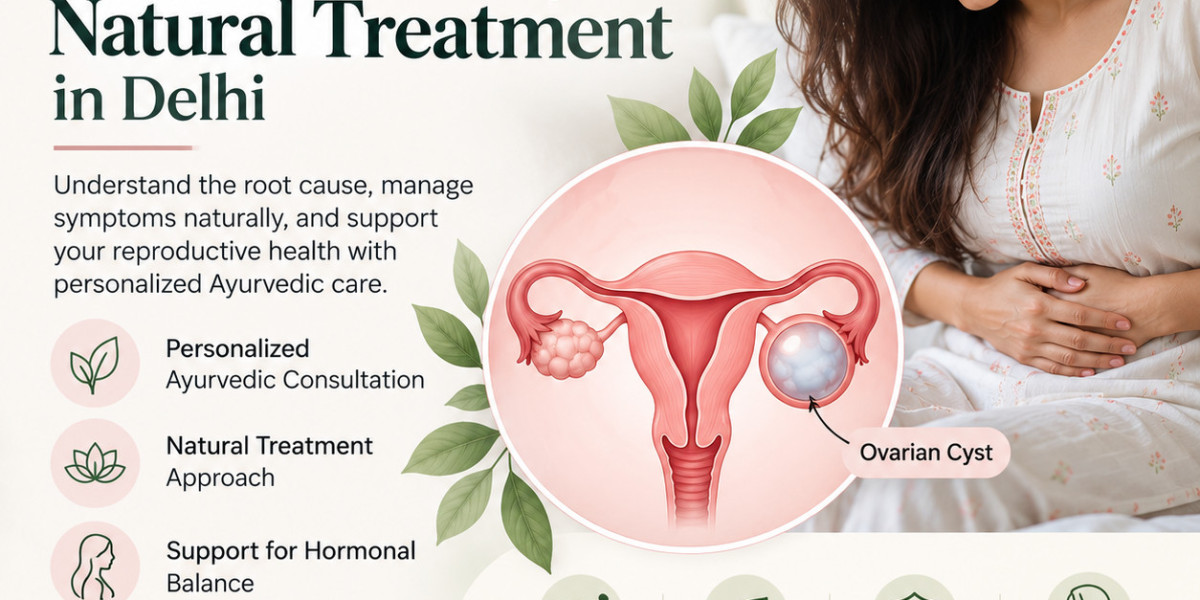

Ovarian cysts are a common gynaecological finding that can occur during different stages of a woman's reproductive life. Many cysts are harmless and disappear without treatment, while others may require regular monitoring or medical intervention. Understanding the type of cyst, its size, symptoms, and possible effect on reproductive health is essential for making informed decisions.
Women searching for ovarian cyst treatment in Delhi often want to understand whether natural approaches or Ayurveda can support their health. Although traditional approaches may contribute to general wellbeing when used appropriately, treatment decisions should be based on an accurate diagnosis and the specific characteristics of the cyst.
This article explores ovarian cysts from a patient-education perspective, including their causes, diagnostic methods, evidence-based treatment options, and the role of complementary care.
What Is an Ovarian Cyst?
An ovarian cyst is a fluid-filled sac or pocket that develops in or on an ovary. The ovaries are responsible for releasing eggs and producing hormones such as oestrogen and progesterone.
Ovarian cysts are broadly classified into functional cysts and other types of cysts.
Functional ovarian cysts are associated with the menstrual cycle. Follicular cysts may form when a follicle does not release an egg as expected, while corpus luteum cysts may develop after ovulation. These cysts frequently resolve on their own.
Other types include dermoid cysts, endometriomas associated with endometriosis, and cystadenomas. Their behaviour and treatment requirements can differ considerably.
For this reason, Ayurvedic treatment for ovarian cyst in Delhi should not be considered a single approach suitable for every diagnosis. Identifying the type of cyst is an important first step.
Common Symptoms of Ovarian Cysts
Many ovarian cysts cause no noticeable symptoms and are discovered during a routine pelvic examination or ultrasound. When symptoms occur, they may include:
Dull or sharp pain in the lower abdomen or pelvis.
A feeling of abdominal fullness, pressure, or bloating.
Pain during sexual intercourse.
Changes in menstrual patterns.
Frequent urination or pressure on the bladder.
Difficulty emptying the bowel in some cases.
These symptoms are not exclusive to ovarian cysts. Conditions such as endometriosis, pelvic infections, fibroids, and gastrointestinal problems can produce similar discomfort.
Persistent or worsening symptoms should therefore be assessed by a qualified healthcare professional rather than managed through self-diagnosis.
When Is an Ovarian Cyst an Emergency?
Sudden, severe pelvic pain, particularly when accompanied by nausea, vomiting, fever, dizziness, or fainting, requires urgent medical assessment. These symptoms may indicate ovarian torsion, in which the ovary twists, or a ruptured cyst with bleeding.
Prompt treatment can be important in protecting reproductive health and preventing complications.
What Causes Ovarian Cysts?
The causes depend on the type of cyst.
Functional cysts develop as part of the menstrual cycle. Hormonal and ovulatory changes can influence their formation. Other cysts may be associated with endometriosis, abnormal tissue growth, or less commonly, other medical conditions.
Polycystic ovary syndrome (PCOS) is also frequently confused with ovarian cysts. However, PCOS is a hormonal and metabolic condition involving features such as irregular ovulation and androgen excess. The small follicles seen on ultrasound in PCOS are not the same as the larger ovarian cysts that may require separate evaluation.
Understanding this distinction helps women seek appropriate care rather than relying on a generalised treatment plan.
How Are Ovarian Cysts Diagnosed?
An appropriate diagnosis helps determine whether observation, medication, further testing, or surgery may be necessary.
1. Medical History and Examination
A clinician may ask about menstrual cycles, pelvic pain, pregnancy possibility, previous ovarian cysts, fertility goals, and relevant medical conditions.
2. Pelvic Ultrasound
Ultrasound is commonly used to assess the size, location, and appearance of an ovarian cyst. Features such as whether it is fluid-filled or contains solid areas can help guide further management.
3. Additional Investigations
Depending on the findings, a healthcare professional may recommend a pregnancy test, selected blood tests, or follow-up imaging. CA-125 testing may be considered in certain circumstances, but it cannot independently determine whether a cyst is cancerous.
The patient's age, menopausal status, symptoms, and ultrasound findings all influence the next steps.
Ayurvedic Treatment for Ovarian Cyst in Delhi: What Should Women Know?
Ayurveda is a traditional system of healthcare that considers diet, daily routines, individual constitution, and overall wellbeing. Some women explore Ayurvedic care alongside conventional gynaecological treatment.
However, it is important to distinguish traditional practice from established clinical evidence. There is currently insufficient high-quality evidence to establish that Ayurvedic medicines can reliably dissolve all types of ovarian cysts, eliminate endometriomas, or prevent complications.
Women considering Ayurvedic treatment of ovarian cyst in Delhi should first obtain a clear diagnosis and discuss complementary treatments with their gynaecologist and a qualified Ayurvedic practitioner.
A responsible approach should include the following principles:
Review the ultrasound report and relevant medical history before beginning treatment.
Disclose all medicines, herbal products, and supplements being used.
Avoid claims that every cyst can be cured naturally.
Do not delay necessary monitoring, surgery, or other recommended treatment.
Check for potential interactions between herbal products and prescribed medicines.
Herbal preparations can have side effects, interact with medicines, or contain ingredients that are unsuitable for particular individuals. Professional guidance is especially important during pregnancy, when trying to conceive, or when taking other medication.
Ovarian Cyst Natural Treatment in Delhi: Supportive Lifestyle Measures
Natural approaches are often discussed in relation to ovarian health. While healthy habits can support general health, they should not be presented as a proven method for removing an established ovarian cyst.
Balanced Nutrition
A varied diet containing vegetables, fruits, whole grains, protein sources, and healthy fats supports overall health. There is no single diet proven to eliminate all ovarian cysts.
Women with PCOS may benefit from individualised dietary guidance to support metabolic health, menstrual regularity, and long-term wellbeing.
Regular Physical Activity
Activities such as walking, swimming, cycling, or other suitable forms of exercise can support cardiovascular and metabolic health. Exercise should be adapted to individual comfort, particularly when pelvic pain is present.
Sleep and Stress Management
Adequate sleep and practical stress-management techniques may improve general wellbeing. They are useful parts of a healthy routine, but they should not be described as direct treatments for ovarian cysts.
Avoiding Unverified Remedies
Detox drinks, extreme diets, and unregulated supplements may be ineffective or harmful. Women should be cautious of products claiming to dissolve cysts quickly or restore ovarian function without medical assessment.
Evidence-Based Treatment Options for Ovarian Cysts
The most appropriate treatment depends on the cyst's appearance, size, symptoms, suspected cause, age, and reproductive plans.
Observation and Follow-Up
Many simple, functional cysts resolve spontaneously. A clinician may recommend observation and a repeat ultrasound after an appropriate interval, depending on the findings and symptoms.
Follow-up is important because not every cyst behaves in the same way.
Medication
Medication may be prescribed to manage pain or treat an associated condition. Hormonal contraceptives can help prevent some future functional cysts in selected situations, but they generally do not make an existing functional cyst disappear faster.
Medication choices should be individualised according to the patient's medical history and goals.
Surgery
Surgery may be considered when a cyst is persistent, large, symptomatic, suspicious on imaging, or associated with complications. Depending on the circumstances, a surgeon may remove the cyst while preserving the ovary or recommend a different procedure.
The decision should consider the benefits and risks, including potential effects on ovarian reserve and future fertility.
Can Ovarian Cysts Affect Fertility?
The relationship between ovarian cysts and fertility depends on the cyst type and the condition causing it.
Many functional cysts do not cause long-term fertility problems. However, endometriomas may be associated with endometriosis, which can affect fertility in some women. Certain ovarian conditions and some surgical procedures can also influence ovarian reserve.
Women planning pregnancy should discuss fertility goals before treatment. This is particularly important when considering surgery on an ovary, because the potential benefits of removing a cyst must be balanced against possible loss of healthy ovarian tissue.
An ovarian cyst diagnosis does not automatically mean that a woman will have difficulty conceiving.
Choosing the Right Ovarian Cyst Treatment
When evaluating options for ovarian cyst natural treatment in Delhi or conventional medical care, women should look for a practitioner who explains the diagnosis, treatment choices, expected benefits, limitations, and warning signs clearly.
Useful questions include:
What type of ovarian cyst has been identified?
Does it require monitoring or active treatment?
Could the cyst affect fertility or ovarian reserve?
What are the benefits and risks of the proposed treatment?
Is there reliable evidence supporting any suggested complementary therapy?
When should another ultrasound or specialist review take place?
Be cautious of guaranteed-cure claims, advice to stop prescribed medication without medical supervision, or recommendations to ignore concerning symptoms.
Conclusion
Ovarian cysts vary widely in their causes, symptoms, and clinical significance. Many resolve naturally, while others require monitoring, medication, or surgery. Accurate diagnosis is therefore more useful than assuming that every cyst needs the same treatment.
Women exploring Ayurvedic treatment for ovarian cyst in Delhi may discuss complementary care with qualified practitioners, provided it does not replace necessary medical evaluation. A balanced approach combines appropriate investigations, evidence-based treatment when required, healthy daily habits, and regular follow-up.
The goal is not simply to treat an ultrasound finding, but to protect a woman's overall health, manage symptoms, and make informed decisions about future reproductive plans.