
Children use language every day to express their needs, understand instructions, share ideas, and connect with others. However, some children may find it difficult to understand words, form sentences, follow conversations, or develop early reading and writing skills. With the right support and regular practice, they can work towards improving these abilities.
Language Therapy Activities provide structured and engaging opportunities for children to practise communication skills. These activities can include storytelling, picture description, listening games, vocabulary exercises, and sentence-building tasks. When selected according to a child's individual needs, they can support language development and strengthen the skills needed for learning at home and school.
Why Are Language Skills Important for Children?
Language plays an important role in children's learning and social development. It helps them understand what others say, explain their thoughts, ask questions, and learn new information.
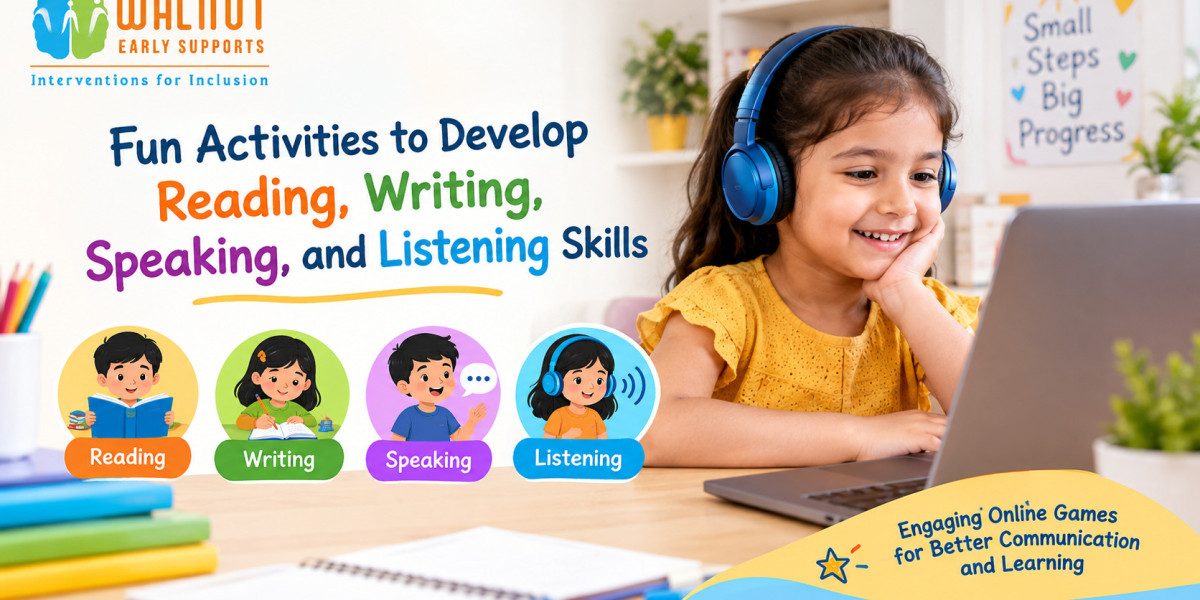
The four key areas of communication and literacy are:
Listening: Understanding spoken words, instructions, and conversations.
Speaking: Using words and sentences to express thoughts, feelings, and needs.
Reading: Recognising written words and understanding their meaning.
Writing: Organising ideas and expressing them through written language.
These skills are connected. For example, a child who learns new vocabulary through conversation may begin recognising those words in books and using them in writing. Supporting all four areas can help children participate more confidently in everyday activities.
1. Improving Listening and Understanding
Listening is an important part of language learning. Children need to understand spoken information before they can respond appropriately or follow instructions.
Some children may struggle to remember directions, understand questions, or identify important details in a conversation. Simple activities can provide opportunities to practise these skills.
Helpful activities include:
Follow-the-direction games: Ask children to complete simple instructions, such as "Pick up the red ball and place it on the table."
Story listening: Read a short story aloud and ask questions about the characters or events.
Sound identification: Encourage children to identify familiar sounds from their surroundings.
Listening and matching: Say the name of an object and ask children to find the matching picture.
Begin with short instructions and gradually introduce more complex tasks when the child is ready. Repetition, visual cues, and encouraging feedback can make activities easier to understand.
2. Building Speaking and Expressive Language Skills
Speaking allows children to communicate their ideas, describe experiences, and interact with other people. Developing this skill involves learning vocabulary, combining words, forming sentences, and using language in different situations.
Language Therapy Activities can help children practise these abilities through meaningful interactions rather than memorising words alone.
For example, show a child a picture of a park and ask what they can see. If the child says, "Boy running," you can model a longer sentence: "The boy is running in the park." This provides a natural example of how to expand a sentence.
Other useful activities include:
Naming familiar objects and describing their uses.
Using picture cards to practise action words.
Playing pretend games involving everyday situations.
Encouraging children to answer questions and retell familiar events.
Give children time to respond and avoid pressuring them to speak perfectly. Focus on helping them communicate their intended message.
3. Supporting Early Reading Skills
Reading involves more than recognising letters and words. Children also need to connect sounds with letters, understand vocabulary, and make sense of what they read.
Activities that combine spoken and written language can support these developing abilities.
For example, read a picture book together and point out familiar words. Ask the child to predict what might happen next or explain what a character is doing. These conversations help connect reading with comprehension and spoken language.
For children who need additional reading support, reading intervention activities may include:
Matching letters with their sounds.
Identifying rhyming words.
Blending sounds to form simple words.
Matching written words with pictures.
Answering questions about short passages.
Choose activities based on the child's current reading ability. Children who have persistent difficulties with reading may benefit from assessment and targeted instruction from an appropriately qualified professional.
4. Developing Writing and Sentence Formation
Writing gives children an opportunity to organise their thoughts and communicate through words. Before writing complete sentences, many children begin with drawing, scribbling, copying letters, and writing familiar words.
Language skills contribute to writing because children need vocabulary, grammar, and an understanding of how words fit together.
Try these activities to encourage early writing:
Ask children to write or dictate a sentence about a picture.
Use word cards to arrange simple sentences.
Create a story together and write one sentence at a time.
Encourage children to make lists of familiar objects.
Ask them to describe a favourite activity in a few sentences.
For younger children, drawing and talking about pictures can be useful starting points. Older children may practise writing short stories, descriptions, or personal experiences.
5. Connecting All Four Skills Through Play
The listening speaking reading and writing skills can be practised together through everyday activities.
For example, choose a short story and read it aloud. Ask the child to listen carefully, describe a favourite character, read a familiar word, and write or dictate a sentence about the story.
This simple routine creates opportunities to practise listening comprehension, vocabulary, speaking, reading, and writing within one meaningful experience.
Well-planned Language Development Activities can also support attention, turn-taking, and communication during shared play. The goal is to provide enjoyable opportunities for children to use language, not to make every interaction feel like a formal lesson.
How Can Parents and Professionals Support Progress?
Parents, teachers, and speech-language pathologists can work together to identify a child's strengths and areas where additional support may be helpful.
Useful child development therapy resources can provide structured activities for practising vocabulary, comprehension, sentence formation, and early literacy. However, activities should be selected according to the child's age, abilities, communication needs, and learning goals.
Parents can reinforce learning through everyday conversations, shared reading, and play. Short, regular practice sessions may be easier to maintain than long activities that leave children feeling tired or frustrated.
If a child consistently struggles to understand language, express needs, or develop communication skills, consult a qualified speech-language pathologist. A professional can assess the child's needs and recommend appropriate support.
Conclusion
Strong language skills help children communicate, learn, and participate in everyday life. With engaging practice, children can develop listening comprehension, speaking abilities, reading skills, and written expression over time.
Language Therapy Activities offer practical ways to support these areas through storytelling, conversation, games, and structured exercises. By adapting activities to each child's needs and celebrating small steps forward, parents and professionals can help make language learning more meaningful, supportive, and enjoyable.