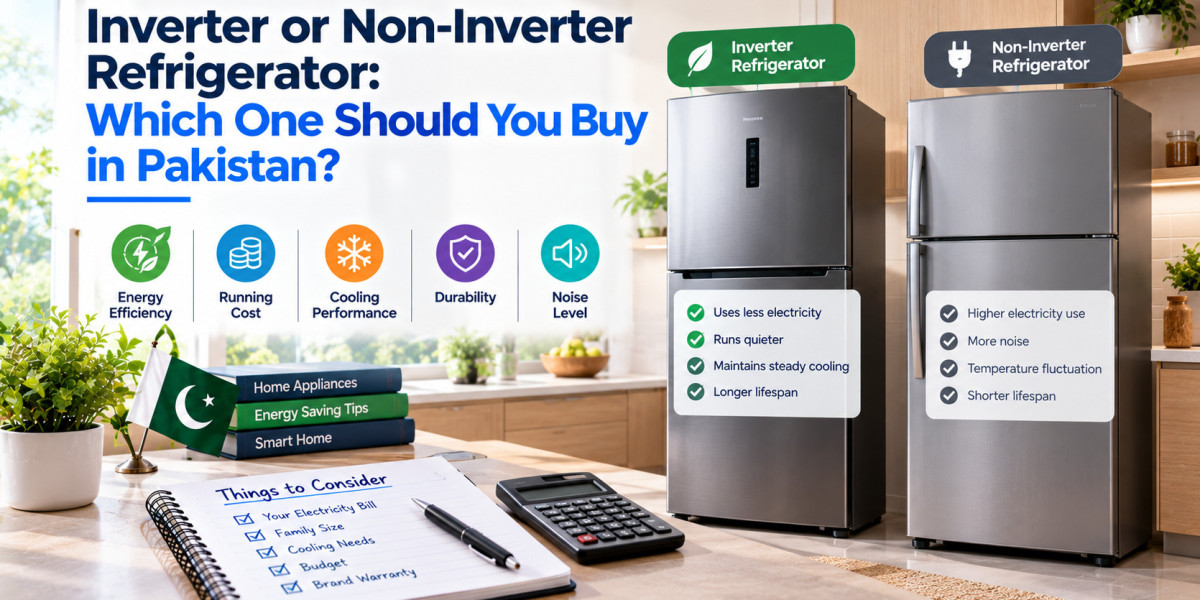

A refrigerator never switches off, which makes it the one appliance where efficiency, voltage tolerance and build quality matter every single day. In Pakistan, frequent load-shedding and voltage swings make the choice harder, because a compressor that starts and stops repeatedly wears out faster. Many buyers start by checking Haier refrigerator price in Pakistan listings, but the more useful first question is whether you need an inverter model at all.
This guide compares both types, explains what size suits your family and shows how to protect the compressor when the power is unstable.
What Is the Difference Between Inverter and Non-Inverter Refrigerators?
A conventional compressor runs at full speed until the fridge is cool, then switches off completely, and repeats this cycle all day. An inverter compressor adjusts its speed to the cooling demand, so it rarely stops and starts abruptly.
| Feature | Non-inverter | Inverter |
|---|---|---|
| Compressor | Full speed, on and off | Variable speed |
| Noise | Clicks and hums at start | Quieter, steadier |
| Power use | Higher over time | Generally lower |
| Voltage tolerance | Moderate | Often wider |
| Upfront cost | Lower | Higher |
| Temperature stability | Fluctuates slightly | More stable |
Neither type is wrong. The better choice depends on how heavily the fridge is used and how unstable your supply is.
Is an Inverter Refrigerator Worth the Extra Cost?
An inverter refrigerator usually costs more at purchase, but it can recover part of that gap through lower electricity use, especially in large families where the door opens constantly. It also handles voltage variation better, which matters in areas where supply fluctuates.
An inverter model makes the most sense when:
- The fridge runs in a hot kitchen for most of the year
- Your household opens the door frequently
- Electricity bills are already a concern
- Voltage swings are common in your area
A conventional model can still serve well for light use, such as a small family or a second fridge used only part of the day.
What Size Refrigerator Do You Need?
Capacity is measured in cubic feet (CFT). Use this as a starting point.
| Household | Recommended size | Notes |
|---|---|---|
| 1 to 2 people | 6 to 9 CFT | Daily shopping |
| 3 to 4 people | 10 to 13 CFT | Weekly shopping |
| 5 to 7 people | 14 to 18 CFT | Bulk storage, cooked food |
| Joint family | 18 CFT and above | Large quantities |
A unit that is too large wastes electricity on empty space. One that is too small leads to overpacking, which blocks airflow and spoils food. Measure the kitchen and entrance before buying, and leave a few inches of clearance at the back and sides.
How Much Power Does a Refrigerator Use?
Typical running power is between 100 and 200 watts, with a short surge when the compressor starts.
| Type | Typical daily use |
|---|---|
| Small conventional fridge | 0.8 to 1.2 kWh |
| Mid-size conventional | 1.2 to 1.8 kWh |
| Mid-size inverter | 0.8 to 1.3 kWh |
Actual numbers depend on room temperature, how often the door opens and how well the seals work. Check the label on the model you are considering.
How Do You Protect a Refrigerator During Load-Shedding and Voltage Swings?
The compressor is the costliest part of a fridge, and it suffers most from sudden power cuts and low voltage.
- Use a stabilizer rated for the fridge’s starting load
- Avoid switching the supply off and on rapidly. Wait a few minutes before the fridge restarts
- If you use a UPS or inverter, check that its rating covers the compressor’s start-up surge, which is higher than the running watts
- Do not use a basic extension board, since poor contacts can overheat
- Keep the back of the fridge ventilated so the compressor does not overheat
During long outages, keep the door closed as much as possible. A full fridge stays cold longer than an empty one.
What Do You Need to Know About Brands and Pricing?
Prices change with exchange rates, taxes and import costs, so always compare the full offer. Two models of the same capacity can differ because of compressor type, cooling system, build and warranty. Check:
- The compressor warranty, which is often longer than the body warranty
- Direct-cool or frost-free cooling
- Whether the service center is in your city
- Availability of spare parts such as thermostats and door gaskets
A clear warranty card and nearby service often matter more than a small difference in price.
When Should You Choose a Deep Freezer Instead?
If your main need is long-term storage of meat, frozen snacks or bulk groceries, a deep freezer is more efficient than using a large refrigerator’s freezer compartment. Many households with big families keep one refrigerator for daily food and a separate freezer for stock. It also reduces how often the main fridge door opens.
Are Compact Models Good for Small Spaces?
Yes, for the right use. Compact fridges suit bedrooms, offices and small apartments, and they draw less power than full-size units. Check the freezer size, since some small models have only a tiny ice compartment, and consider the noise level if the unit sits in a bedroom.
How Do You Keep a Refrigerator Efficient?
- Keep it away from the stove, oven and direct sunlight
- Let hot food cool before storing it
- Check door seals for gaps by closing the door on a sheet of paper
- Defrost direct-cool models when ice becomes thick
- Do not overfill, so air can circulate
- Clean the condenser coils at the back once or twice a year
- Set the temperature at a moderate level, around 3 to 5°C for the fridge section
Frequently Asked Questions
1. Do inverter refrigerators really save electricity?
They are designed to use less power by adjusting compressor speed. Actual savings depend on usage, room temperature and how often the door opens.
2. Can I run a refrigerator on a UPS or inverter?
Yes, but the UPS must handle the compressor’s start-up surge, which is higher than its running wattage. Check the ratings or ask an electrician.
3. Should I use a stabilizer with my refrigerator?
Where voltage fluctuates often, a stabilizer helps protect the compressor and is a sensible investment.
4. How long does a refrigerator usually last?
With proper care, many last ten years or more. Voltage problems, poor ventilation and overloading shorten this.
5. How long can food stay safe during a power outage?
A closed fridge usually keeps food cold for several hours. Avoid opening the door more than necessary, and discard anything that smells or looks unusual.
Final Thoughts
The right refrigerator depends on your family size, power conditions and usage, not on features alone. Estimate the capacity you need, decide whether an inverter model fits your budget and power supply, and protect the compressor with a stabilizer and sensible habits. Compare warranty and service along with the listed price, and the fridge will serve you reliably for many years.