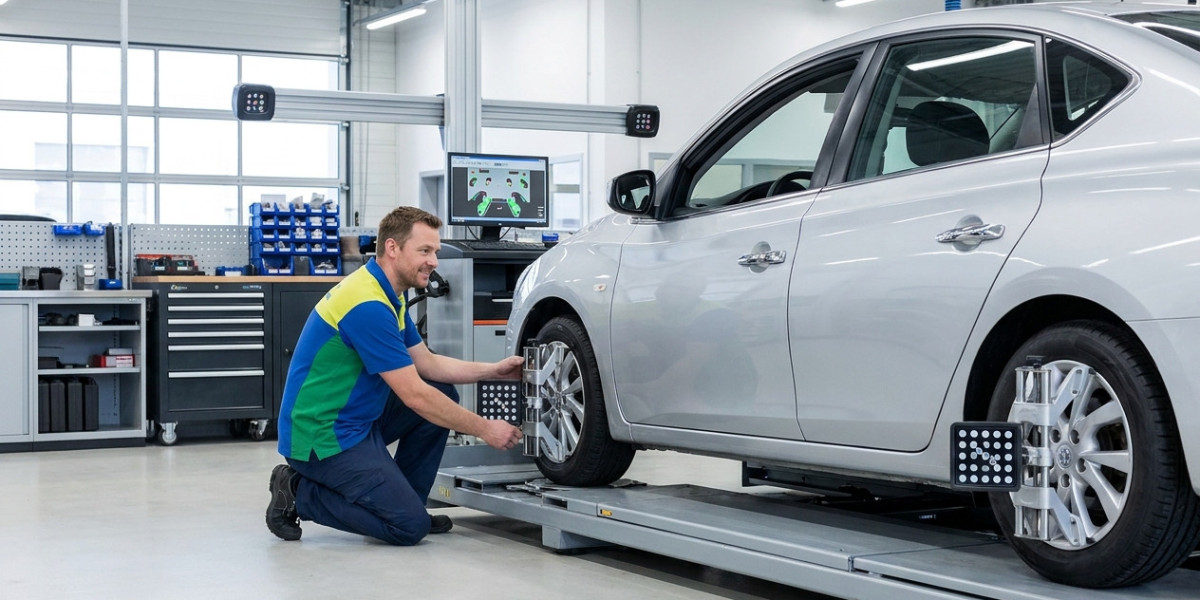

Understanding Wheel and Frame Alignment: The Basics
Every time you get behind the wheel, you expect your vehicle to handle predictably, drive straight, and keep you safe on the road. However, everyday driving hazards—from deep potholes and steep driveways to unexpected collisions—can quietly knock your vehicle’s structural geometry out of balance. When your car begins to drift into another lane, or you notice a sudden vibration in your steering column, these are clear indicators that your vehicle's mechanical specifications have been compromised. Finding reliable wheel alignment services near me is not just a matter of improving your daily driving comfort; it is a critical maintenance step that protects your tires, preserves your suspension, and ultimately, ensures your safety. As a trusted industry expert, I can assure you that ignoring a misalignment issue often leads to escalating repair bills, decreased performance, and hidden dangers on the highway.
In this comprehensive guide, we will explore the critical differences between wheel and frame alignment, the hidden dangers of driving an unbalanced vehicle, the warning signs you should never ignore, and why seeking out a certified, top-tier collision and alignment center is essential for your vehicle's longevity. Many drivers use the terms "wheel alignment" and "frame alignment" interchangeably. While they are closely related and often performed together—especially after an accident—they refer to two distinct mechanical processes. Understanding the difference is the first step in maintaining a healthy, reliable vehicle.
What is a Wheel Alignment?
Wheel alignment (often referred to as tire alignment) is the process of adjusting the angles of your vehicle's wheels so that they meet the manufacturer’s exact specifications. The goal is to ensure that your tires make optimal contact with the road and point perfectly straight. Technicians measure and adjust three primary angles during this process:
Camber: This is the inward or outward angle of the tire when viewed from the front of the vehicle. Too much inward tilt (negative camber) or outward tilt (positive camber) indicates that ball joints, bearings, or other suspension parts may be worn out or damaged.
Toe: Imagine looking down at your feet. If your toes are pointed inward, that is "toe-in." If they point outward, it’s "toe-out." The same concept applies to your tires when viewed from above. Incorrect toe alignment is the leading cause of rapid tire wear.
Caster: Caster represents the angle of your steering axis when viewed from the side of the vehicle. Positive caster tilts the steering axis toward the driver, which helps balance steering, stability, and cornering.
What is a Frame Alignment?
While wheel alignment focuses on the suspension and tires, frame alignment focuses on the vehicle's structural skeleton. Most modern vehicles are built using a "unibody" construction, meaning the frame and the body are a single, integrated piece of metal. If you are involved in a collision—even a minor fender bender—the impact can shift this unibody structure.
If a vehicle's frame is bent, a standard wheel alignment is physically impossible to complete accurately. Frame alignment requires computerized laser measuring systems and heavy-duty hydraulic machinery to pull and push the vehicle’s chassis back to its original factory dimensions. Restoring the frame to its precise geometrical state is the only way to ensure the vehicle is safe to drive and structurally sound enough to protect you in a future collision.
The Hidden Dangers of Driving with Misaligned Wheels and Frames
Choosing to delay an alignment check might seem like a harmless way to save money in the short term, but it triggers a domino effect of mechanical failures and safety hazards. Misalignment forces your vehicle to fight against its own geometry.
Accelerated Tire Wear and Blowout Risks
Tires are expensive, and driving on misaligned wheels is the fastest way to ruin them. When wheels are out of alignment, the contact patch—the portion of the tire actually touching the asphalt—is unevenly distributed. This leads to specific wear patterns such as "feathering" (where tread is smooth on one side and sharp on the other) or "camber wear" (where the inside or outside edge of the tire wears down to the steel belts). Over time, this uneven friction severely weakens the tire casing. At highway speeds, a weakened tire is highly susceptible to sudden, catastrophic blowouts, putting you, your passengers, and other drivers in severe danger.
Compromised Handling and Suspension Strain
When a vehicle's frame or wheels are not perfectly aligned, the vehicle will naturally want to pull to the left or the right. To keep the car driving straight, you must constantly hold the steering wheel at an angle, applying continuous tension. In emergency situations where split-second evasive maneuvers are required, a vehicle with compromised handling will not respond predictably. Furthermore, this geometrical imbalance places immense, unnatural stress on your vehicle's suspension system. Shocks, struts, tie rods, and wheel bearings are forced to work overtime to compensate for the drag, leading to premature mechanical failure and costly repairs.
Decreased Fuel Efficiency
Think of a misaligned vehicle as one that is constantly dragging its feet. When your tires are not perfectly parallel to each other (such as having improper toe angles), they resist the forward motion of the vehicle. This "rolling resistance" forces your engine to work significantly harder just to maintain normal cruising speeds. By investing in a professional alignment, you eliminate this dragging effect, allowing your car to roll freely and maximizing your fuel economy. Over the course of a year, an aligned vehicle can save you hundreds of dollars at the gas pump.
Key Signs You Need Immediate Alignment Services
Your vehicle is incredibly communicative. If you know what to listen for and look at, you can catch alignment issues before they result in massive repair bills. Here are the most prominent red flags that indicate you need an alignment check immediately.
Pulling to One Side and Steering Wheel Vibrations
If you momentarily take your hands off the steering wheel on a flat, straight, and empty road, your car should continue to track straight. If it violently darts or gradually drifts into the adjacent lane, your alignment is heavily compromised. Additionally, if you feel a shaking or vibration in the steering column—particularly when accelerating or cruising at highway speeds—it is a strong indicator that your wheels are fighting each other for directional control.
Off-Center Steering Wheel
Pay attention to the emblem in the center of your steering wheel. When you are driving perfectly straight down a flat highway, that emblem should be perfectly level and centered. If you have to hold the steering wheel slightly rotated to the left or right just to maintain a straight line, your vehicle's "thrust angle" is off. This is a tell-tale sign that your front and rear axles are no longer parallel.
Uneven Tire Wear Patterns and Squealing
Make it a habit to visually inspect your tires once a month. Run your hand over the tread; it should feel smooth and even across the entire width of the tire. If the inner or outer edges are significantly balder than the center, alignment is strictly necessary. Additionally, if your tires squeal or screech during low-speed turns (such as pulling into a parking space), it often means the tires are dragging across the pavement rather than rolling smoothly, which points to a severe toe-angle issue.
Why Post-Collision Alignment is Non-Negotiable
Auto accidents are stressful, and the repair process can be overwhelming. Many drivers and subpar body shops focus solely on the cosmetic damage—replacing dented bumpers, fixing scratched paint, and replacing cracked headlights. However, the true damage from a collision usually lies beneath the surface.
Identifying Invisible Structural Damage
It does not take a high-speed crash to bend a vehicle’s frame. An impact at just 10 to 15 miles per hour can easily warp a subframe, bend a lower control arm, or shift the engine cradle. If a body shop simply bolts new cosmetic panels onto a bent frame, the car will never drive the same again. It will vibrate, chew through tires, and suffer from poor aerodynamics. A reputable collision center will always place a post-accident vehicle on a computerized measuring system to check the frame's exact geometry against factory blueprints before any cosmetic work is completed.
Ensuring ADAS Calibration Accuracy
Modern vehicles are essentially computers on wheels, equipped with Advanced Driver Assistance Systems (ADAS) such as lane departure warnings, adaptive cruise control, and automatic emergency braking. These systems rely on a network of cameras and radar sensors mounted on the vehicle's body and frame. If the frame is even slightly misaligned, or the wheel thrust angle is off, these sensors will be looking in the wrong direction. A misaligned sensor might fail to detect a stopped car in front of you, rendering your safety systems useless. Proper frame and wheel alignment guarantees that your vehicle's digital safety features are perfectly calibrated with the physical direction of the car.
Choosing the Right Auto Repair Center for Your Alignment Needs
Not all repair shops are created equal. Wheel and frame alignments require a high degree of mathematical precision, state-of-the-art machinery, and experienced technicians. When you are looking for a service center to trust with your vehicle, you must demand excellence.
Advanced Diagnostic Technology and Equipment
A basic mechanical shop might use outdated string-and-tape measuring methods, but an elite collision and alignment center utilizes 3D laser alignment technology and computerized frame racks. These machines measure angles down to a fraction of a millimeter, ensuring that your vehicle is restored precisely to OEM (Original Equipment Manufacturer) standards. Never hesitate to ask a shop about the age and capability of their alignment racks.
Certified Technicians and Lifetime Guarantees
The machinery is only as good as the technician operating it. Look for auto repair centers that employ ASE (Automotive Service Excellence) Certified and I-CAR Gold Class technicians. These certifications indicate that the mechanics have undergone rigorous, continuous training on the latest automotive architectures. Furthermore, confidence in workmanship is key. Elite centers, like those with decades of experience under their belts, will back their frame and alignment repairs with a lifetime written warranty. If a shop isn't willing to guarantee their work for as long as you own the vehicle, you should take your business elsewhere.
Conclusion
Your vehicle’s wheel and frame alignment are the literal foundation of its safety, efficiency, and performance. Whether you’ve recently been involved in a collision, hit a deep pothole, or simply noticed that your tires are wearing unevenly, proactive maintenance is your best defense against catastrophic failure on the road. Properly aligned wheels mean smoother rides, significantly lower fuel costs, and peace of mind knowing your vehicle will react exactly how you want it to in an emergency.