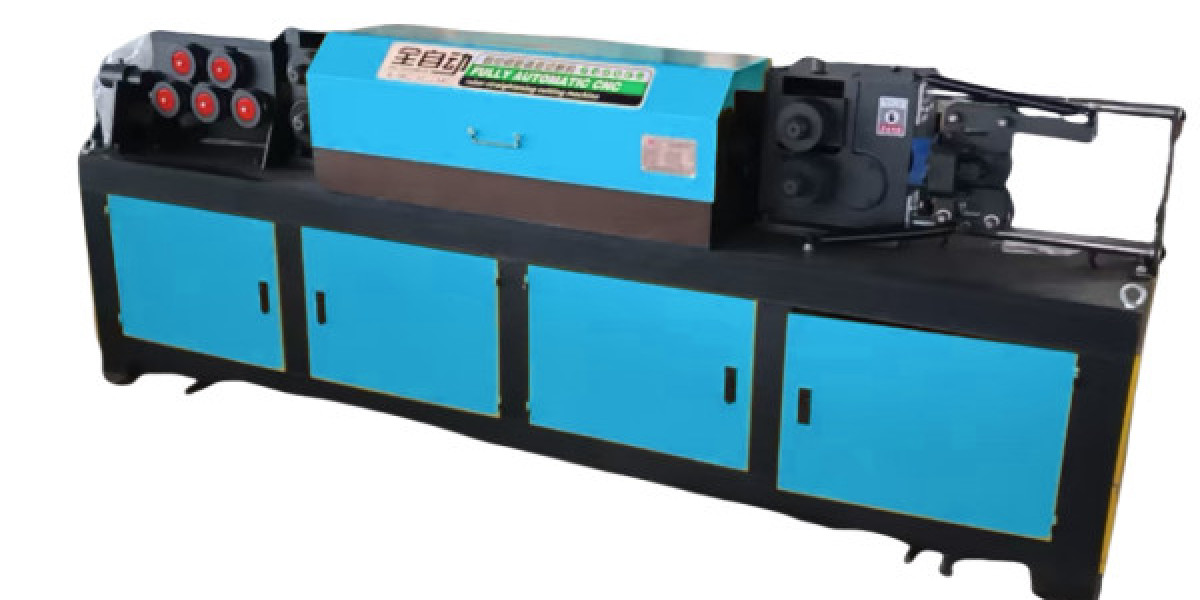

Efficient reinforcement preparation is essential for construction and steel fabrication businesses handling demanding production schedules. Steel bars often need to be straightened and cut into precise lengths before they can move to the next stage of fabrication. A rebar straightener and cutter combines these important operations into one automated workflow, helping businesses reduce repetitive manual work and improve material preparation.
The GTQ4-12 Straightening Machine is designed for processing steel bars while integrating traction, feeding, straightening, and hydraulic cutting functions. This integrated configuration allows the machine to manage several stages of preparation within a single production process. For workshops and construction-related fabrication facilities, combining these operations can make daily material handling more organized and efficient.
One of the machine's notable features is its suitability for thicker steel bars. The manufacturer describes the equipment as a heavy-duty, high-power solution designed for straightening thick steel bars. The GTQ4-12 model supports straightening diameters from 4 to 12 mm, while the product range also includes models designed for larger diameters. This provides businesses with options according to their specific reinforcement-processing requirements.
Production efficiency is another important consideration when processing large quantities of reinforcement steel. The manufacturer states that the machine can achieve a straightening speed of up to 60 meters per minute and produce up to 14 tons of steel bars per shift. Its computer-controlled system can also accept multiple batches and automatically perform cutting during continuous operation, helping operators maintain a steady production workflow.
Accuracy plays an equally important role in steel preparation. The GTQ4-12 is specified with straightening accuracy of ±2 mm and length accuracy of ±3 mm. Consistent dimensions can help fabrication teams prepare reinforcement bars according to planned requirements and reduce unnecessary adjustments during subsequent construction processes.
Durability is another factor worth considering for high-volume steel processing. The machine's straightening wheels use Cr12MoV material with vacuum quenching, and the manufacturer states that a set of wheels can process more than 1,000 tons of steel. The hydraulic system is designed with specified solenoid valves and international oil seals, supporting repeated operation in demanding production environments.
Automation can also improve labor efficiency. Instead of manually straightening and cutting every bar, operators can supervise the machine while it handles programmed production tasks. This can reduce repetitive physical work and allow personnel to focus on feeding material, monitoring operation, checking finished bars, and maintaining overall production quality.
The electrical and control configuration is another part of the machine's design. The manufacturer lists Schneider and Tutox electrical components and describes an independently developed control program with digital remote-control functionality. The system is intended to provide straightforward operation and support continuous production while keeping the workflow easier to manage.
For businesses selecting reinforcement-processing equipment, production volume, material diameter, required cutting lengths, available workshop space, maintenance needs, and operating requirements should all be evaluated. Choosing machinery that matches the actual workload can help companies achieve more reliable performance and better long-term value.
For construction and steel-processing businesses looking to improve material preparation, a rebar straightener and cutter offers a practical combination of straightening, feeding, and hydraulic cutting in one automated system. With computer-controlled operation, specified accuracy, high processing capacity, and a design intended for demanding steel work, the GTQ4-12 can support a more streamlined reinforcement fabrication workflow.
As construction projects continue to demand efficient and consistent reinforcement preparation, automated steel-processing equipment can help fabrication businesses keep production organized. Integrating straightening and cutting into one controlled process provides a practical way to reduce repetitive manual work while preparing reinforcement steel efficiently for modern construction applications.