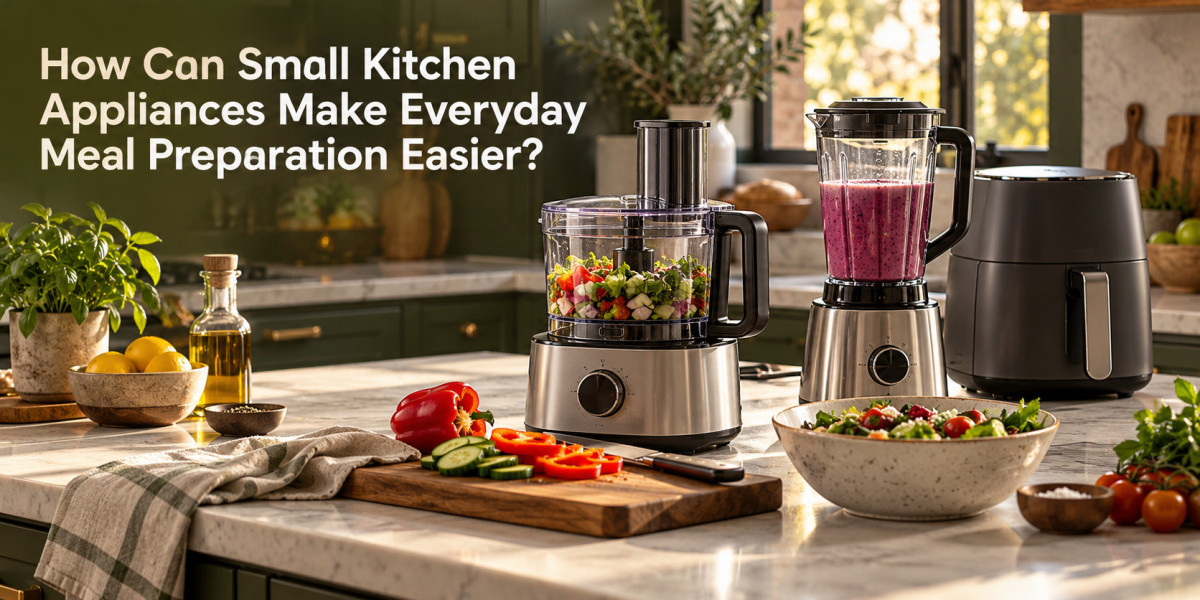

Modern kitchens are not only about large cooking ranges and ovens. Smaller appliances can make everyday food preparation faster, especially for households where breakfast, snacks, reheating, and individual meals need to be prepared quickly.
The right countertop appliance should solve a task that regularly takes time in your kitchen. Some people need an easier way to prepare crispy snacks, while others mainly want fast reheating or a convenient option for breakfast. Available counter space, family size, meal habits, and ease of cleaning should all influence the decision.
Instead of buying every appliance that looks useful, it is better to identify which cooking tasks happen most often and choose equipment around those needs.
Why Should Your Cooking Routine Guide the Choice?
Start by thinking about what happens in your kitchen during a normal week.
If frozen snacks, chicken, vegetables, or small portions are prepared frequently, hot-air cooking may be useful. A household that stores cooked food for later may place greater importance on quick reheating. Families that regularly prepare toast and filled bread for breakfast may benefit from something much simpler.
The important question is not how many functions an appliance offers. It is how often those functions will actually be used.
An appliance that solves one everyday problem can provide more practical value than a multifunction product that remains stored most of the time.
When Does Hot-Air Cooking Become Useful?
Air-based cooking appliances circulate heated air around food inside a basket or chamber. This method can be useful for foods that benefit from roasting or a crisp exterior, including vegetables, potato wedges, chicken pieces, and suitable frozen snacks.
People researching the Air Fryer price in Pakistan should look beyond cost and consider basket capacity, temperature controls, available presets, physical dimensions, and cleaning requirements.
A compact model may work well for one or two people, while a larger household may prefer enough cooking space to avoid preparing several batches.
The right capacity is more important than choosing the largest appliance available.
How Should You Choose the Right Capacity?
Capacity should match the number of portions normally prepared at one time.
A small appliance can be convenient in an apartment or for an individual because it takes up less counter and storage space. However, it may become frustrating if meals for several people need to be cooked in repeated batches.
Larger models provide more room but also occupy more space.
Think about your normal meal rather than occasional gatherings. If food is usually prepared for two people, an oversized appliance may add little practical benefit.
Check both advertised capacity and the shape of the cooking area because usable space can vary between models.
Why Is Temperature Control Important?
Different foods require different cooking conditions.
Adjustable temperature and time controls allow greater flexibility when preparing vegetables, meat, frozen products, and other suitable recipes.
Some appliances include preset programs for commonly prepared foods. These can be convenient, particularly for new users, but they should not become the main reason for paying significantly more.
Manual temperature and timer controls can already provide enough flexibility for many households.
The better option is the one whose controls are easy to understand and adjust during normal cooking.
When Is a Microwave Most Practical?
A microwave can become one of the most frequently used appliances in a busy household because it supports quick heating and defrosting.
Someone comparing the microwave oven price in Pakistan should first decide how the appliance will be used. A household mainly interested in reheating meals may need a different model from someone who also wants grilling or convection functions.
Capacity matters as well. The internal space should comfortably hold the plates, bowls, and containers normally used at home.
Choosing based on intended use makes it easier to avoid paying for functions that may rarely be selected.
What Is the Difference Between Microwave Types?
Basic models generally focus on reheating, defrosting, and straightforward cooking tasks.
Grill versions add another heating function that may help with certain foods requiring additional browning. Convection models can provide a broader range of cooking possibilities depending on the appliance.
More functions can be useful, but only when they fit your routine.
If most use involves warming lunch, reheating dinner, or defrosting ingredients, a simpler appliance may already provide everything required.
Someone who expects to experiment with a wider range of cooking methods may find additional functionality more worthwhile.
Why Does Internal Size Matter?
External dimensions do not always tell you how much usable room is available inside.
Check whether normal dinner plates, bowls, or microwave-safe containers can fit comfortably. The turntable or internal cooking area should suit the cookware you regularly use.
This is particularly important for families.
A compact model may be ideal for individual portions but less convenient when a larger dish needs reheating.
Measure the available counter space as well because the appliance needs a suitable location with the clearance recommended by the manufacturer.
When Can a Sandwich Toaster Be Worth Having?
A sandwich toaster is one of the simpler countertop appliances, but that simplicity can be useful for breakfast and quick snacks.
People checking the sandwich maker price in Pakistan should consider plate size, non-stick surfaces, heating indicators, handle design, and storage requirements.
A small two-slice model may be enough for one or two people, while a larger family may need multiple batches during breakfast.
Its real value depends on how often sandwiches, toast, or similar snacks are prepared. If these foods are part of the regular routine, a dedicated appliance can make preparation straightforward.
Why Should Ease of Cleaning Matter?
Cleaning can determine whether an appliance becomes part of the daily routine or ends up stored in a cupboard.
Food residue, oil, crumbs, and spills should be easy to remove after use.
Removable cooking baskets can make hot-air appliances easier to maintain. Microwave interiors should be cleaned when spills occur, while non-stick sandwich plates can simplify food removal and wiping.
Always follow the care instructions provided for the appliance.
A model that takes a few minutes to clean is often more convenient than one with complicated surfaces or components that require significant effort after every use.
How Much Counter Space Should You Keep Available?
Small appliances can quickly make a kitchen feel crowded.
Before buying, identify where each product will be used and whether it will remain on the counter or be stored after use.
Remember that appliances may require additional clearance when doors, lids, or baskets are opened.
Power-socket location should also be considered. Cables should not need to stretch across areas where food preparation is taking place.
A compact appliance is most useful when it fits naturally into the available space without reducing the working area too much.
Should Wattage Be the Main Comparison Point?
Power ratings can be useful, but they should not be treated as the only measure of performance.
Capacity, heating design, controls, temperature range, construction, and intended function can all affect how an appliance performs.
A higher wattage number does not automatically mean that one product is better for every household.
Compare appliances with similar purposes and capacities. Then look at how the power rating fits into the overall design and functionality.
How Can You Avoid Buying Appliances You Rarely Use?
Before purchasing, imagine how the appliance would fit into your next seven days.
Think about actual meals.
Would it help with weekday breakfast? Would it make reheating lunch easier? Would you use it for weekend snacks?
If you can identify several realistic uses every week, the appliance is more likely to provide value.
Buying because a product is currently popular can result in unnecessary kitchen clutter. Buying because it solves a repeated problem is usually a more practical approach.
Why Choose Electro Gallery for Small Kitchen Appliances?
At Electro Gallery, shoppers can explore different kitchen and small-appliance categories in one place, making it easier to compare capacities, functions, brands, and designs according to individual requirements.
The useful approach is to decide what task needs to become easier first. After that, compare products that solve that specific problem instead of purchasing based only on appearance or the number of advertised features.
Checking current specifications before ordering can also help ensure that the appliance suits both the available kitchen space and normal meal-preparation habits.
FAQs
1. Which small kitchen appliance should I buy first?
Choose according to the task you perform most frequently. Reheating, quick snacks, hot-air cooking, and breakfast preparation all require different types of equipment.
2. Is a larger-capacity appliance always better?
No. Additional capacity is useful only when you regularly cook larger portions. Bigger models also require more counter and storage space.
3. Do I need a convection microwave for everyday reheating?
Not necessarily. Additional functions are useful when you plan to use them regularly, but basic heating and defrosting may be enough for many households.
4. What should I check before buying a countertop appliance?
Check dimensions, capacity, controls, cleaning requirements, power rating, available counter space, and the functions you genuinely expect to use.
5. Are non-stick cooking surfaces useful?
They can make food removal and cleanup easier, but the coating should be maintained according to the manufacturer's care guidance.
Final Thought
Small kitchen appliances are most useful when they are chosen around real cooking habits rather than trends. One household may need faster reheating, another may regularly prepare crisp snacks, while someone else may mainly want an easier breakfast routine.
Start by considering portion size, available counter space, cooking frequency, cleaning requirements, and the meals prepared most often. Then compare appliances that meet those needs without adding functions that are unlikely to be used.
A simple product that saves time several times each week can provide more everyday value than a feature-heavy appliance that spends most of its time in storage.