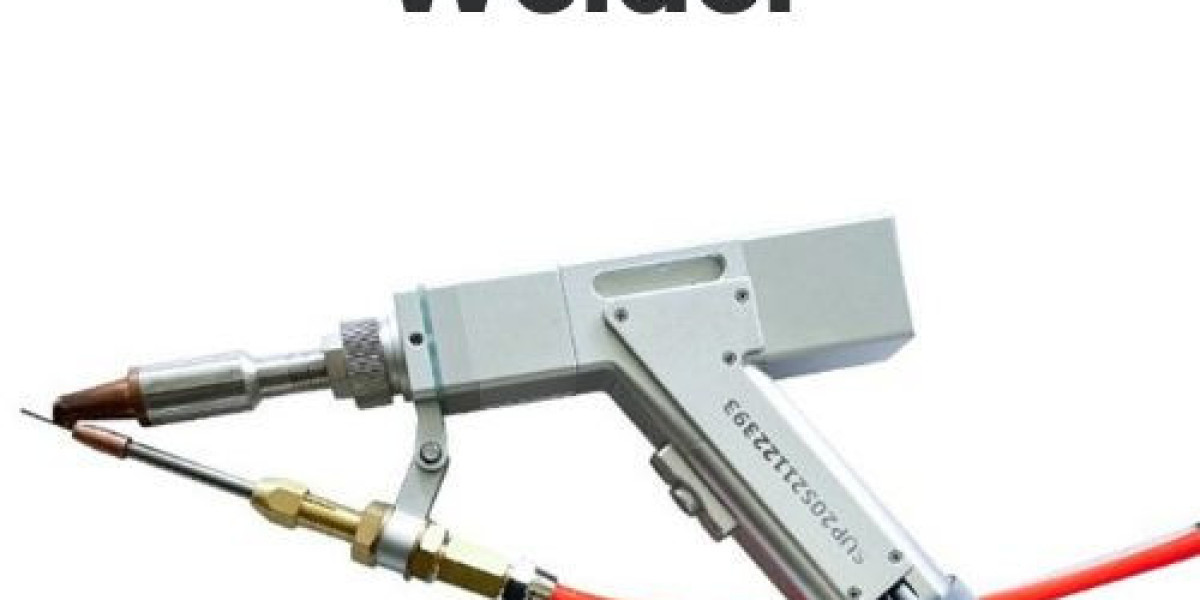

A fiber laser welder is an advanced welding solution designed to deliver precise, fast, and consistent results across a wide range of metalworking applications. By using a highly concentrated laser beam, this technology creates controlled heat at the welding point, allowing metal components to be joined with excellent accuracy and clean weld formation. For manufacturers, fabricators, workshops, and industrial businesses looking to improve production efficiency, fiber laser welding offers a powerful combination of performance, flexibility, and productivity.
LaserChina has developed its laser welding solutions with modern manufacturing requirements in mind. With extensive experience in laser technology, LaserChina provides welding equipment designed for applications ranging from everyday metal fabrication to demanding industrial production. Its fiber laser welding machines combine practical operation with advanced laser technology to help businesses achieve dependable welding performance.
What Is a Fiber Laser Welder?
A fiber laser welder uses a fiber laser source to generate a concentrated beam of laser energy and deliver it through an optical fiber to the welding head. The focused beam produces intense energy over a small area, allowing the workpiece to melt and form a strong joint with controlled heat input.
This focused welding process is particularly valuable when precision and appearance are important. The narrow welding area helps create clean seams while limiting unnecessary heat transfer into surrounding material. LaserChina's welding systems are available for a variety of applications and can be configured for different production requirements.
High-Speed Welding for Greater Productivity
One of the most attractive advantages of a fiber laser welder is its ability to significantly increase welding productivity. LaserChina states that its handheld laser welding machines can provide welding speeds several times faster than conventional welding methods, depending on the material, thickness, power, and application.
Higher welding speed can help manufacturers complete more work within the same production period. For businesses handling repeated fabrication orders, faster processing can translate into improved workflow and greater production capacity. This makes fiber laser technology an excellent choice for workshops and factories that want to modernize their welding operations.
Exceptional Welding Precision
Precision is another major benefit of fiber laser welding. The laser beam can be focused into a very small spot, allowing energy to be delivered exactly where the weld is required. This level of control is useful for producing accurate seams on components with detailed geometries, thin sections, and demanding dimensional requirements.
LaserChina's fiber laser welding solutions are designed for applications where consistent weld quality matters. The controlled beam helps operators create uniform welds and maintain a professional appearance across repeated production jobs.
Reduced Heat-Affected Area
Traditional welding processes can introduce considerable heat into the surrounding workpiece. Fiber laser welding concentrates energy more precisely at the joint, helping to create a comparatively narrow heat-affected zone.
This controlled heat input can help reduce unwanted deformation and preserve the appearance and dimensional accuracy of components. For manufacturers working with finished metal products, precision assemblies, decorative components, and thin materials, this feature can be particularly valuable.
Wide Range of Metal Applications
A modern fiber laser welder can be used with many commonly processed metals. LaserChina's handheld systems are designed for materials such as stainless steel, carbon steel, aluminum, and galvanized steel, while fiber laser technology is also widely applied to other compatible metals and alloys.
This material flexibility allows one welding platform to serve different production requirements. A workshop may use its machine for metal cabinets, kitchen equipment, automotive components, machinery parts, frames, doors, enclosures, hardware products, and many other fabrication projects.
Clean and Professional Weld Results
The quality and appearance of a finished weld are important factors in modern manufacturing. Fiber laser welding can produce narrow, clean weld seams with controlled energy input, reducing the amount of finishing work required for many applications.
LaserChina highlights clean welding performance as an important feature of its laser welding solutions. With the appropriate parameters and preparation, manufacturers can achieve attractive welds that support both structural performance and product presentation.
Easy Operation and Modern Controls
Another important advantage of today's fiber laser welders is user-friendly operation. LaserChina's handheld welding systems feature multilingual HMI controls and built-in welding parameters for different materials and applications.
This helps operators select appropriate settings more efficiently and maintain consistency during production. Modern control interfaces also make it easier to manage laser power and other welding parameters according to the requirements of a particular project.
Handheld Flexibility for Different Workpieces
Handheld fiber laser welders provide valuable flexibility for workshops and fabrication environments. Instead of restricting the welding process to a fixed workstation, the operator can guide the welding head across different workpieces and positions.
This flexibility makes handheld systems useful for large components, customized fabrication, repair work, metal furniture, machinery, enclosures, and general workshop applications. LaserChina also offers solutions that combine handheld and collaborative-robot capabilities, creating additional possibilities for businesses working with both small and larger production batches.
Suitable for Multiple Industries
The versatility of a fiber laser welder makes it suitable for numerous industries. Automotive manufacturing can benefit from precise welding of metal components and assemblies. Electronics manufacturers can use laser welding for applications requiring controlled heat input and accurate joining. Metal fabrication businesses can use fiber laser technology for stainless steel, carbon steel, aluminum, and other common materials.
Other applications include kitchen equipment, architectural metalwork, hardware manufacturing, machinery production, sheet-metal fabrication, medical components, jewelry, and customized industrial products. LaserChina's broad laser technology portfolio allows businesses to select welding solutions according to their particular production needs.
Productivity and Cost Benefits
Fiber laser welding can provide significant operational benefits by combining high processing speed, efficient energy delivery, repeatable performance, and reduced finishing requirements. Faster welding can increase production capacity, while precise energy control can help minimize unnecessary material effects around the joint.
For businesses focused on long-term productivity, these benefits can contribute to a more efficient manufacturing workflow. LaserChina also provides different machine configurations and customization options, allowing customers to select solutions suited to their applications rather than relying on a one-size-fits-all approach.
Advanced Options for Growing Businesses
Modern manufacturers often need equipment that can adapt as their business develops. LaserChina offers customization for selected welding systems, including mechanical, electrical, optical, software-interface, and functional options.
For businesses with specialized production requirements, this flexibility can make it easier to build a welding solution around specific materials, processes, production volumes, and workspace requirements. LaserChina also offers configurations that combine welding with additional laser functions such as cleaning and cutting, depending on the selected system.
LaserChina: Experience in Laser Technology
LaserChina brings more than two decades of experience to the laser equipment industry. The company states that it serves customers across more than 70 countries and provides a broad portfolio covering laser welding, cleaning, marking, engraving, cutting, and related laser solutions.
This experience is an important consideration for businesses investing in professional laser equipment. Beyond the machine itself, manufacturers benefit from working with a supplier that understands different industrial applications and can provide equipment designed around practical production requirements.
Why Choose a Fiber Laser Welder from LaserChina?
Choosing a fiber laser welder from LaserChina provides access to modern laser welding technology combined with a broad range of configuration options. LaserChina's equipment is designed around key manufacturing priorities such as speed, precision, versatility, ease of operation, and consistent results.
The company's welding solutions include handheld systems as well as options for automation and collaborative-robot applications. This makes LaserChina suitable for businesses ranging from smaller fabrication workshops to larger manufacturing operations seeking to introduce more advanced welding processes.
Advantages of Fiber Laser Welding
The major advantages of a fiber laser welder include high welding speed, precise energy control, narrow weld seams, reduced heat-affected areas, excellent repeatability, broad material compatibility, clean weld appearance, and flexible operation. These characteristics can help manufacturers improve both production efficiency and finished-product quality.
Fiber laser welding can also support automation, making it suitable for businesses planning to increase production volumes. As manufacturing continues to demand faster and more accurate processes, laser welding provides an effective pathway toward more modern production.
Benefits for Modern Metal Fabrication
For metal fabricators, the benefits extend beyond simply joining two pieces of metal. A fiber laser welder can help create a smoother workflow from preparation to final finishing. Faster welding, precise joints, controlled heat input, and reduced finishing requirements can help businesses process orders more efficiently.
The technology is also valuable for companies that want to expand their range of services. With suitable configurations, one machine can support different materials, thicknesses, component designs, and production tasks, giving workshops greater flexibility.
Final Thoughts
A fiber laser welder represents a modern approach to metal joining that combines precision, speed, flexibility, and productivity. Its concentrated laser beam allows manufacturers to achieve controlled welds while supporting efficient production across many different applications.
For businesses seeking reliable laser welding technology, LaserChina offers a broad selection of professional solutions designed for modern manufacturing. From handheld welding machines to advanced automated and collaborative systems, LaserChina provides options for different production environments and requirements. With its extensive industry experience and focus on practical laser technology, LaserChina can be a strong choice for businesses looking to improve welding performance and move toward a more efficient, precise, and professional manufacturing process.