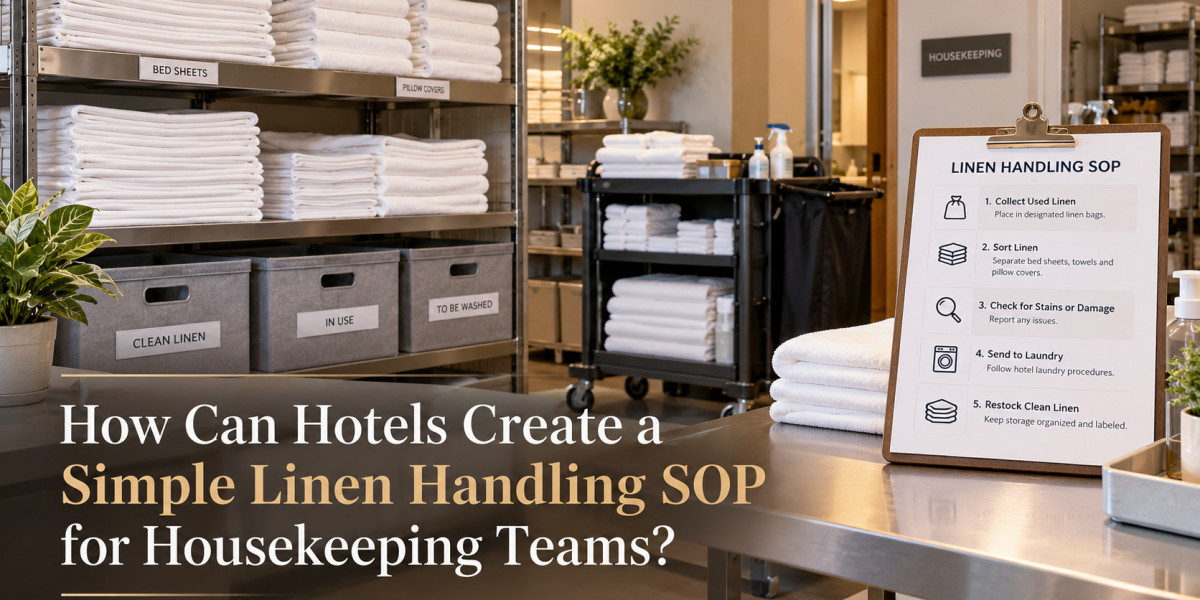

Hotel textiles pass through guest rooms, housekeeping carts, laundry areas, storage rooms, restaurants, and other departments every day. Without clear hotel linen handling procedures, employees may sort products differently, mix clean and used textiles, select incorrect sheet sizes, or remove damaged items without recording them. A simple standard operating procedure can help housekeeping and laundry teams follow the same process without adding unnecessary work.
A useful linen SOP should focus on the complete movement of textiles—from collection after guest use to washing, inspection, storage, and return to service. The goal is consistency rather than creating complicated paperwork.
Why Does a Hotel Need a Linen SOP?
Hotels often rely on experienced housekeeping employees who already know how the property operates.
Problems can appear when new staff join, occupancy increases, or different shifts begin following slightly different methods.
One team may separate stained sheets before sending them to laundry, while another may place everything together. Some employees may store fitted sheets according to room size, while others place all sheets on the same shelf.
Over time, small inconsistencies can lead to:
· Mixed linen sizes
· Missing textiles
· Incorrect room setups
· Repeated stains
· Poor stock rotation
· Unnecessary replacement
· Slower housekeeping
A written procedure gives employees one clear method to follow.
What Should Happen When Linen Is Removed From a Guest Room?
The process begins during room cleaning.
Housekeeping employees should identify the main textile categories while collecting used linen.
Products from the hotel’s bed linen inventory may include fitted sheets, flat sheets, pillowcases, duvet covers, and protective bedding.
Staff should also collect bathroom textiles separately where required by the hotel’s laundry process.
During collection, employees can quickly notice obvious issues such as:
· Heavy staining
· Torn fabric
· Damaged elastic
· Open seams
· Unusual discoloration
Items requiring additional attention can be separated instead of disappearing into a normal laundry load.
How Should Used Linen Be Sorted?
A good housekeeping linen SOP should explain how staff separate products before laundry.
The exact method depends on the property, textile type, and laundry process, but sorting can consider:
· Bedding versus towels
· Colour
· Fabric type
· Soil level
· Product category
· Special treatment requirements
The system should remain simple.
Creating too many categories can slow staff down and increase the chance of mistakes.
Hotels should separate products only where doing so improves laundry, identification, or handling.
Why Should Stained Linen Be Identified Early?
Stains become harder to manage when nobody knows which products require additional attention.
Makeup, oils, food, drinks, and personal-care products can all affect hotel textiles.
Instead of automatically sending heavily stained products through repeated ordinary wash cycles, staff can identify them before processing.
Laundry teams can then use appropriate treatment according to fabric-care instructions and the hotel’s established procedures.
If a stain remains after suitable treatment and the textile no longer meets the property’s standards, it can be reviewed for removal from normal guest use.
This prevents unsuitable products from repeatedly moving through the same cycle.
What Should the Hotel Laundry Workflow Include?
A clear hotel laundry workflow should show what happens after used linen reaches the laundry area.
A simple sequence may include:
Collection → Sorting → Washing → Drying → Inspection → Folding → Clean Storage → Housekeeping Issue
Each stage should have a clear purpose.
After washing and drying, staff should check representative textiles while folding.
They can look for permanent stains, damaged seams, shrinkage, rough texture, or other changes.
Products with problems should be separated before they return to clean storage.
This prevents housekeeping teams from discovering defects while preparing a guest room.
How Should Hotels Handle Bathroom Textiles?
Bathroom products usually include several different items and should not be treated as one general towel category.
My Cotton’s bath linen range covers textiles such as towels and other hospitality bathroom products.
Hotels may need separate storage or handling for:
· Bath towels
· Hand towels
· Face towels
· Bath mats
· Bathrobes
· Pool towels
· Gym towels
Different products can have different dimensions, fabric weights, and drying times.
Separating them properly also makes inventory easier to understand.
If bath towels are disappearing faster than hand towels, management can identify the specific issue instead of seeing only a general linen shortage.
Why Is Clean-Linen Inspection Important?
Washing does not automatically mean a product is ready for use.
Clean textiles should still meet the hotel’s condition standards.
During folding or storage, employees can check for:
· Visible stains
· Tears
· Loose stitching
· Excessive thinning
· Poor fit
· Damaged elastic
· Significant discoloration
Inspection should become part of normal handling rather than a separate complicated task.
If an employee is already folding a sheet, checking its edges and general condition takes little additional effort.
How Should Clean Linen Be Stored?
Clean storage should be easy for employees to understand.
Similar-looking products need clearly labelled locations.
For example:
King Fitted Sheets
Twin Flat Sheets
Standard Pillowcases
Bath Towels
Hand Towels
Avoid placing several almost identical sheet sizes on one unlabeled shelf.
Poor storage can make a sizing problem look like a product-quality problem.
A room attendant who repeatedly receives the wrong fitted sheet may believe the sheets have shrunk when the real issue is mixed inventory.
Organized storage prevents this confusion.
Why Should Hotels Use Stock Rotation?
Stock rotation helps distribute textile use more evenly.
If newly washed linen is always placed at the front of the shelf and staff also take products from the front, the same items can repeatedly return to circulation.
Other clean products may remain unused.
Hotels can use a basic first-in, first-out method.
Existing clean stock is used before newly returned laundry.
This helps distribute washing cycles more evenly and gives management a clearer understanding of normal textile wear.
How Can Linen Management Training Help New Employees?
Good linen management training should focus on practical tasks rather than lengthy theory.
New housekeeping staff should understand:
· Where used linen goes
· Which items need separation
· How different sizes are identified
· Where clean products are stored
· What damage should be reported
· How stock rotation works
A short visual guide can also help.
Photographs of approved sheet sizes, towel categories, and shelf locations can make training easier for employees who are unfamiliar with the property.
The procedure should be reviewed during actual housekeeping work so employees see how it applies in real situations.
How Should Restaurant Linen Fit Into the SOP?
Hotels with restaurants, banquets, or event spaces should also include table linen in their handling procedures.
Tablecloths, napkins, and runners may require different sorting and stain treatment from guest-room bedding.
Restaurant teams should separate products by size and type before laundry.
Returned tablecloths should be checked for permanent stains, damaged hems, shrinkage, and incorrect dimensions.
Clear handling procedures can reduce confusion during busy events when multiple table sizes are being prepared at once.
Should Damaged Linen Be Recorded?
Yes, but the record can remain simple.
When a product is removed, staff can record the reason:
· Permanent stain
· Tear
· Damaged seam
· Shrinkage
· Poor fit
· Loss of absorbency
· Missing item
Over time, these records can reveal useful patterns.
If fitted sheets repeatedly fail around the corners, the issue may involve mattress depth.
If towels become rough unusually quickly, laundry conditions can be reviewed.
This information helps management improve future purchasing and operational decisions.
How Often Should the Linen SOP Be Reviewed?
The procedure should be updated when operations change significantly.
Examples include:
· New mattress sizes
· New laundry equipment
· A different laundry provider
· New room categories
· Expansion of pool or spa facilities
· New restaurant or banquet areas
However, the SOP should not change every few weeks.
Employees need a consistent routine.
Updates should be based on genuine operational problems or changes rather than personal preference.
Final Thought
A good linen SOP should make housekeeping easier, not create more administration. Clear hotel linen handling procedures, simple sorting rules, routine quality checks, organized storage, and sensible stock rotation can prevent many everyday textile problems.
Effective linen management training also helps new employees follow the same process as experienced staff. When housekeeping and laundry teams understand how linen should move through the property, hotels can reduce mix-ups, identify damage earlier, and maintain a more reliable textile system without adding unnecessary complexity.
FAQs
1. What should a hotel linen SOP include?
It should explain collection, sorting, washing, inspection, folding, storage, stock rotation, damaged-linen handling, and how different product categories are identified.
2. Why should stained linen be separated?
Separating heavily stained items allows laundry teams to apply appropriate treatment instead of repeatedly processing them with ordinary linen.
3. How should clean hotel linen be stored?
Use dry, organized storage with clear labels for different products, sizes, and departments.
4. Should hotels inspect linen after washing?
Yes. Staff can check for stains, tears, shrinkage, damaged stitching, discoloration, and other issues during normal folding and storage.
5. Why is linen training important for housekeeping staff?
Training helps employees follow consistent procedures for sorting, storage, stock rotation, size identification, and reporting damaged textiles.
6. How often should a hotel update its linen SOP?
Review it when room configurations, laundry procedures, textile specifications, or other operating requirements change significantly.