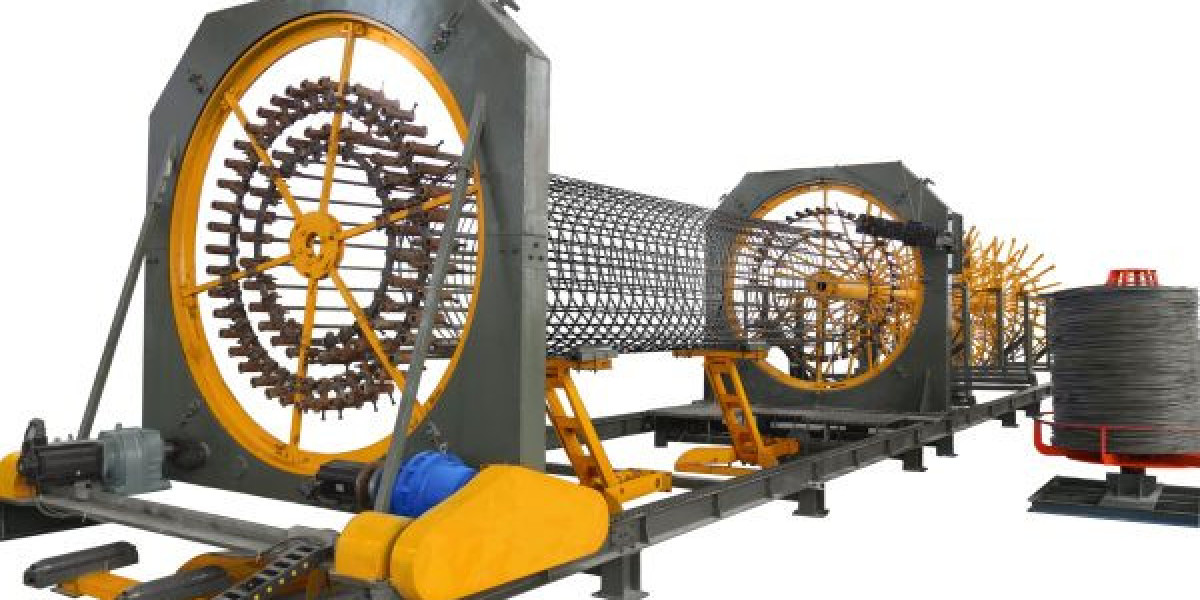

Reinforcement cages are essential components in many concrete construction applications, particularly where structural elements require a precisely arranged steel framework. Producing these cages manually can involve extensive measuring, positioning, tying, and welding. As fabrication requirements increase, dedicated machinery can provide a more organized approach. Modern cage building equipment combines controlled steel positioning and welding processes to support more consistent reinforcement cage production.
The HNYC-1500 CNC Steel Bar Welding Machine is designed for automated reinforcement cage fabrication. Rather than requiring workers to complete every welding point and positioning task manually, the machine coordinates the cage-building process through a CNC-controlled system. This can help fabrication facilities establish a repeatable workflow for producing cylindrical reinforcement structures according to specified project requirements.
One of the most important considerations in cage production is maintaining the correct relationship between longitudinal bars and circumferential reinforcement. A cage must retain its intended shape and spacing throughout fabrication. Automated machinery can provide controlled positioning during production, reducing dependence on repeated manual measurements. This is particularly useful when manufacturers need to produce multiple cages with similar dimensions.
Production consistency becomes increasingly important when reinforcement cages are manufactured in batches. Manual fabrication can produce differences in spacing, alignment, and welding locations if operators have to repeat the same tasks many times. A CNC-controlled system follows programmed production parameters, helping manufacturers establish a consistent manufacturing sequence. Finished cages can therefore be produced with greater repeatability when the machine is correctly configured.
Automation can also change how workers interact with the production process. Instead of concentrating on every individual welding point, operators can supervise the machine, prepare steel materials, monitor production settings, and inspect completed cages. This can reduce repetitive manual work while creating a clearer division between machine operation and quality control.
Another advantage of dedicated cage-building equipment is the ability to organize production around specific project dimensions. Reinforcement cages can vary in diameter, length, bar arrangement, and spacing depending on their intended application. Before production begins, manufacturers can configure the equipment according to the required specifications. This makes CNC-based fabrication suitable for businesses that handle different reinforcement orders rather than producing only one standardized cage.
Welding control is also an important part of reinforcement cage manufacturing. Consistent connections help maintain the arrangement of the steel framework during subsequent handling and installation. Automated welding equipment can coordinate welding operations with the movement and positioning of reinforcement material, creating a more systematic production sequence than individually completing connection points by hand.
For fabrication businesses, workflow efficiency extends beyond the welding process itself. Material preparation, machine setup, cage removal, inspection, and storage all need to work together. A dedicated cage-building machine can become a central part of this workflow, allowing production teams to organize the movement of steel from raw material preparation through completed reinforcement structures.
Businesses considering cage fabrication machinery should evaluate their regular production requirements before selecting equipment. Important factors include cage dimensions, steel specifications, production volume, available workshop space, and the types of reinforcement structures commonly requested. Proper machine selection ensures that automated equipment is aligned with actual manufacturing needs.
A CNC-based cage building system can provide reinforcement manufacturers with a structured method for producing welded steel cages. By coordinating positioning and welding through programmed operation, the equipment can help reduce repetitive manual processes while supporting consistent production across multiple units.
As construction increasingly uses prefabricated reinforcement components, efficient off-site steel fabrication is becoming an important part of project preparation. Automated cage production can help workshops produce reinforcement frameworks in a controlled environment before they are transported to the construction site. With suitable programming, material preparation, and quality inspection, CNC cage-building technology can support a more organized approach to reinforcement manufacturing.