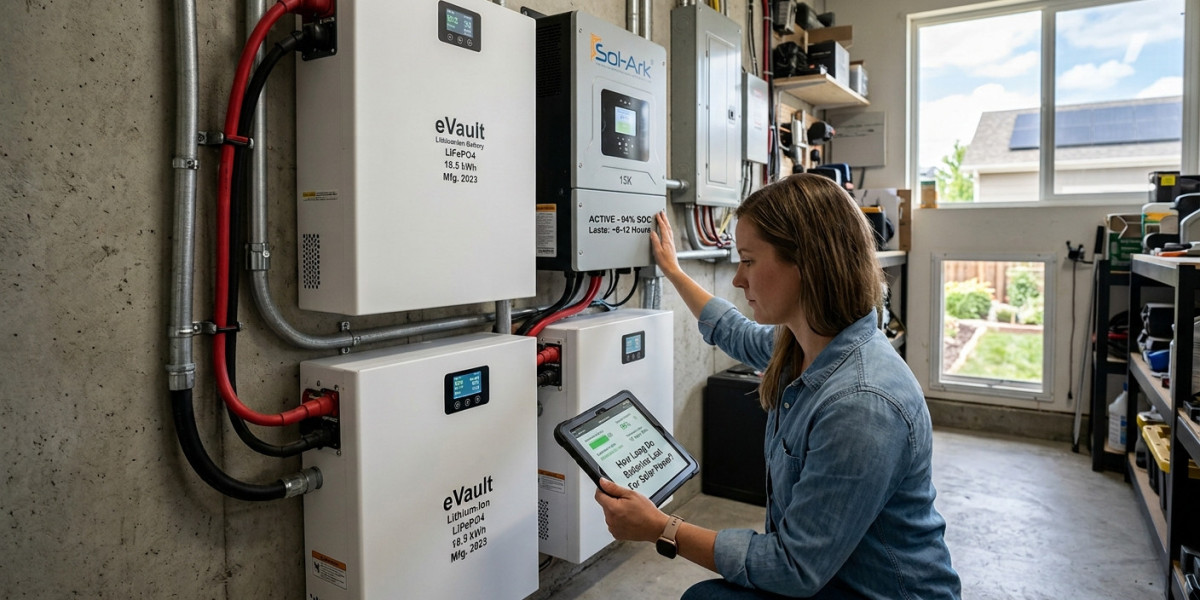

A solar battery normally lasts for around 10 to 12 years in a home, although the exact lifespan depends on the battery technology, how often it is used, operating conditions and the manufacturer's warranty.
That can seem short compared with solar panels, which are generally expected to keep generating electricity for 25 years or more. A battery therefore needs to be treated as a separate part of the system when working out the long-term cost of solar power.
The battery does not usually fail on a particular date. Its storage capacity gradually falls as the cells age. A unit that once stored 10kWh, for example, may still work after several years but provide less usable energy than it did when new.
What Makes A Solar Battery Wear Out?
Every time a battery charges and discharges, its cells go through a cycle. Repeating this process gradually reduces their ability to store energy.
How quickly that happens depends on how the battery is operated. A household that uses a large part of its battery capacity every day will put more cycles through the system than a home that only uses a small amount.
The main factors include:
- Number of cycles: More charging and discharging generally means more battery wear.
- Depth of discharge: Regularly using most of the available capacity can affect long-term ageing.
- Temperature: Battery performance and lifespan can be affected by unsuitable temperatures.
- Battery chemistry: Different technologies have different performance characteristics.
- System controls: Battery management software controls charging and discharge to protect the cells.
- Installation conditions: Location, ventilation and electrical design all matter.
A battery management system can prevent the battery from being completely discharged. Keeping a reserve can help protect the cells rather than allowing them to reach an absolute zero state.
What Happens When A Battery Gets Older?
Battery ageing is normally gradual rather than sudden.
You may notice that the battery reaches full charge more quickly because it can hold less electricity. It may also run out of stored energy earlier in the evening.
This does not necessarily mean the battery has stopped working. Reduced capacity is an expected part of battery ageing.
For example, a household might initially have enough stored electricity to cover most of its evening demand. Several years later, the same battery may cover only part of that demand. The system can still operate, but the amount of energy available has fallen.
The point at which a battery needs replacing depends on whether its remaining capacity is still useful and whether the cost of keeping it in service makes sense.
Does Using The Battery Every Day Reduce Its Life?
Daily use is normal for a home solar battery. These products are designed to charge and discharge repeatedly.
The important detail is how much energy passes through the battery, not simply how many days it is switched on.
A household might use a battery every evening but only discharge part of its capacity. Another household could regularly empty most of its storage before recharging it the following day.
This difference affects the amount of work the battery performs over time.
The system settings also matter. Some batteries reserve part of their capacity rather than allowing the homeowner to use the entire stored amount. That can reduce the usable capacity available each day, but it also helps manage battery operation.
Does A 10-Year Warranty Mean The Battery Will Last Exactly 10 Years?
No. A warranty period should not be confused with a guaranteed failure date.
When comparing batteries, look beyond the number of years shown on the warranty. Check what the manufacturer guarantees during that period.
Useful points to compare include:
| Battery Detail | Why It Matters |
|---|---|
| Warranty length | Shows how long the manufacturer provides its stated cover |
| Guaranteed capacity | Indicates how much storage the battery should retain under the warranty |
| Cycle limit | Shows the amount of charging and discharging covered |
| Usable capacity | Tells you how much stored electricity you can actually use |
| Operating temperature | Shows the conditions the battery is designed to handle |
| Installation cover | Clarifies what protection applies to the installation itself |
A battery advertised with a large storage capacity is not automatically a better long-term purchase. The usable capacity and warranty conditions can be more useful when comparing two systems.
How Long Does The Battery Need To Work Each Day?
This question is easy to overlook when choosing storage.
A battery should match the home's electricity pattern rather than simply being as large as possible. If most electricity is used during the evening, storage can help shift surplus daytime solar into those hours.
Homes with electric heating, a heat pump or an electric vehicle can have much higher electricity demand. In those cases, a larger battery may be useful, but the solar array and household usage still need to be considered together. Current guidance notes that battery size depends on household consumption, when electricity is used and how much surplus solar electricity is available.
A very large battery can also leave capacity unused if the solar system cannot regularly charge it or the household does not need the stored electricity.
How Does Battery Life Affect The Cost Of Solar?
Battery storage adds a significant amount to the initial price of a solar project, so its expected lifespan should be part of the financial calculation.
Current UK guidance puts battery storage at roughly £5,000 to £8,000 for many domestic systems, although prices vary with battery size and installation requirements.
That is why the installation of solar PV system should not be judged only by the price shown on the first quotation. A homeowner also needs to consider which components may need replacing during the system's working life.
Solar panels can continue producing electricity for 25 years or more, while the battery normally has a shorter lifespan. An inverter may also need replacing during the lifetime of the panels.
This creates a different cost picture from a solar-only system.
Should You Buy A Battery At The Same Time As Solar Panels?
It depends on how the household uses electricity.
A battery can store surplus solar generated during the day and make that electricity available later. It can also be charged from the grid where a suitable time-of-use tariff makes that useful.
For a home that uses very little electricity after sunset, the additional storage may not provide the same value as it would in a home with high evening demand.
Before adding a battery, look at your actual electricity consumption rather than relying on a standard battery size. Your installer should be able to use your usage pattern and proposed solar generation to determine a suitable capacity.
What Happens When The Battery Reaches The End Of Its Life?
An ageing battery does not normally need to be replaced simply because it has reached its tenth birthday.
The more useful signs are falling usable capacity, reduced performance or a problem covered by the manufacturer's service arrangements.
If replacement becomes necessary, the solar panels can usually remain in place. The battery and panels have separate lifespans, so replacing one does not automatically mean replacing the other.
This is worth considering when calculating the long-term solar panel installation cost. The initial installation price tells only part of the story if the system includes storage that may need replacing later.
Where Should A Home Battery Be Installed?
Battery location is also part of its expected performance and safety.
Government guidance highlights the need for suitable design, installation and siting of domestic battery systems. UK safety requirements include measures intended to reduce fire risks and manage the effects of a battery incident.
The battery should therefore be installed according to the manufacturer's requirements and the applicable installation standards. GOV.UK also advises homeowners to use an appropriate installation contractor for solar PV and battery systems.
How Long Should You Plan For?
For most domestic solar batteries, 10 to 12 years is a sensible working estimate rather than a fixed expiry date.
Some batteries may continue operating beyond that period, while others may lose useful capacity sooner. The actual result depends on the product and how it is used.
Before buying, compare the warranty, guaranteed capacity, usable storage, cycle information and expected replacement cost. Looking at those details gives you a much clearer picture of what the battery could cost over the life of the solar system.