
Not every potential customer is at the same stage of awareness. Some people already understand their problem, know which solution they need, and are actively comparing providers. Others have not yet recognised the problem clearly or do not know that a solution exists.
These two groups should not always receive the same advertising message.
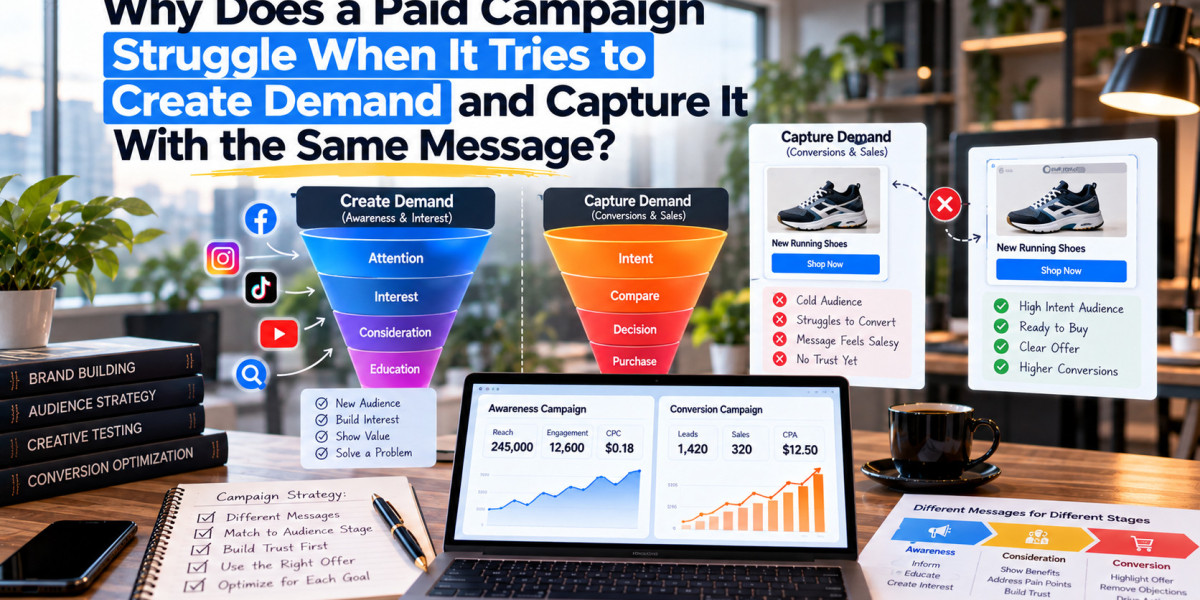
Demand generation introduces a problem, category, or solution to people who are not actively looking for it. Demand capture reaches people who already have intent and helps them choose what to do next.
When one paid campaign tries to perform both jobs with the same creative, offer, and landing page, its message can become too broad to persuade either audience effectively.
Understanding demand generation vs demand capture helps businesses create advertising that matches the customer’s current level of awareness. A thoughtful digital marketing strategy should define which type of demand each campaign is designed to address.
What Is Demand Generation?
Demand generation creates awareness and interest among people who may benefit from a solution but are not actively searching for it.
The audience may recognise a general frustration without understanding its cause. In some cases, people may not realise that the problem is costing them time, money, or missed opportunities.
Demand-generation campaigns often focus on:
· Introducing an overlooked problem
· Explaining why the problem matters
· Challenging an existing assumption
· Demonstrating a new way to achieve an outcome
· Educating the audience about a solution category
· Building familiarity and trust
· Creating curiosity about a better approach
These campaigns commonly appear on social platforms, video networks, podcasts, and display placements where users are consuming content rather than actively searching for a provider.
The immediate objective may be attention, engagement, education, or initial consideration instead of an instant sale.
What Is Demand Capture?
Demand capture focuses on people who already demonstrate interest or buying intent.
These prospects may be searching for a specific product, comparing service providers, visiting pricing pages, reading reviews, or returning to a website after an earlier interaction.
Demand-capture advertising helps customers evaluate their options and take the next step. Its messages may emphasise:
· Specific services or products
· Features and benefits
· Pricing or value
· Proof and case studies
· Customer reviews
· Availability
· Competitive differences
· A direct call to action
Search advertising is a common form of demand capture because people reveal intent through the words they type. Retargeting can also capture existing demand by reconnecting with people who have already visited the website or engaged with previous content.
Why Does One Message Struggle to Perform Both Roles?
A person discovering a problem for the first time needs different information from someone ready to purchase.
An awareness-stage prospect may not respond to “Book a consultation today” because that request arrives before sufficient understanding or trust has been developed.
A high-intent prospect may become frustrated by an advertisement that only explains the basic problem without providing pricing, proof, or a clear next step.
When the same message attempts to serve both audiences, it often becomes vague. It may explain too little for new prospects and provide too little detail for active buyers.
The result can be:
· High engagement but few enquiries
· Many clicks with low conversion intent
· Strong search traffic but weak differentiation
· Expensive retargeting that repeats basic information
· Confusing landing pages
· Calls to action that feel premature or weak
Campaigns perform more effectively when their message has one clear job.
How Should Demand-Generation Creative Be Designed?
Demand-generation creative must earn attention from people who were not planning to think about the subject.
The opening should connect with a recognisable experience, unexpected insight, or relevant customer problem. It should help the audience understand why the issue deserves attention.
Useful demand-generation angles include:
Problem Recognition
Show the audience a hidden cost or consequence of the current situation. The goal is to make the problem easier to recognise, not to exaggerate it.
Educational Insight
Explain something useful that changes how the audience thinks about the challenge. Educational content can build trust when it provides genuine value instead of disguising a sales pitch.
Customer Story
A relatable example can help prospects see how the issue appears in a real situation. The story should focus on the customer’s experience rather than making unsupported claims.
Demonstration
Showing how a product, system, or process works can make an unfamiliar solution easier to understand.
A skilled creative strategist can turn customer research into hooks and messages that introduce the problem without demanding commitment too early.
How Should Demand-Capture Creative Be Different?
Demand-capture audiences usually need less explanation about the general problem and more help evaluating the available choice.
The creative should answer practical questions such as:
· Why should the customer choose this solution?
· What makes the offer relevant?
· What proof supports the promise?
· What will happen after the customer responds?
· What concerns could prevent the decision?
· Is the service appropriate for this customer?
Demand-capture creative can use testimonials, product comparisons, specific benefits, case studies, guarantees, demonstrations, or clear offer details.
The call to action should also reflect stronger intent. Depending on the business, this may involve requesting a quote, starting a trial, booking a call, purchasing a product, or viewing pricing.
Should Demand Generation and Demand Capture Use Different Landing Pages?
In many cases, yes.
A visitor arriving from an educational social advertisement may need additional explanation before being asked to buy. The landing page can expand on the problem, introduce the solution, provide evidence, and offer a low-pressure next step.
A person clicking a high-intent search advertisement may want direct access to the service, pricing, product details, or enquiry form. Repeating a long awareness-stage explanation can create unnecessary friction.
Different pages allow businesses to match the content with the visitor’s expectations. However, every page should maintain consistent positioning, visual identity, and core promises.
The difference should reflect customer intent rather than creating disconnected brand experiences.
How Can Retargeting Connect the Two Approaches?
Retargeting can help move people from generated awareness toward captured demand.
Someone who watches an educational video may later receive a case study. A person who reads the case study may then see a service explanation, customer review, or direct offer.
This sequence allows the campaign to answer new questions as the prospect’s awareness develops.
Retargeting should not simply repeat the same advertisement. Repetition without additional value can create fatigue. Each stage should provide a reason to continue considering the solution.
Relevant campaign case studies can be particularly useful when prospects understand the problem but still need evidence before taking action.
Which Metrics Should Be Used for Each Campaign Type?
Demand-generation and demand-capture campaigns should not be judged through identical expectations.
Demand-generation indicators may include:
· Qualified reach
· Video engagement
· Content consumption
· New website visitors
· Growth in branded searches
· Audience development
· Assisted conversions
· Direct traffic growth
Demand-capture indicators may include:
· Conversion rate
· Qualified enquiries
· Purchases
· Cost per customer
· Revenue
· Return on advertising spend
· Proposal or trial completion
This does not mean that demand generation should be separated from revenue accountability. It should eventually contribute to customer acquisition. However, the time and path between exposure and purchase may be longer.
How Should Budgets Be Divided?
There is no universal percentage that suits every business.
A new company with low awareness may require more demand generation because few people are searching for its brand or solution. An established business in a high-intent category may invest more heavily in demand capture.
The balance also depends on:
· Available search demand
· Competition
· Sales-cycle length
· Brand awareness
· Customer value
· Market maturity
· Advertising budget
· Growth objectives
Businesses should avoid spending the entire budget on demand capture when the existing pool of active buyers is limited. Competing more aggressively for the same small audience can increase costs.
They should also avoid investing heavily in awareness while providing no effective path for interested prospects to convert.
What Mistakes Should Businesses Avoid?
One mistake is expecting every awareness advertisement to generate immediate sales. This can cause valuable educational campaigns to be stopped before their influence becomes visible.
Another mistake is allowing demand-generation campaigns to operate without a clear connection to the offer. Attention that does not build relevant interest has limited commercial value.
Businesses should also avoid sending every visitor to the same generic homepage. The landing experience should continue the message and support the next appropriate action.
Finally, they should not assume that platform attribution reveals the complete journey. A person may discover the brand through social media and later convert through search, direct traffic, or email.
Final Thoughts
Demand generation and demand capture solve different marketing problems. One creates awareness and interest, while the other converts existing intent into action.
Paid campaigns struggle when the same message tries to educate unfamiliar audiences and close purchase-ready prospects simultaneously. The creative becomes less specific, calls to action lose relevance, and performance becomes difficult to interpret.
Businesses should define the purpose of each campaign, match the message to the customer’s awareness level, and create a clear path from discovery to decision.
When demand generation vs demand capture is planned as one connected system, advertising can create future interest while converting the demand that already exists.
Frequently Asked Questions
What is the main difference between demand generation and demand capture?
Demand generation creates awareness and interest among people who may not be actively looking for a solution. Demand capture converts people who already demonstrate intent.
Is social media only for demand generation?
No. Social platforms can also capture demand through retargeting, lead campaigns, product advertising, and offers aimed at engaged audiences.
Is search advertising always demand capture?
Search advertising often captures existing intent, but broader informational searches can also support education and early-stage awareness.
Should both campaign types use the same call to action?
Not always. Awareness audiences may respond better to educational content, while high-intent audiences may be ready to request pricing, book a call, or purchase.
Can a small business use both approaches?
Yes. A small business can allocate part of its budget to educating suitable prospects and another part to converting people who already show stronger intent.