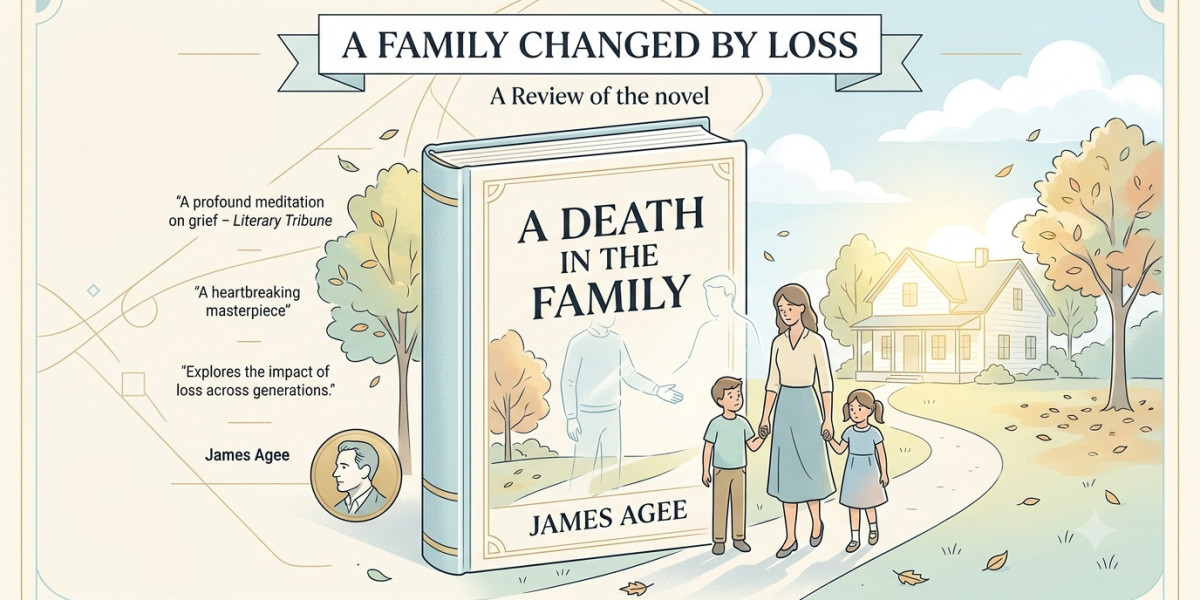

James Agee’s A Death in the Family hits hard; it’s all about grief, family, and the shock that comes with losing someone you love. The book came out after Agee’s death in 1957, but it draws straight from his own childhood. You don’t just read about a family’s loss; you feel like you’re there with them, in the middle of the confusion and pain after something unthinkable happens.
Plot Overview
The story centers on the Follet family in Knoxville, Tennessee, back in 1915. Jay Follet heads out one night to see his sick father, but on the way home, he dies in a car accident. That news hits his wife Mary, his young son Rufus, and their whole family like a punch to the gut.
Agee pays special attention to Rufus. Rufus can’t really grasp what “death” means; he’s too young. Through his eyes, you get this raw, unfiltered look at grief, the sort that adults are struggling to process but maybe can’t quite put into words.
A Powerful Exploration of Grief
One of the best things about this novel is how honest it gets about mourning. There’s no neat arc from sadness to “moving on.” Every person in the family reacts differently; someone’s angry, someone else gets lost in confusion or disbelief, and it’s all mashed together. Agee’s approach doesn’t sugarcoat anything, so the family feels real, not like some polished version of grief.
Rufus’s point of view is spot-on. He keeps asking questions the adults can’t answer, and you can see how little kids try to make sense of things while the grown-ups are just as lost. The story deals with death in a way that’s raw and true, without drifting into cheap sentiment.
Style and Atmosphere
Agee’s style is quiet and detailed. He zooms in on the small stuff: the talk around the dinner table, the way a room feels, what’s going on in someone’s head when nobody’s talking. All that detail plants you right in the Follet home. Sometimes the story slows down a lot; Agee likes reflection and description, but that slow pace matters.
It puts you in the thick of the family’s pain, forcing you to sit with it the way they do.
At the end of the day, A Death in the Family isn’t just a story about losing someone; it’s about love, being a kid, being a parent, and just getting through the hardest moments together.
Agee turns what could have been just another sad story into something unforgettable. Rufus’s experience and the way the whole family feels so true-to-life make the book stick with you. If you want something that dives deep into what loss actually feels like, this novel doesn’t flinch or hold back.
The Child’s View of an Adult World
One of the novel’s most effective elements is the contrast between Rufus’s understanding and the adults’ experiences. Rufus notices conversations, expressions, and changes in behavior, but he does not always understand what they mean. This creates a powerful gap between what the reader knows and what the child can comprehend.
Through Rufus, ordinary events suddenly carry greater emotional weight. A conversation between adults, a change in household routine, or an unfamiliar reaction can become confusing and frightening. Agee captures the way children can sense that something has fundamentally changed even when they don't yet have the emotional vocabulary to explain it.
This perspective keeps the novel grounded in human experience rather than turning it into a simple account of tragedy.
Family Relationships Under Pressure
The death of Jay affects every relationship within the Follet family. His absence changes the household practically as well as emotionally. Mary has to confront a future she never expected, while Rufus has to understand what it means to lose his father.
The extended family also becomes important because grief rarely belongs to one person alone. Different relatives bring their own beliefs, memories, expectations, and ways of coping. Their interactions show how even people who love each other can struggle to communicate when emotions are overwhelming.
This makes the novel feel larger than one tragic event. It becomes a study of how a family attempts to remain connected when the person who helped hold that family together is suddenly gone.
The Importance of Ordinary Moments
Agee doesn’t rely entirely on dramatic scenes to create emotion. Instead, much of the novel’s power comes from ordinary moments. Meals, conversations, family visits, silences, and small observations become meaningful because the characters are living through something that has changed everything.
That attention to everyday life makes the tragedy feel more believable. Real grief doesn't happen in a constant state of dramatic emotion. There are moments when people have to eat, talk, sleep, answer questions, and continue with routine even though their lives have been completely disrupted.
The novel understands this contradiction extremely well.
A Novel About Memory and Love
Although death is at the center of A Death in the Family, the novel is equally concerned with memory. The characters remember Jay in different ways, and those memories help define what he means to them.
This gives the book an important emotional balance. Jay is not simply a character who disappears after the accident. His presence continues through the memories, conversations, and relationships he leaves behind.
The result is a story that considers not only what happens when someone dies, but also what remains after them.
Who Might Enjoy This Novel?
Readers who enjoy literary fiction, family stories, historical fiction, character-driven novels, and emotionally reflective books may find a lot to appreciate here. It is especially suited to readers who prefer detailed writing and psychological depth over fast-moving plots.
The novel does require patience. Its deliberate pacing and detailed descriptions may feel slow if you are expecting a conventional page-turner. But for readers willing to spend time with the characters, that slower approach creates much of the book’s emotional power.
For readers exploring classic literature and looking for thoughtful reviews before choosing their next book, totalread.net provides recommendations and reading-focused content covering a range of authors, genres, and stories.
Final Thoughts
A Death in the Family is ultimately a deeply human novel about what happens when ordinary family life is suddenly interrupted by tragedy. James Agee doesn't offer an easy explanation for grief, nor does he try to wrap the family's pain into a simple lesson.
Instead, he allows the characters to experience loss in their own ways. Rufus's confusion, Mary's pain, and the reactions of the wider family create a layered picture of mourning that feels intimate and authentic.
The novel’s lasting impact comes from this honesty. It reminds readers that grief is not just about the moment someone dies. It is also about everything that follows: the questions, memories, changed routines, difficult conversations, and attempts to understand how life continues.
For anyone looking for a quiet, deeply emotional classic about family, love, childhood, and loss, A Death in the Family remains a memorable and moving reading experience.